Biography
Anna Yi Si-im
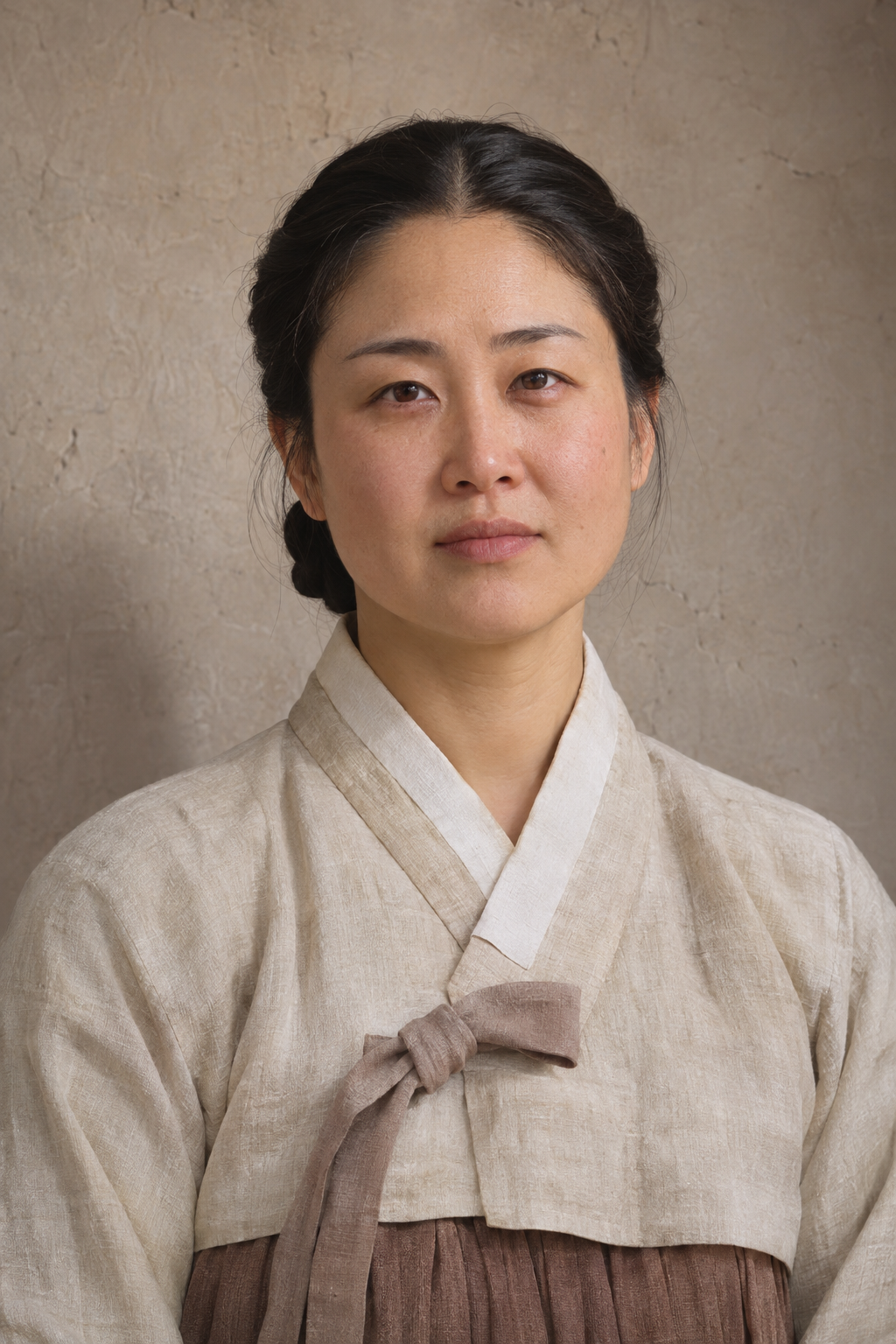
About Anna Yi Si-im
Anna Yi Si-im tried to find a community in which she could live her Catholic faith freely. Born in 1782 at Nopeunmoe in Deoksan, she came from a family known for military service. Her father, Yi Hui-un, initially opposed the religion his children had accepted. His eventual conversion came only two years before his death. Anna’s own search for a different form of life unfolded within this divided and displaced household.
She was the only daughter among four children in the Hampyeong Yi family. Her elder brother, Seong-ji, accepted Catholicism, but as the eldest son faced expectations to maintain ancestral observances among non-Christian relatives. He eventually took the household away from their home in order to practice their religion. The property they carried with them did not protect them from later cold and hunger. Seong-ji continued urging their father to convert. Neither the date of her conversion nor the precise timing of her departure is securely established.
Anna wanted to remain unmarried and join women who had made the same religious choice. Her decision attracted criticism from neighbours and relatives, which also fell upon her family. Through other Catholics she learned of women living together and resolved to join that particular community. She asked a Catholic boatman surnamed Pak to guide her to their community. Instead, he sexually assaulted her, and she subsequently lived with him as his wife. Kim Jeong-suk contrasts the episode with later Catholic marriage teaching that required both spouses’ consent.
Anna gave birth to a son, Jong-ak. Pak died not long afterward, leaving her widowed. She then took her child to the Catholic settlement of Meorusan in Jinbo, where she continued religious practice among other believers. Her move resumed the search for a place within a community that had drawn her away from home in the first place. She was living at Meorusan when the persecution of 1815 reached the village. Arrest brought mother and child into a new period of insecurity, followed by transfer through Andong to the provincial authorities at Daegu. The arrests took place while the community observed Easter. In Andong, Anna and other prisoners encouraged one another while undergoing punishment. Cha Ki-jin’s account particularly remembers the support she shared with Barbara.
The imprisonment lasted well beyond the initial interrogation. Sentenced to death in 1815, Anna remained confined until the following year; the delay prolonged the hardship she and her child endured. Accounts of the Daegu prisoners describe work during the day and common prayer at night. Making straw sandals helped obtain food, while reading and prayer sustained a shared religious life. Anna was not alone in prison, yet the company of fellow believers could not remove hunger or protect her child. Accounts describe about twenty months of confinement, including a long wait after the death sentence had been pronounced. Guards sometimes came to ask about the Catholic faith practiced by the prisoners inside the jail.
Jong-ak died in his mother’s arms during her imprisonment. The account remembers him as a small child who had shared her confinement and hunger. After losing her husband and then her son, she remained in prison and continued to refuse the demand that she renounce her faith.
On December 19, 1816, Anna was taken to the execution ground at Daegu with other prisoners. Five men were killed before the two women, Anna and Barbara Ku Seong-yeol. An official again offered release if they would abandon their religion. Anna rejected the suggestion that women should be less responsible than men for honoring God. Their recorded reply described Jesus and Mary as calling them to heaven. She was beheaded. Her body was buried near the execution ground; relatives and fellow Catholics later recovered her remains and arranged another burial. The initial burials had inscriptions marking each martyr’s remains.
Anna’s family suffered further losses after her death. In 1827, her relatives were arrested in another persecution. Her elder brother Seong-ji and younger brother Seong-sam both died in Jeonju prison, in 1835 and 1827 respectively.
Anna’s experience has also prompted a different historical question: what did choosing an unmarried religious life make possible, and what obstacles remained? Song Jee-yeon emphasizes that women seeking such communities had to confront pressure within their families and society. Anna’s journey shows that religious intention alone did not guarantee safety or control over marriage. Song cautions against making these lives stand for a simple, continuous progress toward modern women’s liberation.
Her remembered refusal at the execution ground nevertheless asserted a particular responsibility. The official’s appeal rested on her being a woman; her answer insisted that worship and religious commitment concerned women as well as men. Kim Jeong-suk reads that exchange alongside Anna’s earlier wish to choose a religious community. The two episodes preserve both the constraint she encountered and the determination with which she continued to practice her faith.
Wondering how to weigh the stories and sources? Learn how to read a saint biography.