Biography
Anno II
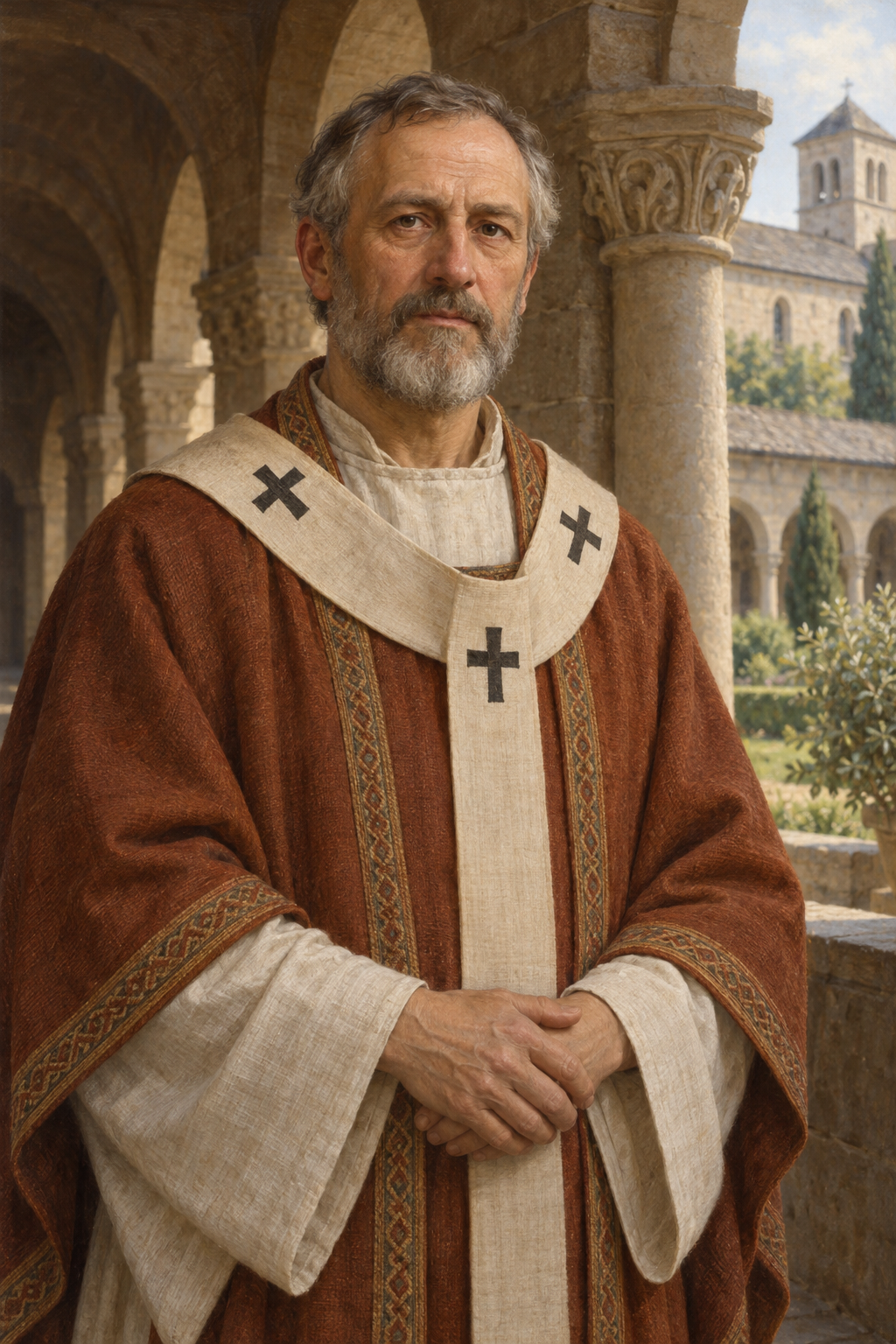
About Anno II
Anno II became archbishop of Cologne in 1056 after serving at the imperial court. His career joined pastoral responsibilities to the power of a prince.
In 1062 he helped seize the young Henry IV at Kaiserswerth, drawing him onto a ship and taking control of his upbringing and government.
Lampert of Hersfeld describes his foundations at Cologne, Siegburg, Saalfeld and Grafschaft. Impressed by the monks of Fruttuaria, Anno brought their discipline to Siegburg.
The monastery also required protection and an economic base. A charter of Henry IV dated 8 October 1069 records Anno’s request that the king confirm its market, toll and minting rights, together with its possessions. The king accepts it under royal protection and preserves the archbishop’s authority over it. This act presents Anno as a petitioner securing the future of a foundation, even though his earlier relationship with the king had involved coercion. Its language concerns rights and obligations, rather than offering a neutral judgment of the two men’s friendship. The royal protection also carried a threatened financial penalty against anyone who violated the grant.
Christian Hillen’s study explains the distinctive arrangement that developed around Siegburg. Its monasteries sought protection from local bishops against interference by lay lords. Freedom from secular control therefore did not mean independence from episcopal power. The bishop retained an important role in the appointment of abbots and the supervision of the lay officials responsible for protection and administration. Hillen describes this as an episcopal form of monastic reform, joining stricter religious observance to Cologne’s existing pattern of authority. The reform also sought to reduce duties at the episcopal court so that abbots could remain with their communities. Nor did withdrawal from worldly pressures require abandoning all pastoral care for neighbours. These features help explain how Anno’s religious and territorial responsibilities could reinforce each other. They also show why the movement should not be described simply as a copy of Cluny: its institutional relationships developed in a different setting.
His authority could be violent. After Cologne’s revolt in 1074, his soldiers looted homes and blinded several men. Lampert reports that some claimed Anno had not authorized their actions; the account remains openly sympathetic to him.
The sources also need care. Tilman Struve shows how later accounts brought together the traditions of Siegburg and Hersfeld. The longer saint’s life incorporated Lampert’s narrative; the shorter life reused the longer one. Their agreement does not make them separate witnesses to every episode. Struve connects this literary work with the need to defend Anno’s reputation against continuing criticism. He reads the later biography as a response to a particular community’s concerns, rather than a detached chronicle. His analysis also separates the early work associated with Reginhard from Lampert’s account: they arose independently before later writers combined their traditions. Reconstructing a lost text from what subsequent authors borrowed remains uncertain. The resulting portrait can therefore preserve valuable early material while also showing what later monks wanted their founder to represent.
The medieval account of the elevation describes how this remembrance took material form. The monks searched for the burial, opened it after their night prayers and gathered the remains in clean linen. The narrator records an episcopal ring and inscribed lead tablets among the objects found. The tablets were presented as identifying the burial for later generations. The story then moves from the monks’ work inside the church to a public ceremony with clergy and townspeople. These details belong to the community’s written account of honouring its founder, rather than an archaeological examination conducted today. Its reports of miraculous sounds and healings express the writer’s belief in Anno’s sanctity; they are not independent proof of those events.
Anno’s canonization developed in stages. Papal legates raised his remains in 1183, but the ceremony’s authority was disputed. Jürgen Petersohn explains that confirmation followed at a Cologne synod in 1186. The medieval translation account itself records disagreement among churches and a repeated canonization.
The difficulty concerned the authority to act in the pope’s name. According to Petersohn’s analysis of the documents, the abbot assured the legates that papal permission had been obtained, but they did not see a written mandate. They proceeded after hearing testimony about Anno’s life and reported miracles. A subsequent papal instruction showed willingness to begin the process, rather than confirming that the earlier ceremony had already been authorized. Some Cologne clergy consequently resisted its recognition. Petersohn identifies the 1186 action as the step that resolved this defect through expressly delegated authority. This history explains why a single date can conceal an important distinction between the first ceremony and its later confirmation. It does not erase the disagreement preserved in the sources.
He died at Cologne on 4 December 1075 and was buried at Siegburg.
Cologne’s 2025 calendar commemorates him on 5 December, with a solemnity in Siegburg. The Catholic Church in Norway’s received account also lists 4 December.
Wondering how to weigh the stories and sources? Learn how to read a saint biography.