Biography
Ansfried of Utrecht
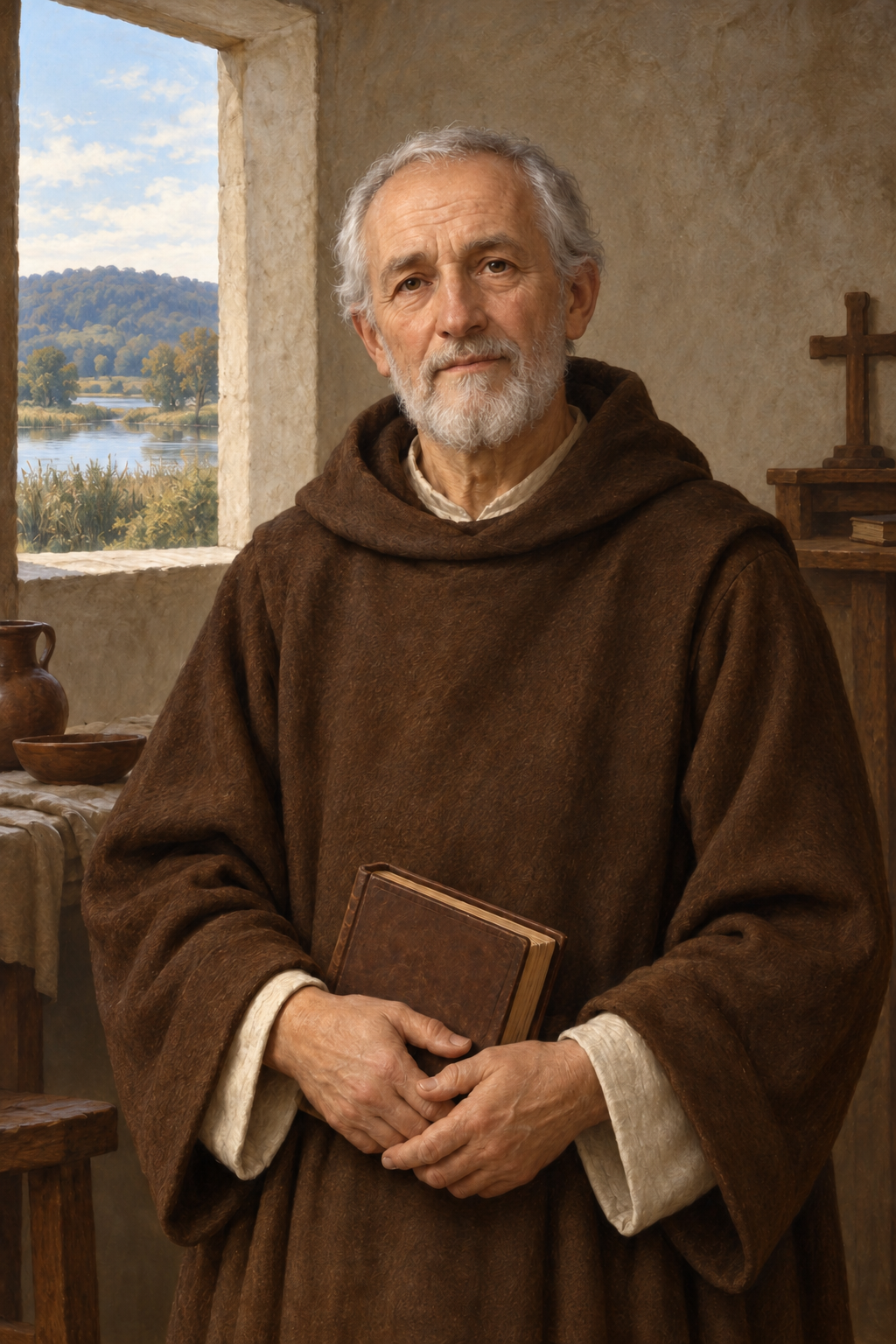
About Ansfried of Utrecht
Ansfried became bishop of Utrecht in 995 after a career as a count. His earlier life belonged to the world of royal service, landed wealth and armed power. He was also married and had a daughter who became an abbess at Thorn. The transition to church leadership did not erase that worldly past.
The surviving stories of his youth place him in the care of Archbishop Robert of Trier and then Bruno of Cologne. They describe his military education and service to Otto I in Italy. In one episode he carries the ruler’s sword while Otto prays in Rome. These details occur in the Corvey revision of Thietmar’s chronicle, not in its original surviving recension. They should therefore be read as a later account of his formation, rather than a transcript from the royal court.
His ancestry remains difficult to reconstruct. Johanna Maria van Winter examined attempts to connect the Ansfrieds to other powerful families through similar names. She rejected the equation of Ansfried with Erenfried or Yrimfried and challenged the supposed connection to Queen Mathilde’s family. Her own alternative family connections were offered as hypotheses, not proven relationships.
That distinction matters when reading a saint’s life. A prestigious pedigree repeated across biographies can look firmly established even when it rests on a disputed identification or a late source. Van Winter’s study traces how these constructions developed. It leaves a substantial family background possible without supplying a secure list of parents and grandparents. She also examines a charter dated 947 that had been used to identify Ansfried’s supposed father as a count of Leuven. The document was judged a later forgery. Recasting its date did not establish the family relationship. That example shows why a useful-looking genealogical detail cannot be accepted simply because it fits a familiar story.
There are similar difficulties around his wife. Sources give different names and disagree about when she died. Hein Jongbloed argues that traditions concerning two related men named Ansfried may have become entangled. He also cautions against turning references to the region of the Brabanders into the later titles “count of Brabant” or “count of Leuven.” His proposed solution to the family problem remains an interpretation, not a settled genealogy.
Alpert of Metz praises Ansfried as a reader and judge who resisted gifts, and as a forceful opponent of robbers. His appointment is presented as reluctant: the count objects that he has spent his life in military affairs before accepting the bishopric. This is an admiring account of public authority.
Ansfried later lost his sight and took up Benedictine observance at Hohorst. Alpert describes a chapel, cells and a community under an abbot, where he returned after public meetings. He also remembers practical care for a sick man: drawing water, preparing a bath and providing clean clothes. These acts are reported sympathetically. Alpert’s explanation of blindness as spiritual correction reflects his theology, rather than a medical explanation or a judgment upon disabled people.
The Corvey narrative also remembers quiet generosity, including feeding poor people and providing grain for birds in winter. Its account of his death leads into a dispute over where his body should be buried. His daughter, the abbess, intervenes when armed groups threaten violence. Those episodes belong to a devotional narrative that celebrates the bishop and his family.
Alpert describes townspeople taking his body to Utrecht during a fire. He credits the abbess with preventing a violent pursuit. Ansfried was buried at Saint Martin’s church. The disagreement over his body belongs to his remembered history alongside praise of his charity.
A surviving book offers a different kind of remembrance. Museum Catharijneconvent holds the Ansfriduscodex, an evangelistarium containing Gospel readings for worship. An inscription on its binding identifies it as the bishop’s gift to Saint Martin. The museum dates the parchment book to the later tenth century, while noting disagreement about its proposed origin at Saint Gallen.
Its richly worked cover has changed over time. The museum distinguishes the older silver work on the back from later additions and repairs, and records disagreements about the front cover’s history. The object therefore preserves a tradition of his gift without allowing every visible ornament to be assigned to his lifetime. It belongs to the long material history of Utrecht’s worship, rather than providing a complete picture of the donor. The catalogue records different hands in the manuscript and additions made after its original production, including copies of documents. The Gospel readings served a liturgical purpose: they were passages to be read or sung at Mass through the church year. Those later layers are part of the book’s history, rather than evidence of what Ansfried personally wrote.
Ansfried died at Hohorst in 1010. Catholic calendar notices commemorate him on 3 May and also mention 11 May.
He is also included among Utrecht’s holy bishops commemorated together on 8 November. In a 2016 homily for that observance, Bishop Jan Hendriks named Ansfried and spoke of church leadership as service, received as a gift rather than measured by position or achievement.
Wondering how to weigh the stories and sources? Learn how to read a saint biography.