Biography
Anthony Hong Ik-man
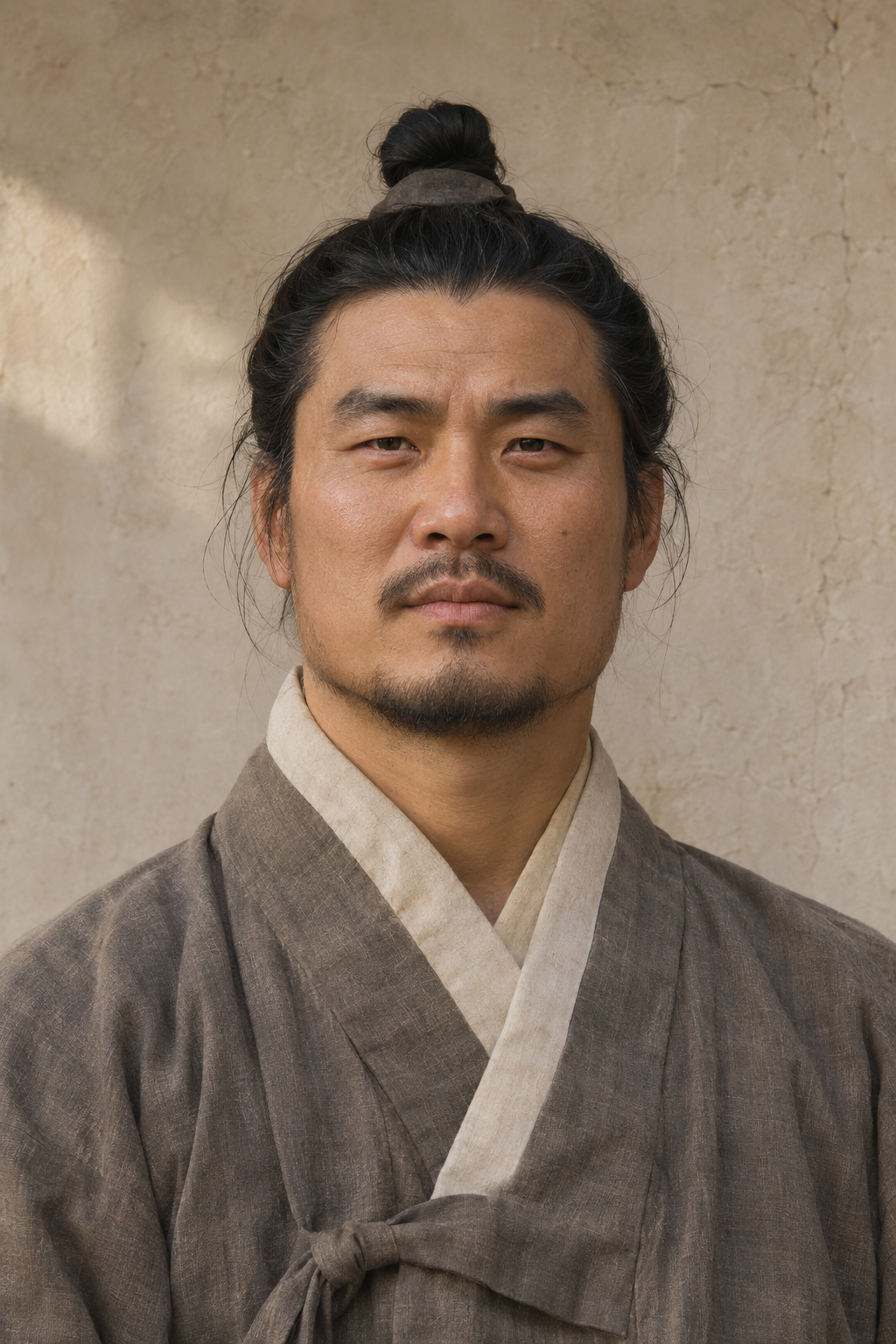
About Anthony Hong Ik-man
Anthony Hong Ik-man made his home available to a small Catholic community in Seoul, bringing together relatives, fellow readers and a priest who had to move discreetly between believers’ houses. He belonged to the Namyang Hong clan and was the son of Hong Cheom. As the son of a secondary union in a yangban family, he was related to Francis Xavier Hong Gyo-man through a secondary family line. He lived in Yanggeun before moving to Songhyeon in the capital around 1790. Two of his daughters married Catholics: Philip Hong Pil-ju and Anthony Yi Hyeon. These marriages connected his household to other families active in the growing Church. Two generations of his family had held government office. His grandfather Hong Sang-bin served in the tribunal that investigated major criminal cases, and his great-grandfather Hong Gyeong-ryeom held a post in the Central Council.
His interest in Christianity began with borrowed books. Around 1785 he went to Thomas Kim Beom-u’s house after hearing that Catholic writings could be found there. Historian Cha Gi-jin describes an initially hesitant reader: Hong thought the teaching contradicted the Confucian sages Yao and Shun and put it aside. In Cha’s account, reading Jindo Jajeung in 1794 changed his judgment. He began studying with believers including Peter Yi Seung-hun, Augustine Jeong Yak-jong, Alexis Hwang Sa-yeong and Barnabas Jeong Gwang-su. The official biography and Catholic Encyclopedia connect baptism with the earlier period. Cha places it after renewed study. All name Yi as the baptizer, but the chronology differs.
Jindo Jajeung was a Chinese-language introduction to Christianity by the French Jesuit Émeric Langlois de Chavagnac. Won Jae-yeon describes a work written for educated readers who had no previous instruction in the faith. Its author considered the nature of God and creation before introducing the life of Jesus, the commandments and the sacraments.
Song Ran-hui names two Korean scholars, Hong Jeong-ha and An Jeong-bok, who read the same work and wrote rebuttals. The books lent among Anthony’s friends thus reached well beyond those who welcomed the new religion. Anthony also taught outside his circle of Catholic readers. In an account examined by Jeong Min, the statesman Chae Je-gong hired him to teach a grandson born to a secondary branch of the family. Chae provided him with a house in Jeong-dong and money and food. When someone warned Chae that the tutor was a Catholic, Chae considered dismissing him. Anthony sought help, friends intervened, and the boy continued studying with him for several years. What the grandson learned about religion, if anything, is unknown. The teaching arrangement also appears in the royal annals. After Chae’s death, officials argued that he should be punished posthumously for his connections with Catholics. Among the accusations was his choice of Anthony as his grandson’s teacher. The memorial preserves the names and the relationship. Its authors had an interest in making a household decision look like evidence of political allegiance.
Hong met James Zhou Wen-mo in 1796 at Philip Hong Pil-ju’s house. The priest’s visit gave him access to the sacraments and drew him further into the community’s work. He sometimes received Zhou in his own home. The house became one of the six meeting centers associated with the Myeongdohoe lay organization. The Catholic Encyclopedia nevertheless notes that Hong had not abandoned ancestral rites because of his circumstances. It does not explain those circumstances further.
His home also stood close to Yangjegung, where two women of the royal family practiced Catholicism. Cha credits him with helping Zhou’s contacts with Song Maria and her daughter-in-law Shin Maria. Jeong Min’s study of neighboring Catholic households points out another family connection: Columba Kang Wan-suk’s stepson Hong Mun-gap was Hong Ik-man’s son-in-law. Jeong interprets such connections as part of the practical organization of concealed worship in the capital. Houses linked by kinship allowed Catholics to arrange visits and shelter without relying only on conspicuous public meetings.
He introduced Luke Yi Hui-yeong and Josephat Kim Geon-sun to Zhou and attended three days of worship and study at Barnabas Jeong’s house.
Yeo Jin-cheon records Hong’s continued activity even after the 1801 persecution forced him to flee. He carried Christian books and taught a friend while hiding. Yun Gu-son, a cousin of the earlier martyr Paul Yun Yu-il, brought him news and carried letters between him and his family. Before capture, his refuge shifted from relatives in Ansan and Yeoju to the mountains and then a friend’s house in Icheon. Cha describes these moves as responses to the police searches that made continued residence dangerous. For a time, he remained connected to the Church through both books and personal messengers.
After his arrest, Hong was interrogated and punished at the police bureau and the Ministry of Punishments. The official biography remembers his refusal to name believers who had not already been arrested. It also records that he maintained his faith rather than renounce it. He was beheaded in Seoul on 29 January 1802 with other Catholics. The official account leaves the precise execution ground unresolved between Seosomun and Saenamteo. His surviving story centers on a lay household that provided space for study and worship while its members faced prosecution for their religion.
Wondering how to weigh the stories and sources? Learn how to read a saint biography.