Biography
Anthony Yi Hyeon
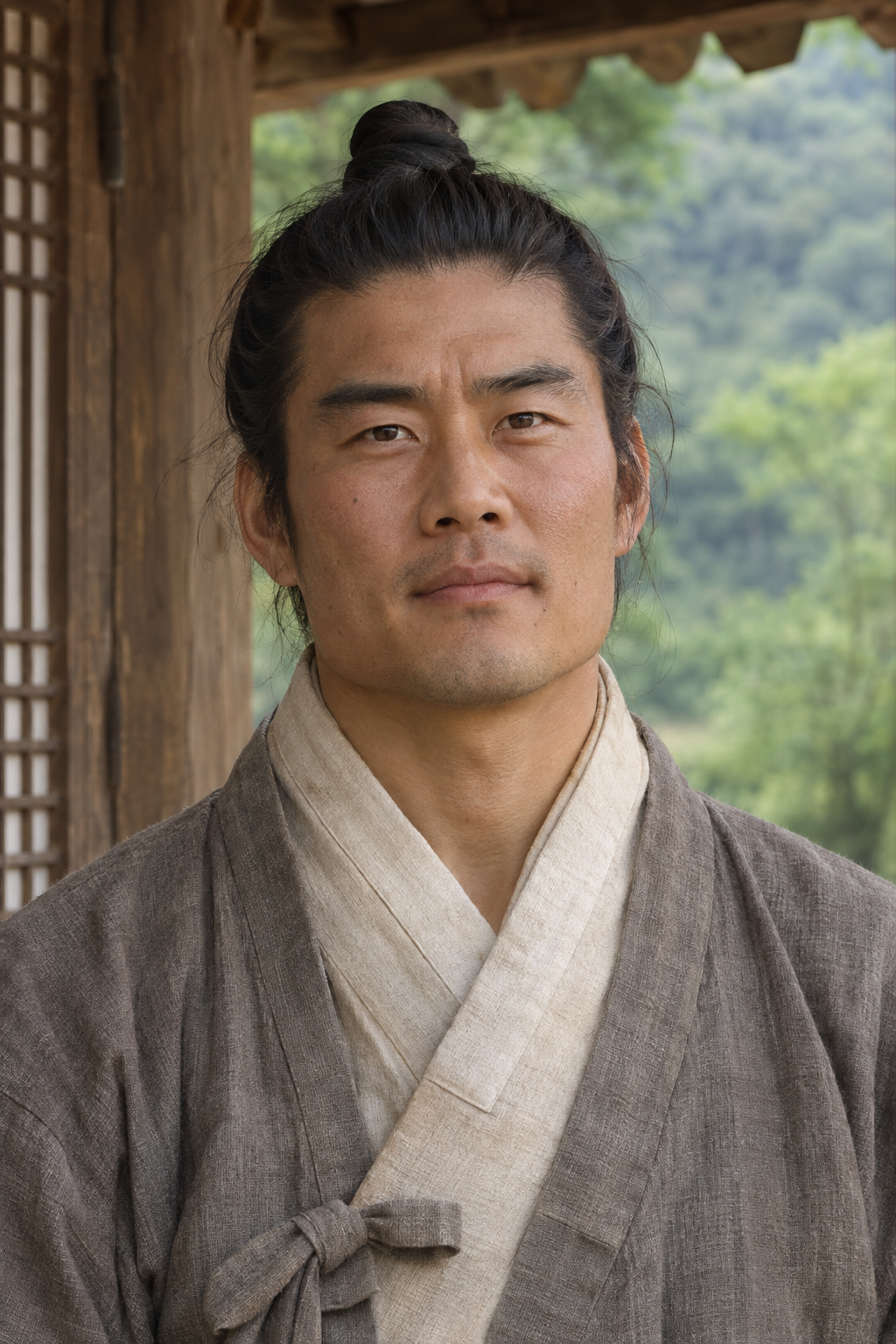
About Anthony Yi Hyeon
Anthony Yi Hyeon came from a yangban family in Yeoju, Gyeonggi Province, Korea. His uncle Luke Yi Hui-yeong lived in the household of Josaphat Kim Geon-sun. Anthony visited there and began studying Catholic doctrine with Kim in the autumn of 1797. Books helped draw him into the faith before he joined the wider community in Seoul.
Jeong Min places Anthony among the people waiting at Kim’s home when Kim returned from Seoul in 1797. His uncle was there too, alongside Martin Yi Jung-bae and James Won Gyeong-do. The historian describes this circle as previously interested in Daoist techniques and the prospect of establishing a new community on an island. Kim’s conversion redirected their religious hopes towards Christianity. This reconstruction supplies a setting for Anthony’s first instruction, but it does not give him a documented role in planning an island settlement. His presence in the circle should not be enlarged into personal leadership of its earlier ambitions.
The Korean Catholic Encyclopedia identifies Tianzhu Shiyi, The True Meaning of the Lord of Heaven, as a book that particularly attracted him. He moved to Seoul’s Gyedong district and continued instruction through visits to Philip Hong Pil-ju’s home. James Zhou Wen-mo baptized him. His faith developed through reading and personal teaching in Catholic households.
The book named in his life was written by the Jesuit Matteo Ricci and published in Beijing in 1603. The Academy of Korean Studies describes it as a dialogue between a Chinese scholar and a Western scholar, organized in eight sections. It defended Christian teaching through reasoning, while drawing extensively on Chinese classical learning. Its subjects included the creator, the immortality of the human soul, and reward and punishment after death. Rather than explaining every aspect of Christian belief, it prepared readers to move towards faith through arguments they could examine. This was a form of religious instruction addressed to people with a Confucian education. Its circulation in Korea produced both committed readers and sharp criticism from scholars who rejected its claims. Such a book offered Anthony material for study and discussion before baptism; his surviving notice does not identify which of its individual arguments most persuaded him.
Anthony married a daughter of Anthony Hong Ik-man. Philip, who married another daughter of the same family, thus became his brother-in-law. Priest and historian Yeo Jin-cheon identifies the religious companions around Anthony as Choe Hae-du, Barnabas Jeong Gwang-su, Hong Jeong-ho, Francis Kim Jong-gyo, Peter Choe Pil-je and Nam Pil-yong. When Anthony lost his parents in the winter of 1800, Philip came to pay his condolences. The family connection appears in this concrete act as well as in the accounts of shared religious instruction.
Jeong’s study of baptismal names records Anthony’s name as Andon. He distinguishes this spelling from the Andang used by his father-in-law, although both represent Anthony. The difference illustrates how Korean Catholics adapted foreign Christian names into Chinese characters. It also cautions against treating a differently written baptismal name as sufficient evidence for a different person, especially within this closely connected family.
The persecution of 1801 brought Anthony’s arrest. His uncle had already been taken and executed. Under repeated interrogation and punishment, Anthony briefly said he would abandon the faith. He refused to denounce fellow believers. After transfer to the Ministry of Punishments, he regretted his earlier answer and resolved to maintain his Catholic belief. Further pressure did not change that decision.
The hostile police conclusions likewise identified him through family: Hui-yeong’s nephew and the brother-in-law of Columba’s son. Officials treated these Catholic connections as part of their accusation against him.
He was beheaded outside Seoul’s Small West Gate on July 2, 1801. The encyclopedia names the companions executed with him, including Ignatius Choe In-cheol, Juliana Kim Yeon-i, Columba Kang Wan-suk and Agatha Han Sin-ae. His personal notice links a reader and student from Yeoju with the network of Catholic homes in the capital, then records the change from his first frightened response to his final refusal to abandon the religion.
Later commemoration recalls the journey from prison to execution. Tak Hui-seong painted an ox cart moving along a road beside a walled compound, with guards and other figures following. The accompanying diocesan caption identifies it as the cart carrying Anthony towards the execution ground. The painting gives visual form to the final journey remembered in his biography; its details are a devotional reconstruction, rather than an eyewitness picture. Anthony is represented within a group, as a prisoner taken towards death alongside other believers, rather than as an isolated figure.
His home region also remembers him. A 2017 report in the Catholic Times describes the martyrs’ monument beside Yeoju parish church, honoring Anthony among seventeen martyrs from Yeoju. The parish setting connects his memory with the place where he first studied the faith, even though his later life and death unfolded in Seoul. The monument commemorates his origins; it is not identified as his burial place.
Wondering how to weigh the stories and sources? Learn how to read a saint biography.