Biography
Antiochus of Sulcis
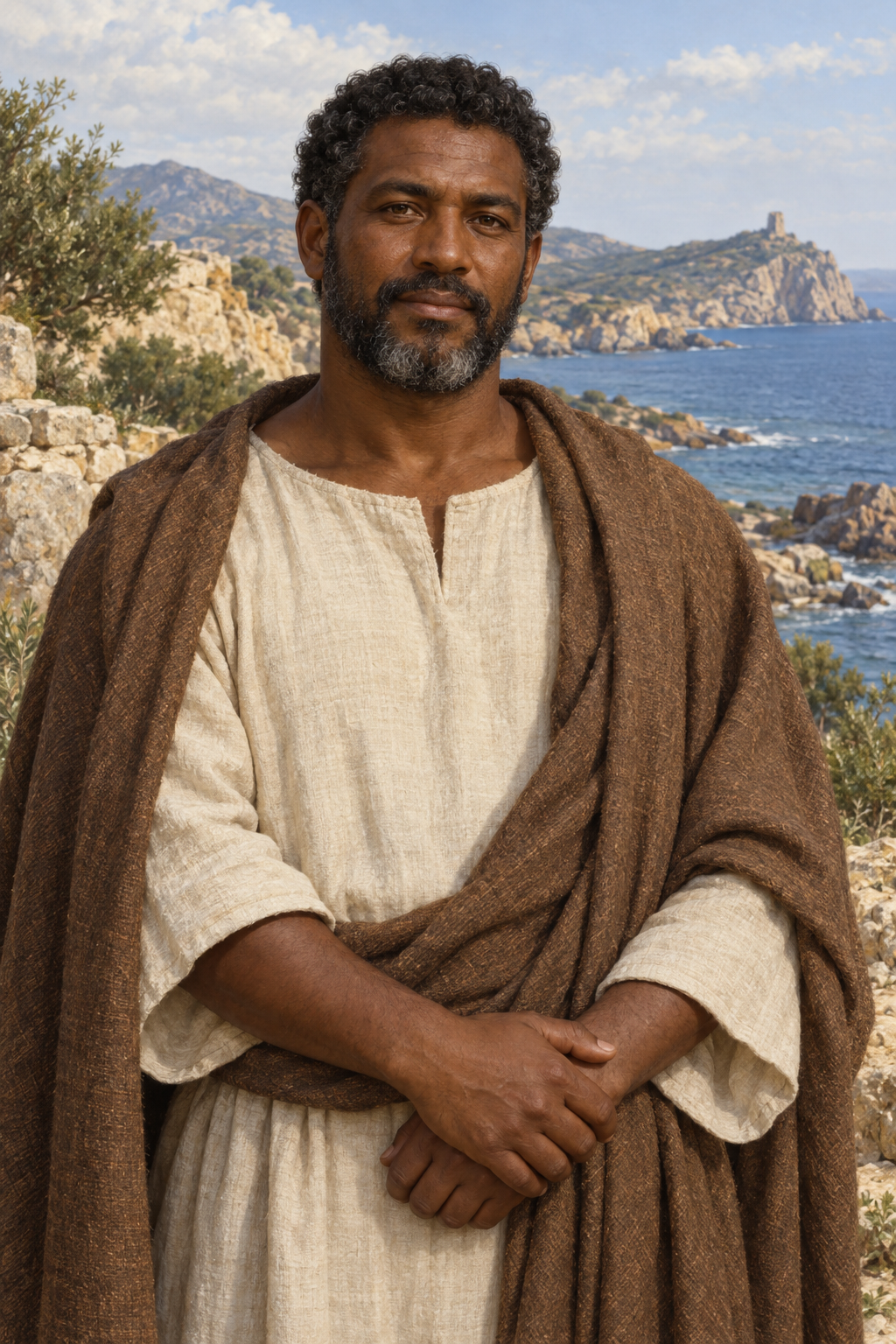
About Antiochus of Sulcis
Later tradition remembers Antiochus as a physician who came to Sardinia from North Africa. A Sardinian heritage account describes him as a doctor from Numidia who was exiled to the city now bearing his name and died there. These details belong to his received life, rather than an independently established chronology.
Andrea Pala notes that tradition places him under Hadrian, while analysis of the Passion’s opening has suggested a setting under Diocletian. Such differences make a precise account of his lifetime difficult.
The landscape of his remembrance is more tangible. The Pontifical Commission for Sacred Archaeology describes Christian burial chambers beneath his basilica, adapted from Punic tombs beginning in the fourth century. Burial near the martyr became important to the community. The account distinguishes the sarcophagus associated with his remains from a room traditionally remembered as the place where he prayed and died. That tradition does not establish a historical death date.
An inscription records the restoration of the shrine by Bishop Peter and calls Antiochus blessed and saint. Pala reviews several proposed datings for the inscription. It bears witness to the history of his veneration, while its date should not be treated as the date of the saint’s death.
His image also survives in later art. Italy’s national heritage catalogue records a painted wooden statue at Iglesias, probably made for the altar completed in 1656. Its hair and beard belong to seventeenth-century artistic fashion. The catalogue’s suggestion of an older model is a possibility, rather than proof of a likeness made during his life.
Paolo Maninchedda places Sardinian martyr shrines within a broader history of community identity. Texts, monuments and repeated remembrance helped carry that identity across generations. This context explains the continuing significance of the cult without supplying missing episodes in Antiochus’s biography.
A diocesan homily for his April 2026 celebration connects his remembrance with care for poor people, older people, young people leaving the region and those seeking work. This is a contemporary interpretation of his legacy. In Ozieri, where he is the principal diocesan patron, his liturgical feast is 13 November, distinct from the local popular celebration on 20 May.
Wondering how to weigh the stories and sources? Learn how to read a saint biography.