Biography
Antonio Maria Gianelli
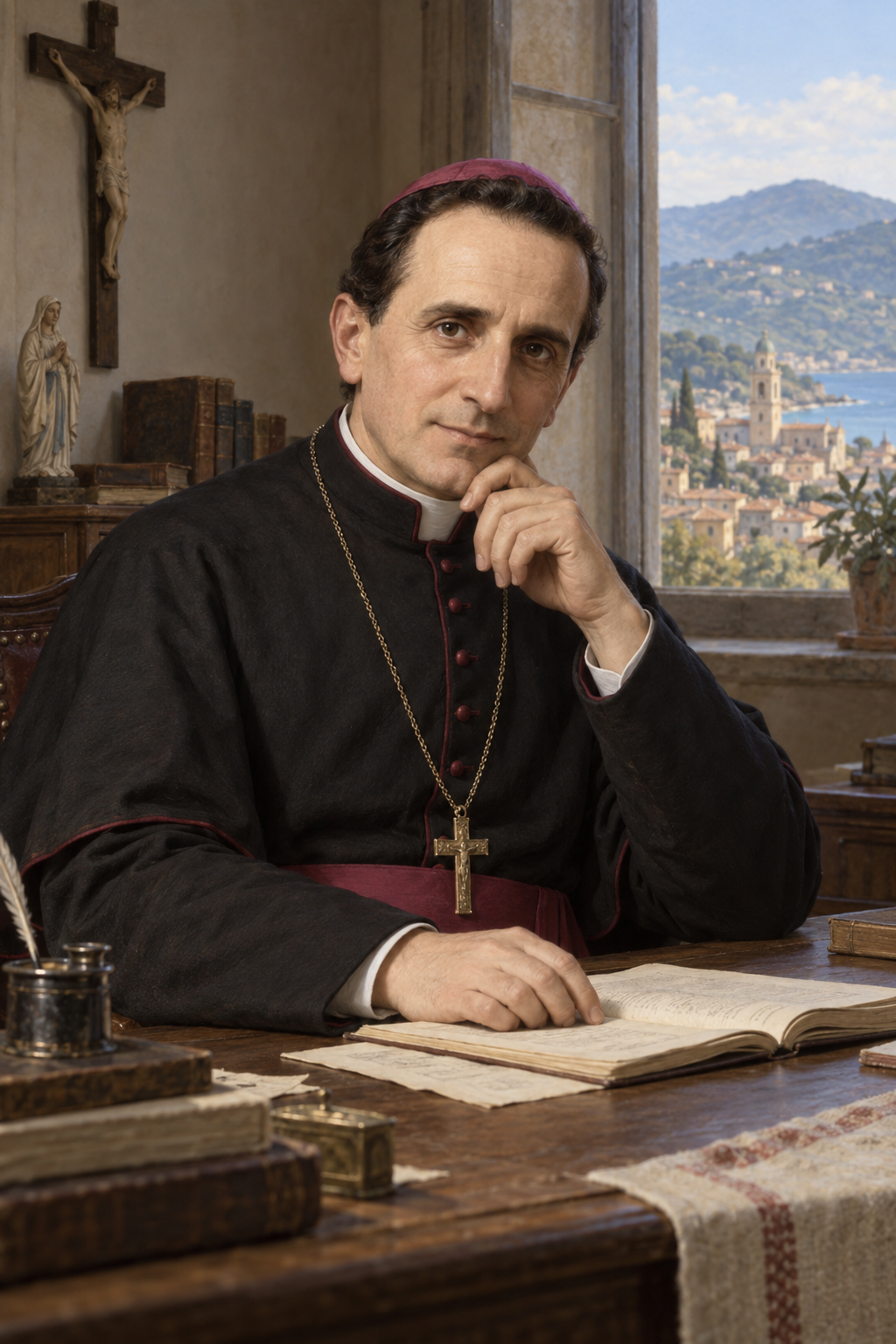
About Antonio Maria Gianelli
Antonio Maria Gianelli was born on April 12, 1789. The catalog records his birthplace as "Cereta near Chiavari, Province of Genoa," and this draft preserves that wording before final approval.
The birthplace needs a visible note because current source language is not uniform. Some profiles use Cereta near Chiavari and Genoa wording, while other modern references point toward Cerreta, Carro, and the later Province of La Spezia.
This is not just a spelling issue. Historical church geography, civil province changes, and village names can all overlap, so the final packet should separate what the source says from what the modern map might suggest.
This draft does not resolve that historical-geographic issue by force. It keeps the existing row stable and lets the final packet decide whether a structured place correction is warranted.
Gianelli became a Roman Catholic priest. The catalog stores both Bishop and Priest / Deacon classes, and this draft preserves both because his priestly ministry and later episcopal ministry are both central to the story.
His early public work was pastoral and educational. The page should show him as a preacher, teacher, organizer, and reforming pastor rather than as a distant administrator.
That pastoral identity began before episcopal office. A future bishop who had already preached, taught, and formed people can be shown as a shepherd whose authority grew from service, not from costume.
The Chiavari setting matters because the sources connect him with parish life, education, preaching, and formation there. The biography can use Chiavari as a pastoral center without settling every birthplace label at once.
Gianelli founded the Daughters of Our Lady of the Garden. This foundation should be presented as a concrete pastoral answer to needs around education, care, and formation, not as a mere institutional footnote.
The founder language should stay sober. It can name the congregation and its purpose while avoiding modern promotional claims, membership statistics, or a long institutional history outside this saint's own life.
The title "Our Lady of the Garden" can remain in the congregation name without adding unsourced symbolism. The artwork may include a small Marian statue, but it should not create a visual legend that the sources do not require.
His pastoral imagination seems practical in the sources. He preached, taught, formed clergy and lay people, and helped create structures that could continue works of charity and education.
The public article should therefore hold reform and mercy together. Gianelli's life was not only administration; it was an effort to make preaching, schooling, religious life, and care serve actual people.
He later became Bishop of Bobbio. That episcopal service belongs in the main narrative, but the artwork should remain restrained: cassock, pectoral cross, book, papers, and a simple study are enough.
The Bobbio years should be described as pastoral service, not merely promotion. A bishop's work included governance, correction, preaching, and care for the life of the diocese.
The portrait should avoid making him look like a ceremonial official detached from parish life. A modest study with Ligurian light can connect bishop, teacher, and pastor.
Vatican News remembers him as bishop and founder on the June 7 feast. That source supports the feast field and the summary identity without requiring long quotation.
The catalog currently leaves death place blank. Source tradition commonly names Piacenza, but this draft does not fill the field until final review confirms the exact structured wording.
That restraint follows the same pattern as the birthplace note. The biography can say he died on June 7, 1846, while the database waits before adding a death place.
Gianelli was canonized in 1951. The article should mention that recognition briefly, because the more important public narrative is the shape of his ministry: priest, educator, founder, bishop, and reforming pastor.
The Dicastery profile provides the official cause context and identity. The Genoa diocesan profile helps with local pastoral memory. Vatican News helps with feast and public saint-of-day framing.
Those sources are enough for a careful draft, but the final review should still look closely at place normalization. The row may need more precise historical and modern place fields before sealed approval.
The death-place blank is a similar review point. The source tradition is not absent, but the packet should decide the exact wording before writing it into the structured catalog.
Gianelli's relevance is concrete for pastors and teachers. He shows that reform is not only a program; it can be patient preaching, better formation, care for the young and vulnerable, and a willingness to build durable institutions.
That relevance should remain anchored in his own vocation. He was not a general management example; he was a priest and bishop whose reform served Catholic formation, charity, and ecclesial life.
The final page should leave readers with a bishop whose holiness was active and pastoral: teaching, writing, founding, correcting, and serving with disciplined charity.
Artwork should show a nineteenth-century Italian bishop in restrained black cassock with modest pectoral cross and zucchetto, in a simple study with book, papers, crucifix, and Ligurian hills or town beyond the window. Avoid lavish vestments, flags, political scenes, readable text, halos, and exact-likeness claims.
The badge crop should keep his face, cassock, cross, hand, and open book visible. It should read as bishop and pastor before it reads as generic clerical portraiture.
Wondering how to weigh the stories and sources? Learn how to read a saint biography.