Biography
Antonio of Tlaxcala
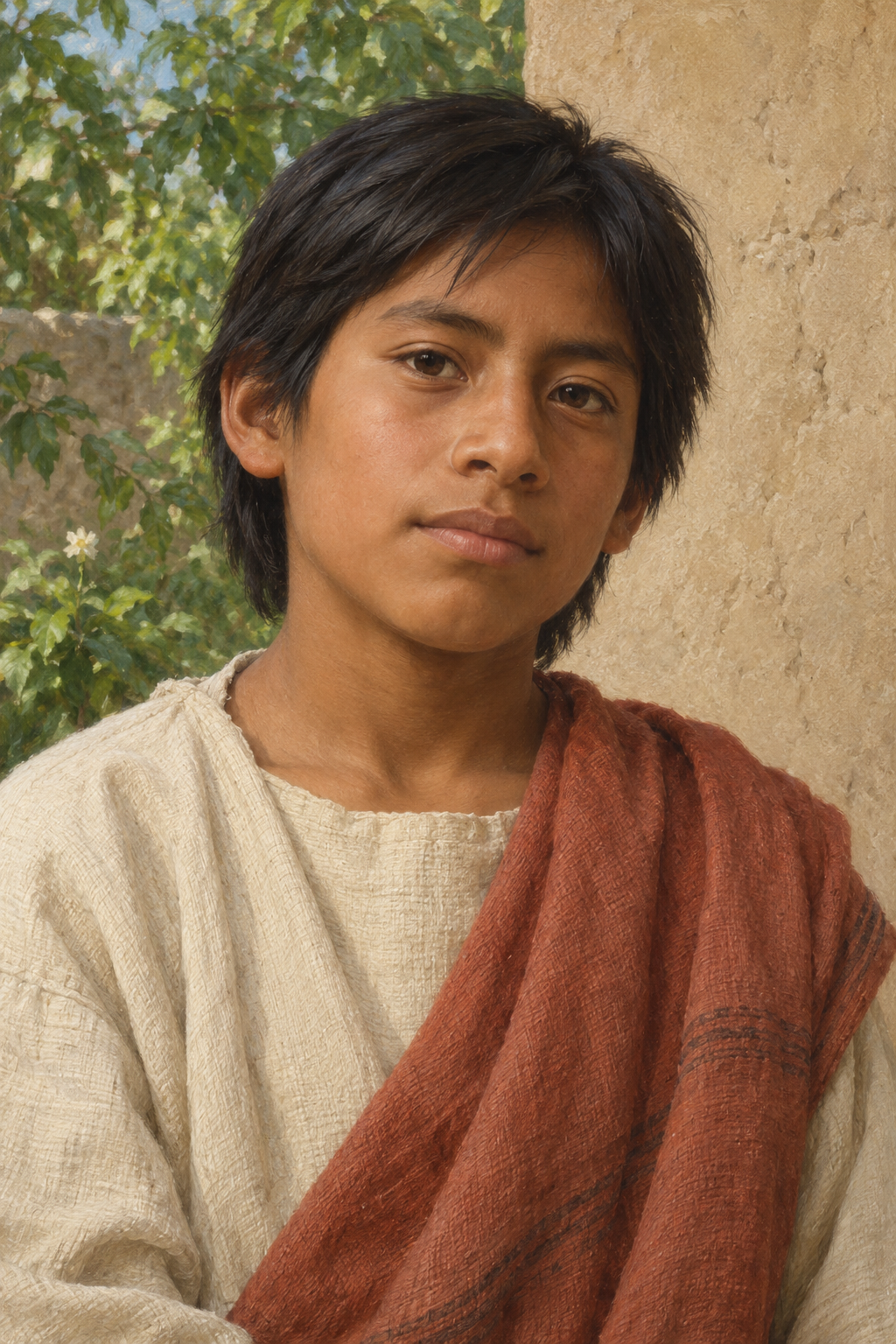
About Antonio of Tlaxcala
Antonio studied with the Franciscans at Tlaxcala. He joined Dominican missionaries with Juan, his servant, and Diego.
Sent to collect religious images from households, Antonio and Juan were killed by residents. Motolinía reports that Antonio tried to defend Juan.
The account connects their deaths with the removal and destruction of Indigenous religious objects. Its hostility toward established beliefs reflects the missionary author’s commitments.
Historian Antonio Rubial García examines how the boys’ story functioned within colonial religious writing. He argues that Motolinía presented their deaths as evidence of the Franciscan mission’s achievements and as instruction encouraging the denunciation of traditional religion. Later Franciscan chronicles repeated the story. Their repetition therefore needs to be distinguished from independent testimony about the incident.
Rubial also describes a recurring narrative pattern: a named Christian hero faces opponents portrayed through broad stereotypes of cruelty and evil. Extended speeches, accounts of suffering and reports of extraordinary events help shape the religious meaning of such stories. Reading Antonio’s account with that awareness preserves its importance without treating every narrative detail as independently established history.
The memory of the children acquired a further local meaning. Rubial describes an eighteenth-century movement led by Ignacio Faustinos Mazihcatzin, a priest descended from Indigenous nobility. Their remembrance affirmed Tlaxcala’s place in the history of Christianity and the capacity of Indigenous people to be recognized as saints. This later use of their memory shows how a martyr story could also express a community’s dignity and belonging.
Luis Antonio Nava García’s comparison of the sources identifies further difficulties. Unlike the account of Cristóbal, Motolinía’s account of Antonio and Juan does not identify the person from whom he learned the story. Nava also contrasts it with Diego Muñoz Camargo’s version, which does not name the children and describes three boys, two escaping and one being killed. The differences concern the shape of the incident, not simply spelling or a minor chronological detail. They make it inappropriate to combine the narratives into one seamless eyewitness account.
Nava places these accounts beside Indigenous annals describing executions of local rulers, while noting disagreements in chronology and in the officials named. His proposed connection between those records and the children’s deaths is a historical interpretation, not an independently settled identification. More broadly, he asks how missionary intervention affected Indigenous government and religious life. This perspective brings the adults who directed the mission, and the communities whose sacred objects were removed, back into a story often told only through the children’s final actions. It also leaves room to distinguish grief for their deaths from endorsement of religious coercion.
The diocesan explanation of the modern cause identifies a pastoral purpose: offering children and young people examples of lay evangelizers and catechists. It also describes an historical inquiry in 1982, followed by examination in Rome. The diocesan article acknowledges that some later authors reproduce earlier writings. The number of books mentioning the boys consequently cannot by itself establish the number of independent witnesses.
The diocese describes the inquiry as a staged review. A tribunal worked with a historical commission, heard witnesses and sent copies of its proceedings to Rome while retaining the original locally. Later examinations considered the historical case, its theological interpretation and its significance for the Church. The witnesses heard in the twentieth century were part of that inquiry; they were not survivors of the sixteenth-century events. This procedural history explains how the Church examined the cause without turning the modern proceedings into contemporary testimony about Antonio’s death. It dates the local hearings from June to September 1982 and names fifteen witnesses.
Modern recognition followed a distinct process. The Vatican’s account records their beatification by John PaulII on6May1990. It reports that the request for canonization included a dispensation from the study of a miracle. Reports of cures in that account describe devotion and requests made during the cause; they are not presented here as independently demonstrated medical events.
Pope Francis canonized Cristóbal, Antonio and Juan on15October2017. In the ceremony’s homily, he asked Christians to practice love throughout ordinary life. That contemporary interpretation belongs to their public remembrance, alongside the difficult historical setting of the early account.
Francis used the wedding banquet in Matthew’s Gospel to explain that celebration. He described the Christian life through trust, dialogue and forgiveness, and warned against an exclusive claim to God’s invitation. His application to the saints focused on sustained love rather than a single verbal profession. He also urged his listeners to respond to rejection with greater generosity instead of resentment. These were the pastoral terms in which the canonization was presented to its participants. They should be distinguished from a judgment that every method used by the early colonial mission was right.
The group’s Catholic remembrance is23 September. Birth year remains unset; death year is approximate. Tizatlán and Cuauhtinchán are the church account’s birth and death places.
Wondering how to weigh the stories and sources? Learn how to read a saint biography.