Biography
Aquilinus of Évreux
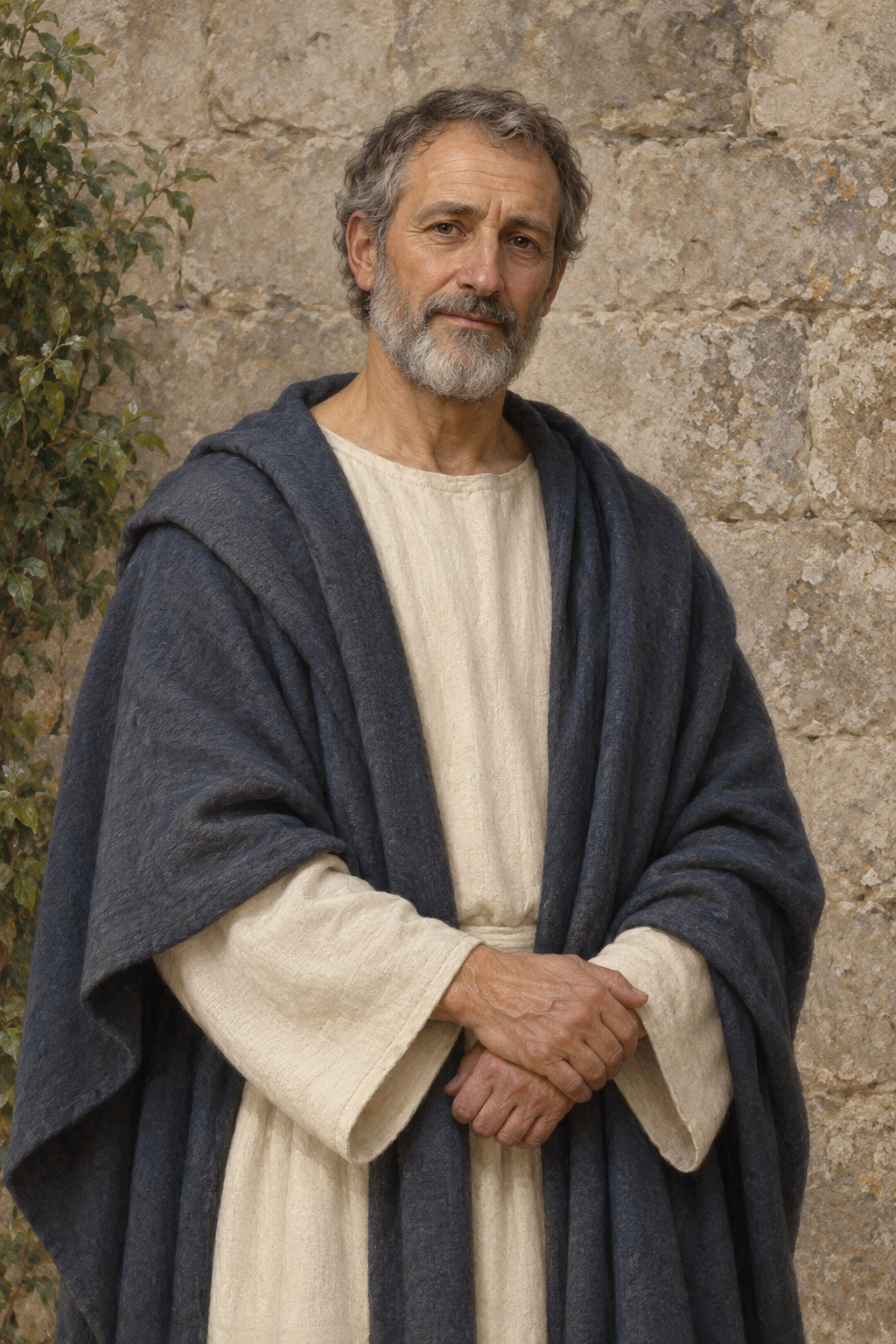
About Aquilinus of Évreux
Aquilinus, called Aquilin in French, is venerated as an early bishop of Évreux. The diocese continues to include him among its saints and celebrates him on 19 October. The memory of his pastoral life reaches us through a late narrative, medieval records, and the history of his cult.
The traditional life places his origins at Bayeux and describes marriage, children, and service under a king called Clovis. His unnamed wife welcomes him back at Chartres and proposes continence, which they agree to make permanent. Together they give generously to people in need and make their home a place of hospitality. After becoming bishop, Aquilinus seeks a quiet cell for prayer and continues his pastoral work. The writer also describes blindness, presenting it through a devotional interpretation. These passages preserve the saint’s remembered example rather than independently verified conversations or medical history. The life gives him forty-two years as bishop.
The life’s forty-two-year episcopate differs from the twenty-five years in the current diocesan account. This discrepancy is another reason to avoid a fixed chronological outline.
Historian Louis Duchesne offers an important caution about the record. In his critical history of the bishops of Gaul, he reports knowing no manuscript of Aquilinus’s life earlier than the twelfth century. He also points to a Corbie martyrology manuscript of that period and concludes that the cult existed at least by the preceding century. Duchesne considers the narrative a possible expansion of an older text, while observing that it does not arrange the bishops in the same order as the medieval episcopal catalogue. His discussion separates evidence for veneration from confidence in the details of a saint’s childhood, marriage, and ministry. The transmitted story remains valuable, but its age and literary form need to be understood before using it to reconstruct a precise chronology.
A different kind of evidence appears in the copied text of a privilege issued by Aiglibert, bishop of Le Mans. Among its episcopal subscriptions is the name Aquilinus, with an expression of assent to the privilege. The closing clause places the act at Le Mans in June, in the eleventh regnal year of King Theodoric. The list itself gives no diocesan label beside Aquilinus’s name, so the identification with Évreux depends on comparison with other evidence. This is a transmitted documentary text, not a surviving autograph. It supplies a trace of an episcopal name within church affairs, without describing the bishop’s domestic life or giving his birth and death dates.
Julien Havet examined this privilege in his study of Merovingian documents. He argued for the dating of one version to June 683, rather than accepting a later version’s problematic date. He treated the episcopal names as an important part of the argument: several could be identified with known bishops, and the placement of metropolitan bishops reflected established documentary practice. Among those he identified was Aquilinus of Évreux. Havet also proposed that the gathering implied a council at Le Mans, while admitting that no other evidence for that council was known to him. His reasoning supports the interpretation of the document and its historical setting; the proposed council should remain a scholarly inference. The entry does not turn conventional life dates into contemporary testimony or establish that every incident in the saint’s later narrative happened as told.
The editors of the Acta Sanctorum likewise resisted assigning an author too confidently. They identified the writer’s Benedictine setting through the prologue’s reference to the monastic rule, but questioned the supposed name Hecelo. That name might have arisen from a misunderstood phrase in the manuscript tradition. They also found the date of composition uncertain: describing the work as old was insufficient to prove that it had been written in the eighth century. These reservations concern the writer of the life, and do not establish that Aquilinus himself belonged to a Benedictine monastery. The distinction helps preserve the boundaries between the bishop’s remembered vocation and the community that later narrated it.
Later evidence brings his cult into clearer focus. A quoted notarial record of an inspection at Gigny on 19 May 1547 describes a reliquary attributed to Aquilinus. Those conducting the inspection took one of two large bones from it and placed that bone in a reliquary associated with Taurinus. The record documents the names under which the remains were kept and an act of relic management. It records an attribution and a physical transfer within the church, without providing independent proof that the bones belonged to the ancient bishop.
The Acta editors also cautioned that accounts of the relics’ movements were not equally clear. They distinguished later testimony from older narratives and noted that references to a saint’s body could mean a portion of the remains. Their conclusions preserve uncertainty rather than a single uninterrupted itinerary.
The current diocese remembers the church erected over Aquilinus’s tomb and the later seminary chapel placed under his patronage. Its present feast is 19 October; it also recalls an older February observance. His continuing place in local devotion can be stated more securely than his exact life dates.
Wondering how to weigh the stories and sources? Learn how to read a saint biography.