Biography
Arey of Gap
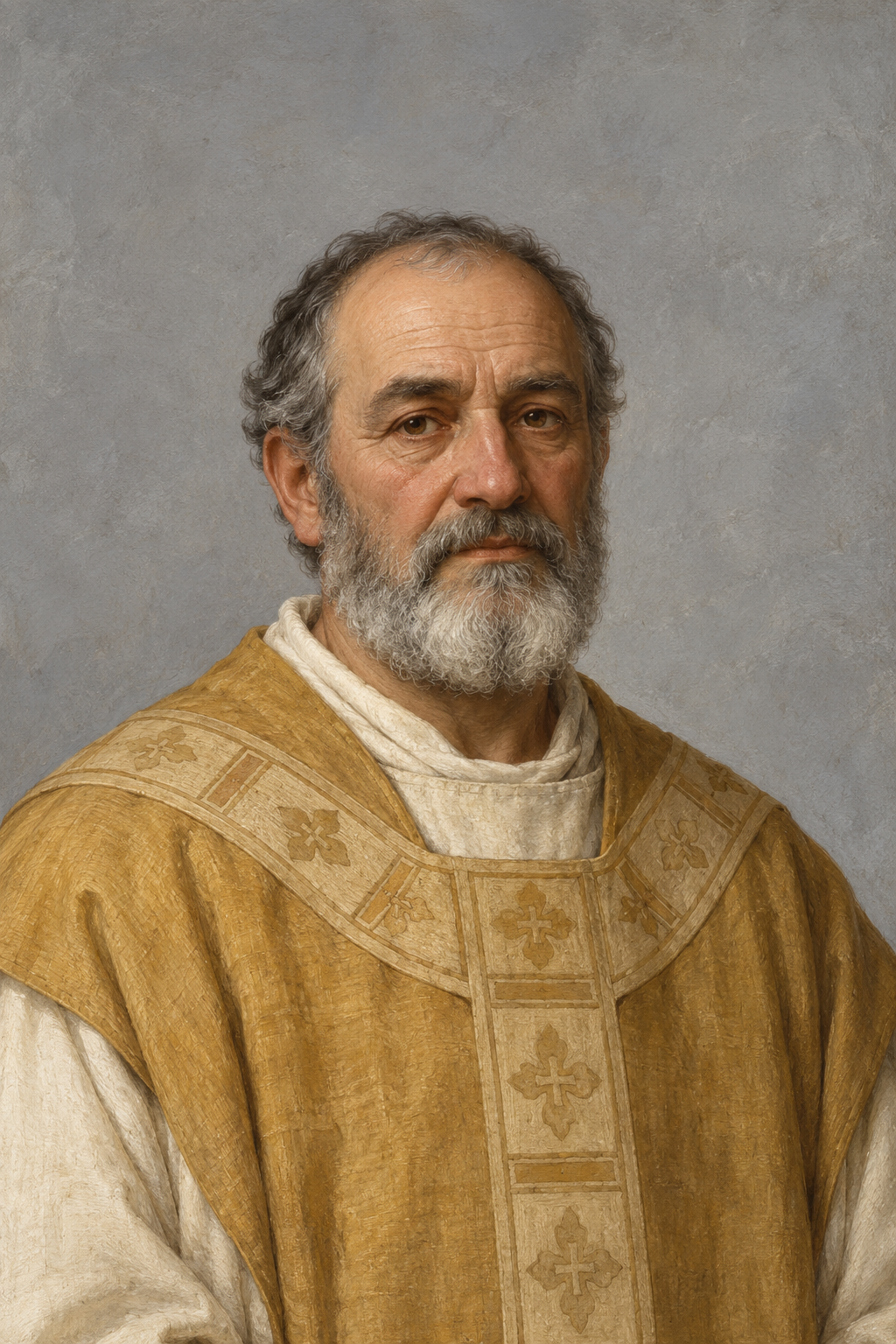
About Arey of Gap
Arey was bishop of Gap in the southern Alps around the turn of the seventh century. The diocesan account remembers him as a pastor concerned with training clergy and supporting the churches entrusted to him. It places his earlier priestly service at Morges in the Trièves and describes a house where he formed young clerics after becoming bishop.
Letters from Gregory the Great bring his work into clearer focus. In one, the pope responds to Arey’s grief after losses among his people. He acknowledges their shared sorrow and urges the bishop to turn his care toward those still living. The same letter recalls Arey’s hurried departure from Rome because of sickness among his people.
Gregory also grants Arey and his archdeacon permission to wear dalmatics, a request that had remained unsettled when the bishop left. He asks Arey to attend a council against simony, the buying and selling of ecclesiastical office, and to send a full written account of its proceedings.
A later letter renews that appeal and praises Arey’s efforts against the abuse. It also asks him to help the monks travelling to Augustine in England, so that they can continue without unnecessary delay. The letter establishes the request for assistance; it does not provide a detailed record of their reception at Gap.
Arey’s veneration continued long after his lifetime. Olivier Hanne’s study of the cathedrals of Gap and Embrun records indulgences granted in 1290 to visitors to Gap Cathedral on the feasts of the Virgin, Arnoux and Arey. His feast had become part of the cathedral’s religious calendar.
Later tradition gave him a memorable animal companion. In a local story, an encounter with a bear disrupts his ox-drawn carriage on the return from Rome. Arey makes the bear take the missing ox’s place in the yoke. This is a legend of the saint’s power over a wild animal, not an independently verified episode of his life.
At Auron, he is remembered under the name Érige. The chapel’s paintings include scenes associated with him, among them a meeting with Pope Gregory. A diocesan account identifies him as a patron of shepherds and farmers, connecting his remembrance with the rural communities of the southern Alps.
The proper calendar of Gap and Embrun commemorates Arey on May 5. The diocesan account also notes that the cathedral canons’ pectoral cross has carried the images of Gregory and Arey on opposite sides since 1853, preserving the memory of their friendship.
The Roman Martyrology remembers him on May 1 and places his death after 604. The differing dates given in later accounts do not support a more precise year here.
Wondering how to weigh the stories and sources? Learn how to read a saint biography.