Biography
Arnold of Soissons
About Arnold of Soissons
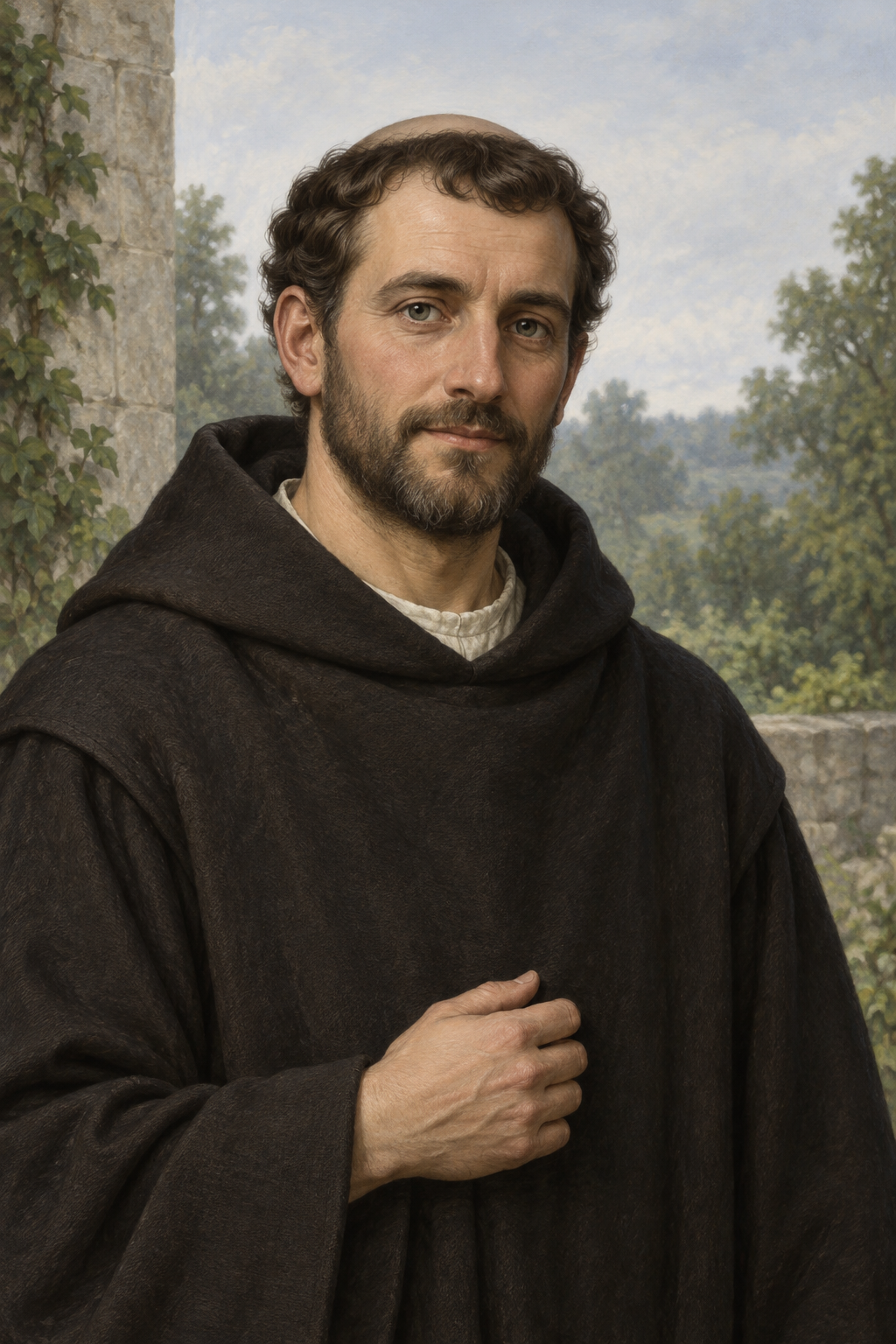
Arnold, also known as Arnulf, was a monk and bishop of Soissons remembered for seeking peace in an unsettled world. His medieval Life describes a former warrior entering Saint-Médard, surrendering his military equipment, receiving monastic clothing, and learning the discipline of the community. He was entrusted with alms and the care of poor people.
The same account presents episcopal office as a duty imposed on a man drawn to solitude. Later, Pope Gregory VII sent him to approach Count Robert of Flanders about men who had lost their position and property. The Life credits his preaching and personal appeals with reconciling enemies around Bruges and Oudenburg. Its portrait of peacemaking belongs to the religious narrative preserved by his biographers.
The modern critical edition places that portrait within struggles over secular and ecclesiastical power. Its publisher’s account emphasizes that both Arnold and the writers who remembered him lived amid violence, church reform, and communal conflict. Peace was therefore more than an abstract virtue in the story they told. It addressed the force that powerful people could exercise against neighbors and religious communities. This setting helps explain why a bishop’s efforts at reconciliation became central to his remembered sanctity.
Historian Nicolas Ruffini-Ronzani explains that Lisiard, a later bishop of Soissons, began the first Life after Arnold’s death. He suggests that the work could rehabilitate Arnold’s memory and offer a model of episcopal holiness during political crisis. Hariulf, abbot of Oudenburg, subsequently revised it. That revision gave greater prominence to Flanders and the relationship between the saint and the young monastic community, while the years at Soissons moved into the background.
The two writers were in contact, and their collaboration extended to accounts of miracles intended to support recognition of Arnold’s sanctity. The later version circulated more widely in medieval manuscripts. Ruffini-Ronzani treats the surviving dossier as evidence for how communities wrote and rewrote religious memory. The texts preserve testimony about Arnold, while also showing what their authors hoped his remembrance would mean for the Church and its people.
Hariulf’s letter to Bishop Lambert makes that purpose visible. He presents his work for episcopal examination and asks that it be passed onward to Lisiard and the archbishop of Reims. The letter also thanks Lambert for bringing relief from hostility that had troubled the abbot. Writing about a remembered peacemaker thus took place within the author’s own need for protection and peace. His account sought a place within a network of church authority. He compares a work without sound judgment to food lacking salt and a building whose measurements are wrong. These images make episcopal scrutiny an essential part of how he hopes the Life will reach its readers.
In his letters to Lisiard and Raoul, Hariulf again asks for judgment, support, and correction. He wants the work to encourage virtue among readers and welcomes the improvement of its expression. His assurances about reliable witnesses belong to that appeal for recognition. They show the care with which he wished the account to be received, while remaining the claims of a committed advocate for the saint’s cult. The letters help readers understand the purpose behind the narrative.
Later Oudenburg remembrance made the theme of peace visible in public art. The local heritage association records three reliefs commissioned in 1946, after the Second World War, representing peace, the abbey’s foundation, and Arnold’s death. Their purpose was to renew devotion to him as an apostle of peace. They were moved to the archaeological museum’s garden in 2009 and restored. These objects belong to a later community’s response to its own experience of conflict.
The same heritage account cautions that no authentic portrait from Arnold’s lifetime survives. It also distinguishes him from Arnulf of Metz, whose stories have sometimes become entangled with his. The abbey foundation is likewise a disputed historical claim: Arnold’s traditional association with Oudenburg should not be turned into certainty about every stage of the institution’s establishment. Such distinctions preserve the particular saint and community being remembered.
At Tiegem, a parish account of the chapel’s 2024 reopening describes a continuing place for silence, reflection, simplicity, and prayer. It records a gathering to honor Arnold that August and identifies him as a patron of peace and brewers. Those descriptions show a living devotional setting. They express what visitors and worshippers seek there, rather than providing medical evidence for the healing stories attached to the spring or the saint.
A parish description of the stained glass at Saint Martin’s Church in Koekelare offers another example of that remembrance. Its Arnoldus window presents him with a staff resembling a stirring implement and a brewing vessel, alongside Oudenburg’s arms. The church’s window-restoration account records work completed in 2005. This imagery illustrates later brewers’ devotion and regional identity; it does not establish that Arnold invented beer or performed a medically verified cure.
Wondering how to weigh the stories and sources? Learn how to read a saint biography.