Biography
Artaldus
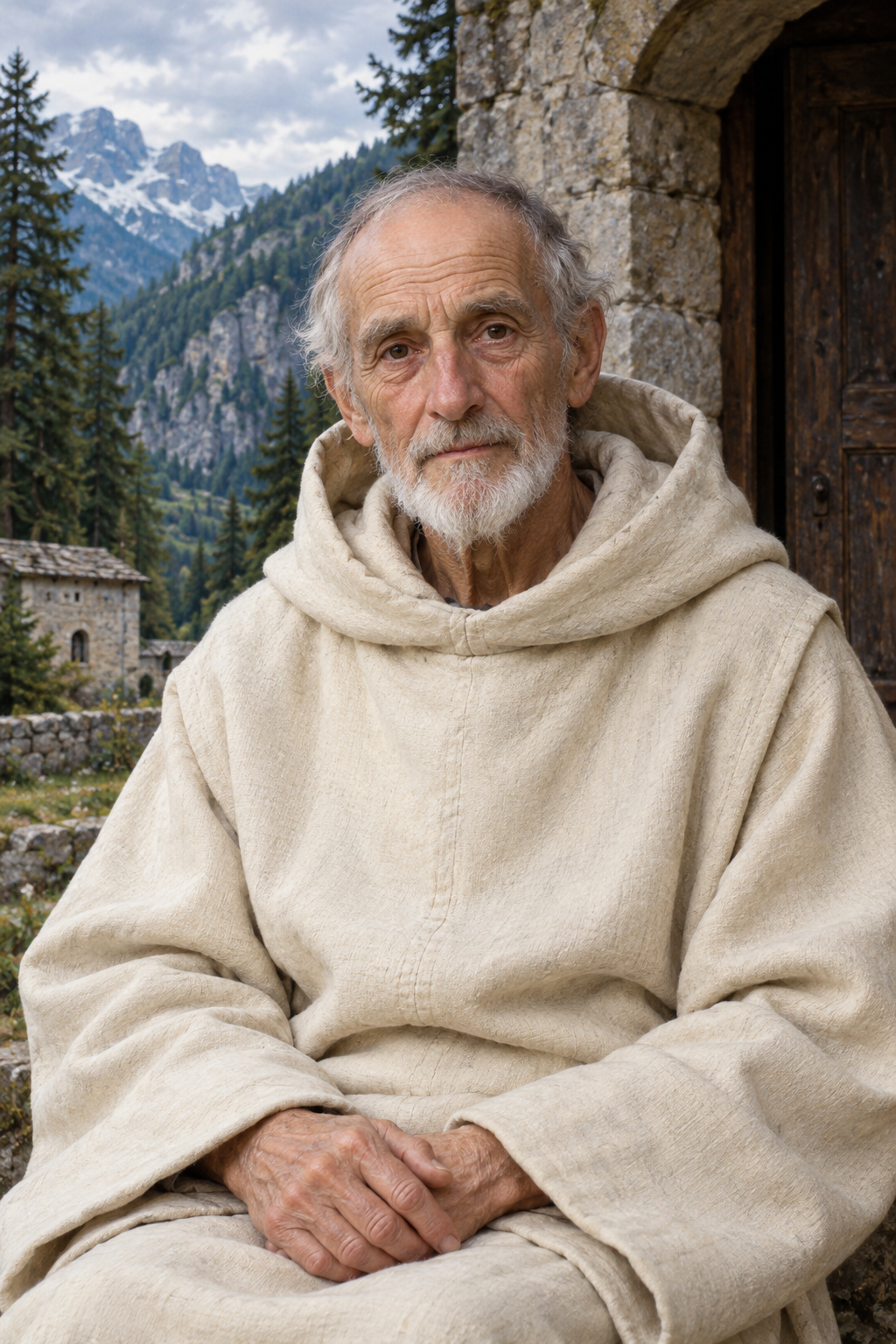
About Artaldus
According to his surviving Latin Life, Artaldus, also remembered as Arthaud or Arthold, exchanged a life connected with a noble household for the discipline of the Carthusian monks at Portes. The account describes prayer, fasting, humility, and careful observance as the beginnings of his religious formation. It then follows his work in establishing a community at Arvières. The brothers first occupied small, simply built cells in a difficult mountain setting; later, with episcopal encouragement and help from benefactors, they established a more substantial monastery. The account portrays Artaldus as a teacher whose example attracted others. When he became bishop of Belley, it emphasizes his attention to poor people, his visits to the sick, and his efforts to reconcile those at odds. Eventually, worn down by age and pastoral work, he sought permission to resign and returned to the solitude he had known as a monk.
A separate Life of Hugh of Lincoln preserves a memorable encounter after that retirement. Hugh made a difficult journey to visit the former bishop of Belley at Arvières. The writer describes the two men finding encouragement in a private conversation before joining the brothers. Artaldus then asked Hugh to tell the community about a peace agreement between the French and English kings. Hugh, whom the account presents as deeply attached to the order’s discipline, answered with a gentle, almost playful rebuke: news that bishops might discuss did not belong inside the monastic enclosure. He redirected the conversation toward spiritual encouragement. The episode leaves Artaldus recognizably human: retired from episcopal responsibilities, still interested in an agreement that ended a royal dispute, and willing to share a fellow monk’s company.
His concern for peace also reached beyond his mountain community. A surviving fragment of Alexander III’s reply addresses the prior of Arvières and commends the devotion and sincerity behind his letter. The old editor’s accompanying account reports that the pope nevertheless rejected reopening judgment of his position or relinquishing his office. Artaldus’s intervention therefore should not be turned into a story of successful mediation. The surviving material shows that sincere proposals could encounter a firm refusal.
There are limits to the detailed Life on which much of his later remembrance depends. The Acta Sanctorum editor reports receiving its text from Leo de Vasseur, a Carthusian, through material sent in 1667. He could not establish the author, the date of composition, or exactly which manuscripts supplied it, and he considered the possibility of a compilation from the order’s records. He also recognized that its account of Hugh’s visit had been taken from Hugh’s Life. Even the familiar birth year around 1101 was obtained by working back from the very advanced age reported at Artaldus’s death. These observations matter when reading the narrative’s confidence about noble origins, chronology, or miracles: a pious account can preserve valuable recollections while leaving their transmission uncertain.
The order’s current historical notice is itself cautious about his connection with the family of Sothonnod. Its research bibliography describes that tradition as unverifiable. It also distinguishes periods when he is attested as prior from a general assumption that he continuously held the office. The current history places his election to Belley in 1188 and his resignation in 1190. These dates are retained as the order’s present account, with the surviving evidence’s limits in view.
Later evidence shows how his remembrance continued at Arvières. In a record dated August 9, 1640, Jean de Passelaigue, bishop of Belley, says that he visited and venerated remains called those of Saint Arthold. He acted at the monks’ request and with permission from the bishop of Geneva, whose diocese included the monastery. The record locates the stone grave near a small doorway of the church and describes the remains being reverently replaced. It also names Carthusian witnesses. This is concrete evidence of a recognized devotion centuries after Artaldus’s lifetime. The inspection records what the participants honored; it does not supply independent biological proof of the remains’ identity.
The monastery’s setting remains part of that memory. The Department of Ain’s heritage account describes the surviving site as a place of ruins rather than an intact charterhouse. It reports that the Office national des forêts maintains the site and that an association established an ethnobotanical garden there. The same heritage service points readers toward the departmental archives, where part of the charterhouses’ records survives in series H. For visitors, the mountain site offers a tangible connection with the community Artaldus helped establish, while its damaged buildings and dispersed records also help explain why a complete reconstruction of his life remains difficult.
Nominis commemorates Saint Arthaud on October 6 and reports that his relics are kept in the church at Lochieu. It also describes papal approval of his cult for the diocese of Belley in 1834. The Norwegian Catholic directory cautions that this approval does not appear in the cause index it consulted. Accordingly, this profile records the present commemoration and leaves a formal canonization date unspecified.
Wondering how to weigh the stories and sources? Learn how to read a saint biography.