Biography
Ascelina
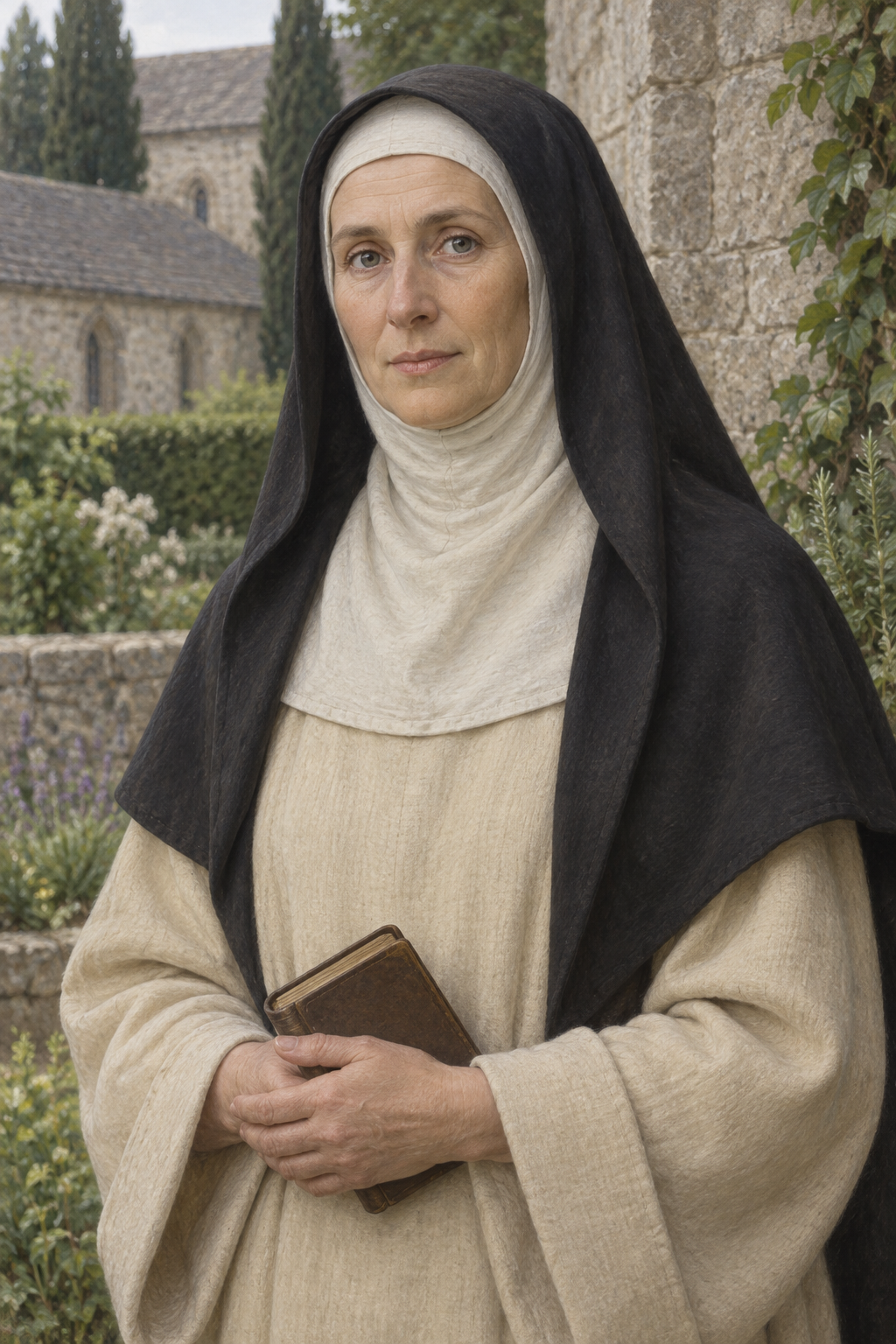
About Ascelina
Ascelina is remembered as a Cistercian woman associated with the religious community near Boulancourt. Nominis commemorates her as Sainte Asceline on August 23.
The abbreviated Latin Life calls her the prioress of the women’s house near the abbey. It portrays a life marked by frequent prayer, keeping God in mind, and a reputation for spiritual discernment. In one episode she advises a monk against leaving his community for what he imagines will be a stricter life. Another brings her to Cologne at an archbishop’s request. The writer also presents childhood visions, prophetic knowledge, and miraculous deliverances. These stories express the religious reputation attached to Ascelina, but the surviving printed abbreviation cannot be treated as a secure record of each event. Even its account of her family belongs to the disputed transmission.
The editors of Acta Sanctorum were unusually explicit about those difficulties. They knew that a Life had been attributed to Goswin, a monk described as her contemporary, but they did not possess that fuller text. The version published by Chrysostomus Henriquez drew criticism for mixing earlier material with later additions. The editor therefore printed the abbreviation with critical notes rather than presenting its contents as equally reliable. Those notes also identify conflicts in proposed parentage and chronology. This criticism applies to the text they had before them; it does not establish that every earlier account of Ascelina was fabricated. It does explain why a precise birth year or a detailed family tree would give more confidence than the available reading supports.
Modern scholarship continues to distinguish the author’s works. Stefano Mula’s entry in the Dictionary of Cistercian Saints attributes a Life of Ascelina to Goswin and separately lists his Life of Hemelina, his collection of miracle examples, and his account of Everard. Its bibliography also identifies a modern edition of the two women’s Lives from the Florence manuscript Ashburnham 1906. This provides an important research reference beyond the old abbreviation. The full edition has not been inspected for this profile, so its existence is not being used to certify the disputed episodes or settle Ascelina’s parentage.
Later records offer firmer evidence of remembrance than of her childhood. In the material attributed to Nicolaus Des-Guerrois, a shrine inscription places the remains called those of Goswin, Emelina, and Ascelina together beneath a consecrated altar in the abbey church. His account also describes relics being presented for public veneration. The record’s value is that it documents the devotion its writer and informants recognized at Boulancourt. Shared veneration does not, by itself, prove a biological relationship between the two women, and the shrine record cannot authenticate every miracle in the Life.
Her chronology remains provisional. The Norwegian Catholic directory preserves different proposed birth years and more than one date associated with her remembrance. The printed Life’s ending places her death around 1195. Its notes acknowledge a competing year in another writer. This profile therefore leaves her birth date and birthplace unknown and treats 1195 as an approximate death year. It records August 23 as the present commemoration reported by Nominis, without turning a feast into proof of an exact day of death.
Wondering how to weigh the stories and sources? Learn how to read a saint biography.