Saint profile
Athanasius I of Constantinople
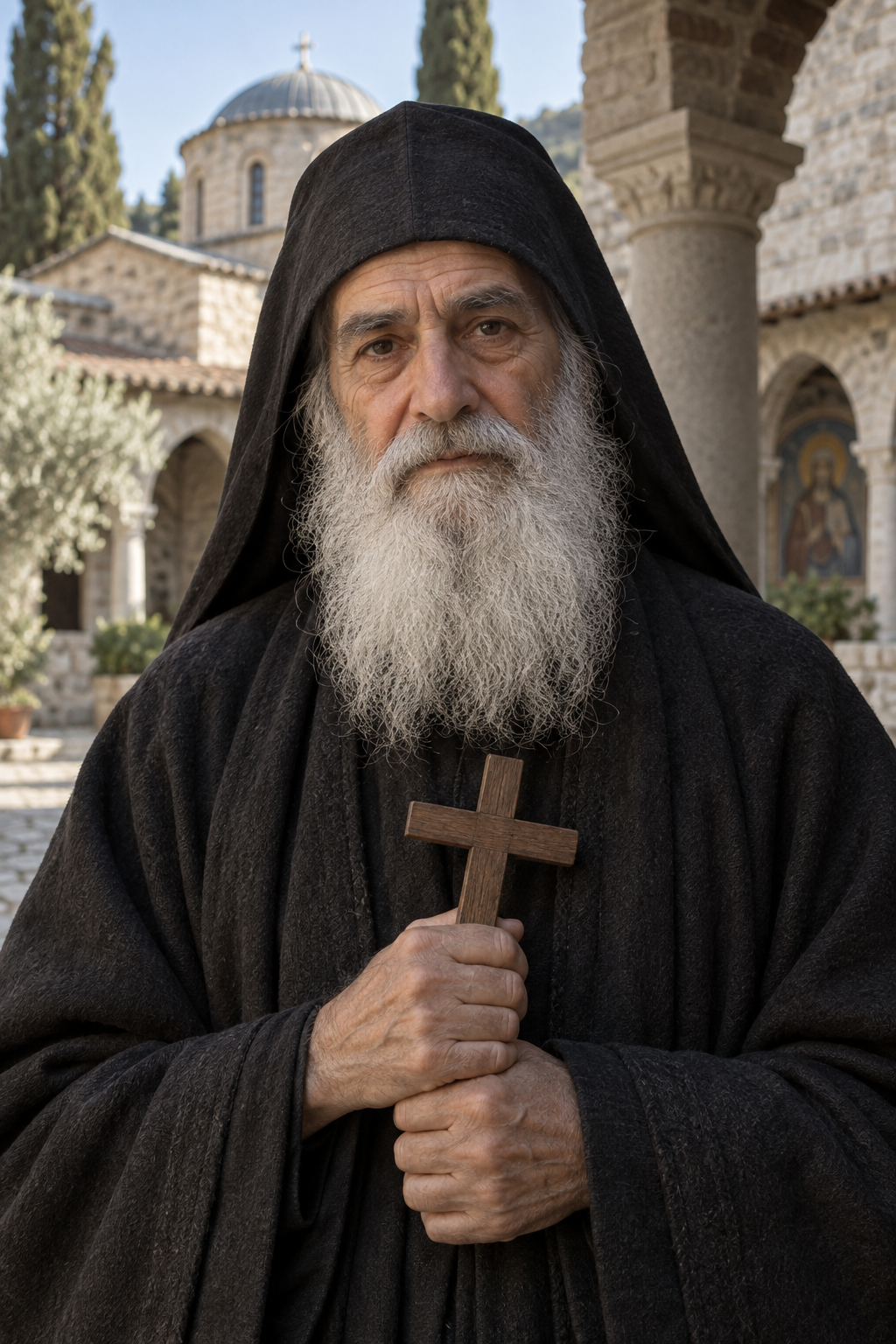
About Athanasius I of Constantinople
Athanasius I brought a monk's demanding habits into the leadership of Constantinople's Church. He served as patriarch twice, from 1289 to 1293 and again from 1303 to 1309.
His early life began far from that office, although neither his birth year nor his birthplace is entirely settled. Demetrios Constantelos reports competing birthplace traditions, with modern scholarship favoring Adrianople. The young man, originally called Alexios, left home for monastic life near Thessalonica. He later worked as a cook at the monastery of Esphigmenou on Mount Athos. His journeys took him to the Holy Land and monasteries in Asia Minor. At the monastery of Saint Lazaros on Mount Galesion, he became a priest and devoted himself to reading. He eventually established a community near Mount Ganos in Thrace, gathering disciples around him. A birth around 1230 is one scholarly estimate; his exact age remains uncertain.
The received Orthodox life remembers the patient discipline behind those journeys. It describes three years of work in the dining service at Esphigmenou on Mount Athos and his effort to live with very little. He sought solitude, but his reputation also drew people who wanted guidance. The Orthodox Church in America's account recalls a women's monastery among his foundations. It places Emperor Andronicus Palaeologus among those who recommended him for the patriarchate. Once in office, the monk had to deal with a wider community than any single monastery. His efforts to correct the clergy brought opposition, and after his first resignation he returned to a monastery he had founded. The same account remembers his recall to office and a later return to monastic retirement.
Athanasius expected bishops to remain close to the people entrusted to them. The Ecumenical Patriarchate's account emphasizes his insistence that bishops living in Constantinople return to their own dioceses. He also tried to restrain monks who wandered outside the discipline of their communities. Those expectations made enemies among the very people whose conduct he hoped to change. Bishops and monks who resented his measures became personal opponents, and the patriarchate's account connects their attacks with his two resignations. His reforming work was therefore neither a quiet administrative success nor an undertaking that everyone welcomed. The conflict concerned where clergy belonged and what their vocation required of them in daily life.
His concern for the city also took the form of practical relief. During the hunger and cold of his second patriarchate, he organized food for people in need. Cahit Mete Oguz's study of his letters describes the gruel kitchens and the use of church resources to support them. Athanasius asked wealthy people either to support refugees themselves or to contribute to a relief fund. He criticized the hoarding of grain and the search for profit while neighbors were hungry. His letters could also be sharply self-critical: having enough to eat himself troubled him when others lacked food and warmth. Relief was not simply a subject on which he advised someone else.
These efforts belonged to a period of insecurity, when Constantinople faced military threats and a much reduced empire. Athanasius wanted to defend Orthodox religious life as well as improve the city's condition. His outlook also had exclusionary edges. John Boojamra's study identifies hostility toward Latin religious influence and cites letters expressing hostility toward the city's Jewish community. His defense of the poor should not erase those attitudes. The same study shows his involvement in imperial family policy: he opposed a project to send an imperial son to Italy. Such interventions brought the patriarch's convictions into decisions that extended well beyond the care of a monastery or a parish. Boojamra records that the family's eventual choice was Theodore, the middle son, rather than the original candidate. Theodore later married into a Genoese family and accepted papal obedience, illustrating the religious concerns surrounding the proposal.
One surviving letter offers a smaller, more personal glimpse of his exchanges with another church official. After receiving a book as a gift, Athanasius returned it to the sender. In the French translation published by Pantelis Golitsis, he says that neither he nor his circle has an appetite for the kind of enrichment it offers. He presents keeping an unused volume as an injustice to people eager to read it, and ends by asking for prayers. Golitsis notes the letter's irony; its courteous language should not be turned into a simple story of grateful acceptance. The exchange preserves a voice capable of pointed criticism even in a letter about a gift.
His last years and exact death date remain uncertain. An estimate reported by Constantelos places his death around 1315, but no definite date is established. The lasting importance of his work lies in its combination of pastoral responsibility and material help: questions of hunger, public conduct and church discipline became matters for which he expected religious leaders to answer.
Explore similar vocations
Prayers for Athanasius I of Constantinople
Athanasius I of Constantinople: sourced prayer excerpt
pray to Christ God for the salvation of our souls.