Biography
Athanasius the Athonite
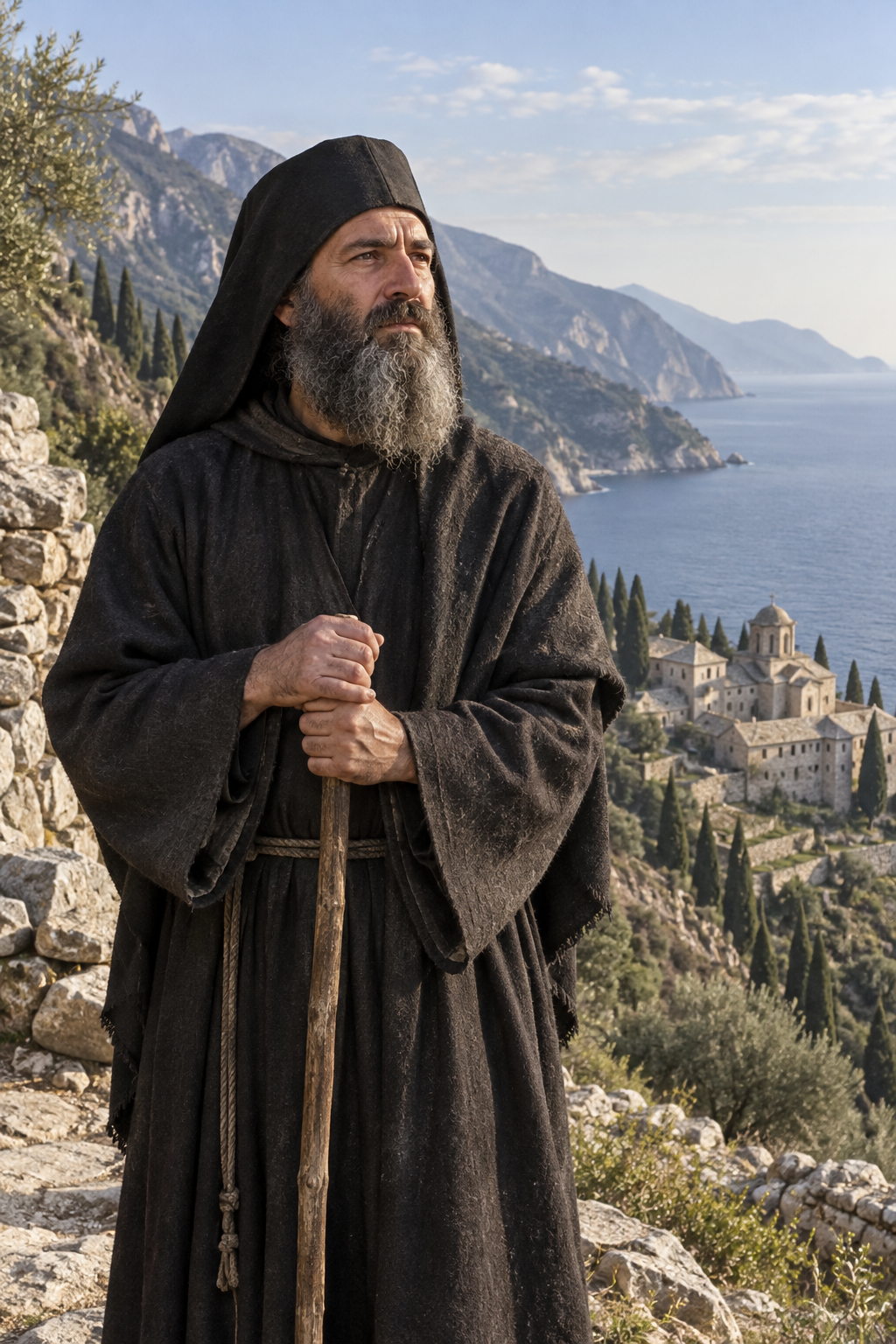
About Athanasius the Athonite
OCA's life gives Athanasius the baptismal name Abraham and places his early story in Trebizond and Constantinople before Kyminas. These are received details from hagiography, not independently recovered childhood chronology. Speeches and interior motives are therefore omitted.
GOARCH's commemoration gives the broad sequence of Kyminas, Mount Athos, and the Great Lavra. This ecclesial synopsis supports the received identity and feast, but it does not independently prove every episode in a shared hagiographic tradition.
The editors date the Typikon to 973–975 and attribute it, along with the Rule and Testament, to Athanasius. The Typikon gives an institutional account of the Lavra's foundation. Its editors caution that it omits episodes and differs from hagiographic chronology.
OCA's church history places the Great Lavra's foundation in 960 and calls it the first large cenobitic monastery on Mount Athos. It names Nikephoros II Phokas and John I Tzimiskes as strong supporters. Modern scholarship commonly locates construction in the early 960s, so an approximate 960–963 range is more honest than forcing the sources into one day or year. The institutional importance is clearer than the exact starting date: Lavra became a major organized community on a peninsula already inhabited by ascetics.
The Rule and Typikon prescribe common worship, discipline, administration, material provision, and succession for the Lavra.
OCA ends the life with a fatal construction collapse. That traditional episode is retained, while its prophecy and speeches are omitted. OCA's church history gives 1003, but reviewed scholarship uses nearby alternatives, so no exact death date is proposed.
OCA and GOARCH both commemorate Athanasius on July 5. The June 12 page attached to the index merely mentions him inside another life and cannot establish his feast. This corrects the present observance without resolving disputed life dates.
The Great Lavra became a major organized community on a peninsula already inhabited by ascetics, with a history shaped by imperial patronage and communal governance.
Wondering how to weigh the stories and sources? Learn how to read a saint biography.