Biography
Audoin of Rouen
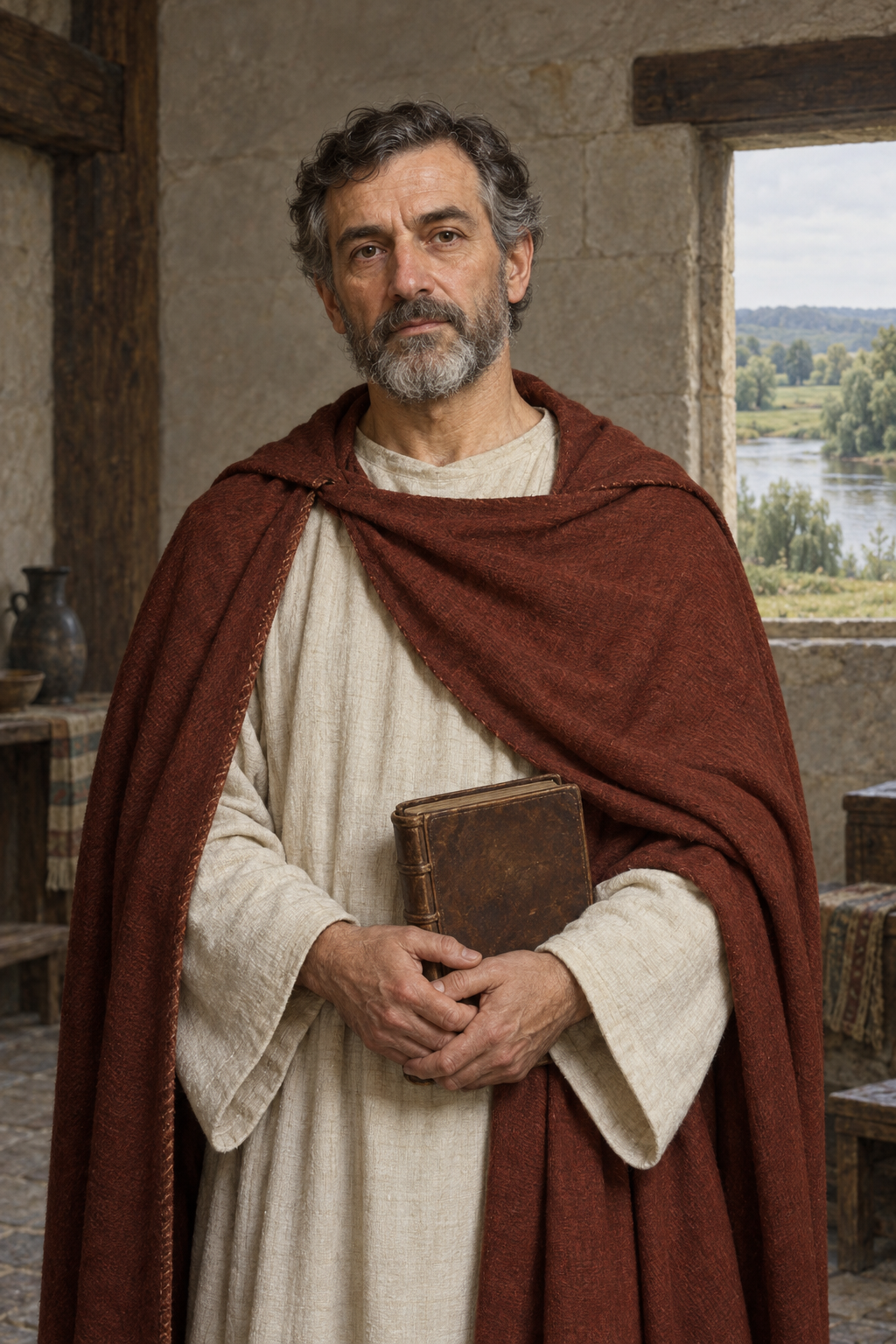
About Audoin of Rouen
Audoin of Rouen, also known as Ouen, moved from royal service into the leadership of a church. His career belonged to the seventh-century Frankish world, where political responsibilities and religious commitments often met in the same people.
The Catholic account gives an approximate birth year of 602 and identifies Sancy-les-Cheminots, near Soissons, as his birthplace.
An older geographical identification preserved in Acta Sanctorum names Sanciacum or Sanctiacum, a village near Soissons. It associates the place with property belonging to Audoin and explains the variation in the village’s name. That evidence is a reported historical identification, rather than a birth certificate. The early Life itself uses a broader reference to Soissons. The traditional village identification can therefore be retained without claiming that every surviving text supplies precisely the same place label.
The shorter Life remembers him as Dado, one of three brothers, and describes service under Dagobert. Its account joins courtly responsibility with prayer and generosity to the poor. It also connects him closely with Eligius before placing him in the episcopal chair at Rouen. As bishop, he is presented preaching and supporting churches and communities of both men and women. These are the main elements of the received portrait of his work. The writer also praises severe bodily austerities and recounts miracles; those passages express the ideals of the narrator and are not independent medical or physical evidence.
The historical setting helps explain why becoming a bishop did not end his political role. In Late Merovingian France, Paul Fouracre and Richard Gerberding describe a society in which royal courts organized relationships among powerful families. They place Audoin and Eligius among Dagobert’s important counsellors and date their episcopal ordination to 641. Later, they place Audoin on the council serving Queen Balthild’s regency, alongside Ebroin and other leading figures. Their analysis emphasizes the importance of personal loyalty: a bishop’s institutional title alone does not explain his political interests or alliances. This makes Audoin’s career more understandable as a continuing participation in government, rather than a simple division between an earlier public life and a later religious one. The authors’ discussion also warns against treating the political narratives as entirely transparent, since the surviving sources can be strongly partisan.
That involvement requires a careful account of conflict as well as reconciliation. The Norwegian church biography notes his support for Ebroin and the possibility that it implicated him, perhaps unintentionally, in the mistreatment of Leodegar and Philibert. This is a qualified assessment, not a demonstrated personal order to harm either man. It remains relevant alongside his reputation for peace-making. A responsible account cannot turn his later recognition as a saint into a claim that every political judgment was harmless or that the disputes surrounding him were straightforward.
The printed sources themselves show how a reputation can acquire layers. The old critical editors distinguish the shorter Life from later, expanded accounts. They say that they had only one complete manuscript witness for their first edition and supplied some conjectural words, marked with brackets, to make difficult passages intelligible. They also question an attribution of the longer prose account to Fridegod and distinguish it from a later verse Life. These are editorial judgments about the texts, not proof that the early portrait is false. They matter because a smooth modern story can conceal differences of wording, authorship, and chronology. The longer account cannot simply be treated as a second contemporary witness confirming every detail of the shorter one.
The shorter Life gives particular attention to efforts to restore peace between Neustria and Austrasia. It describes a journey to Cologne and places his final illness at the royal estate called Clipiago. His body is then taken to Rouen for burial.
The current Diocese of Rouen’s historical summary remembers Ouen among its early bishops and gives 684 as the end of his life. Older printed chronology also gives 683, so the retained death year is approximate.
Nominis records his local Catholic feast on August 24.
His later memory became part of the city’s architecture. Rouen’s heritage account links the burial tradition with the basilica of Saint Peter and the subsequent development of the abbey church. It carefully presents construction of the early basilica during his lifetime as a possibility. The great Gothic church now bearing his name belongs to much later centuries: the city dates the start of that project to 1318 and the present western façade to the nineteenth century. The building remains associated with worship and public cultural events. Its history therefore witnesses continuing remembrance of Audoin, rather than providing the setting he would have seen during his episcopate.
His remembrance also extended beyond France. The Norwegian church reference identifies churches carrying his name in Bristol and Dublin, where the forms Ewen and Audoen preserve different versions of Ouen. These dedications show the geographical reach of his later cult, without establishing that he visited either city.
Wondering how to weigh the stories and sources? Learn how to read a saint biography.