Biography
Augustine Yu Chin-gil
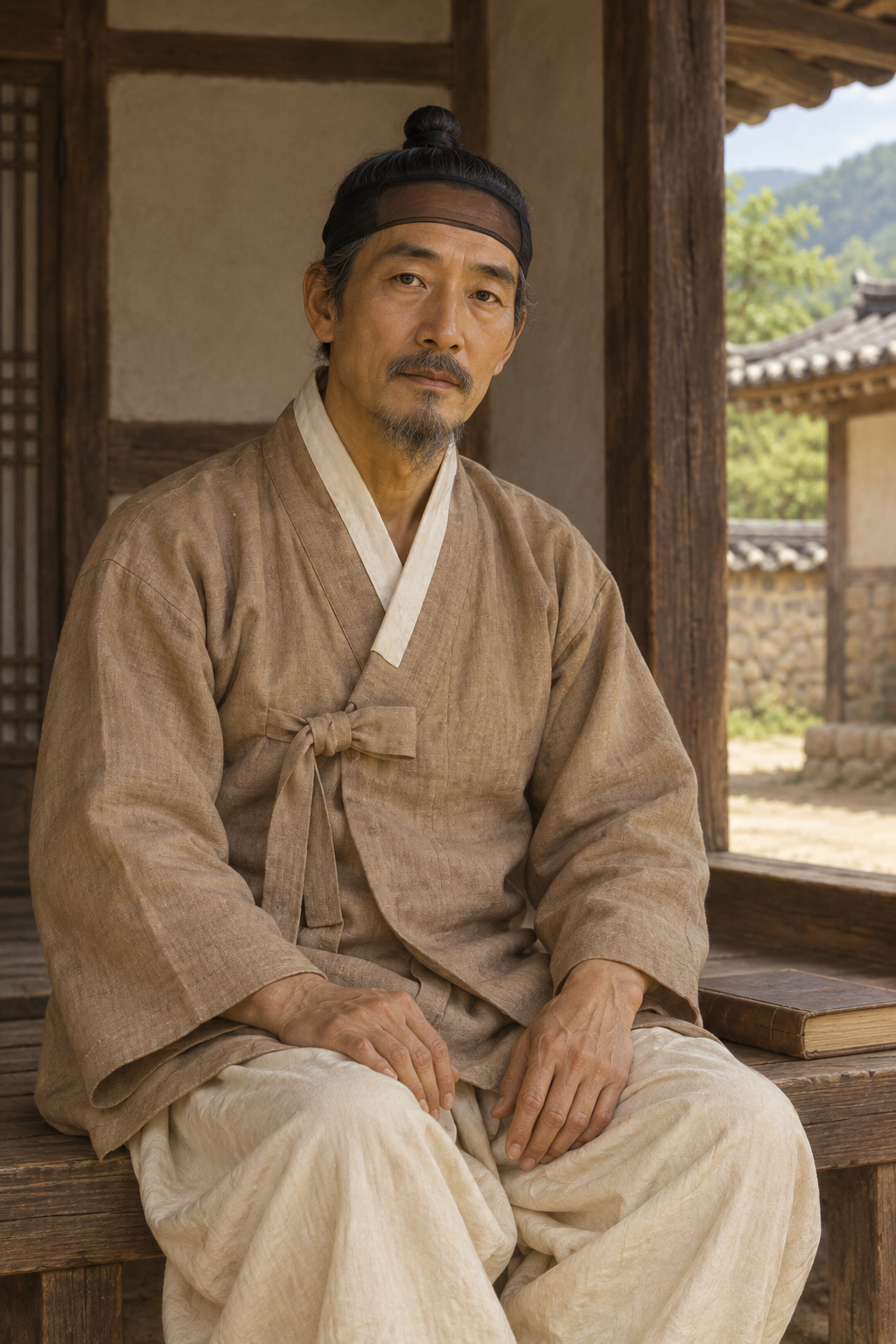
About Augustine Yu Chin-gil
Augustine Yu Chin-gil came from a family of government interpreters in Seoul. Born in 1791, he studied Buddhism and Taoism while seeking answers about human life and the world. The Korean Catholic Encyclopedia dates his encounter with part of Matteo Ricci’s teaching to 1822. He sought instruction from Catholics and worked with Paul Chong Ha-sang to obtain priests for Korea. His interpreter’s position enabled him to join a diplomatic journey to Beijing, where he received baptism in 1824.
The bishops’ conference preserves a received conversion account. It describes fragments of Ricci’s writing reused inside an old chest, followed by instruction from Paul Yi Kyong-on. This is a received conversion story; the account does not identify a surviving chest. Augustine learned prayers and commandments before visiting the mission in Beijing.
Augustine and Paul addressed a petition to the pope in 1825. Written in Chinese, it passed through church officials in Beijing and Macao before translation into Latin and dispatch to Rome. The encyclopedia records its receipt in 1827. Korea became an apostolic vicariate in 1831, with Barthélemy Bruguière appointed its bishop. Augustine’s efforts were part of this developing connection between Korean lay Catholics and the wider Church.
A letter from Augustine and his colleagues to Bruguière survives in a published French transcription. The compiler labels it 1835 and identifies it by the twelfth lunar month. The writers thanked the bishop and Joseph Wang for helping their community obtain a priest. They also explained why they had previously hesitated to escort a European bishop across the frontier: his appearance might attract attention and endanger Catholics. Their alternative proposal was for the bishop to arrive by a large ship near the capital and openly request permission to preach. They stressed that this proposal did not mean they wished to reject him.
The same letter agreed to a frontier reception after further instructions from Bruguière. It described a shop meeting point, identifying characters and agreed handkerchiefs as recognition signals. The writers warned that the Catholics lacked money for the bishop’s accommodation and support. They estimated a basic cost of five hundred taels and explained that more elaborate arrangements would require considerably more. Preparations, they said, would have to match their resources and circumstances. Other details were entrusted to Wang to convey orally rather than written down.
A second letter, dated in the first lunar month of 1835, names Augustine Yu, Charles Cho and Francis Kim as its signatories. They acknowledged a message brought by Wang and confirmed their intention to receive the bishop. The journey should wait until winter, they wrote. Their proposed arrival period was a window rather than a guaranteed day, and arrangements would depend on conditions at the frontier. The bishop should assess conditions on reaching the meeting area. The letter describes preparations rather than a completed arrival.
The signatories distinguished money intended for Pacificus Yu from money reserved for the bishop. They reported one hundred taels for the priest and five hundred for preparing the bishop’s reception. Chinese goods were to be sold in Korea to finance further purchases, with the accounts kept separate. They also acknowledged receipt of missals, books and sacred objects to be distributed according to an inventory supplied through Wang. They promised to welcome European missionaries. Augustine and his colleagues organized travel, finance and supplies.
A different perspective appears in Charles Cho’s deposition, recorded during the government proceedings of September 1839. The published translation attributes to Charles an account of repeated Beijing journeys with Augustine, instruction received from him and Augustine’s purchases of religious books and pictures. It also describes Augustine arranging missionary reception with a Chinese intermediary. This testimony was recorded in a coercive prosecution, and its hostile religious labels are not neutral descriptions.
The records also contain a difficult disagreement. A police report dated September 17 attributes Sebastian Nam’s arrest to information from Augustine. The church biography instead remembers Augustine refusing to identify Catholics. The police allegation should not be treated as an independently verified betrayal, but neither should it be erased from his history.
Augustine’s formal death sentence, dated September 22, accused him of bringing foreign priests into Korea and arranging for young Koreans to travel abroad. It identifies him as an interpreter and orders his execution. The document establishes the government’s accusations and sentence, rather than the truth of its charges of treason.
A condensed royal chronicle groups his execution with others under September 21. This differs from the September 22 sentencing document and the church chronology.
According to the bishops’ conference, Augustine was arrested in July 1839 and refused to abandon Catholicism. It dates his execution outside Seoul’s Small West Gate to September 22, with Paul Chong Ha-sang. His son Peter Yu Tae-chol also died during the persecution. Augustine is remembered for helping connect a largely lay Catholic community with priests, books and church authorities abroad.
Wondering how to weigh the stories and sources? Learn how to read a saint biography.