Biography
Augustine Yu Hang-geom
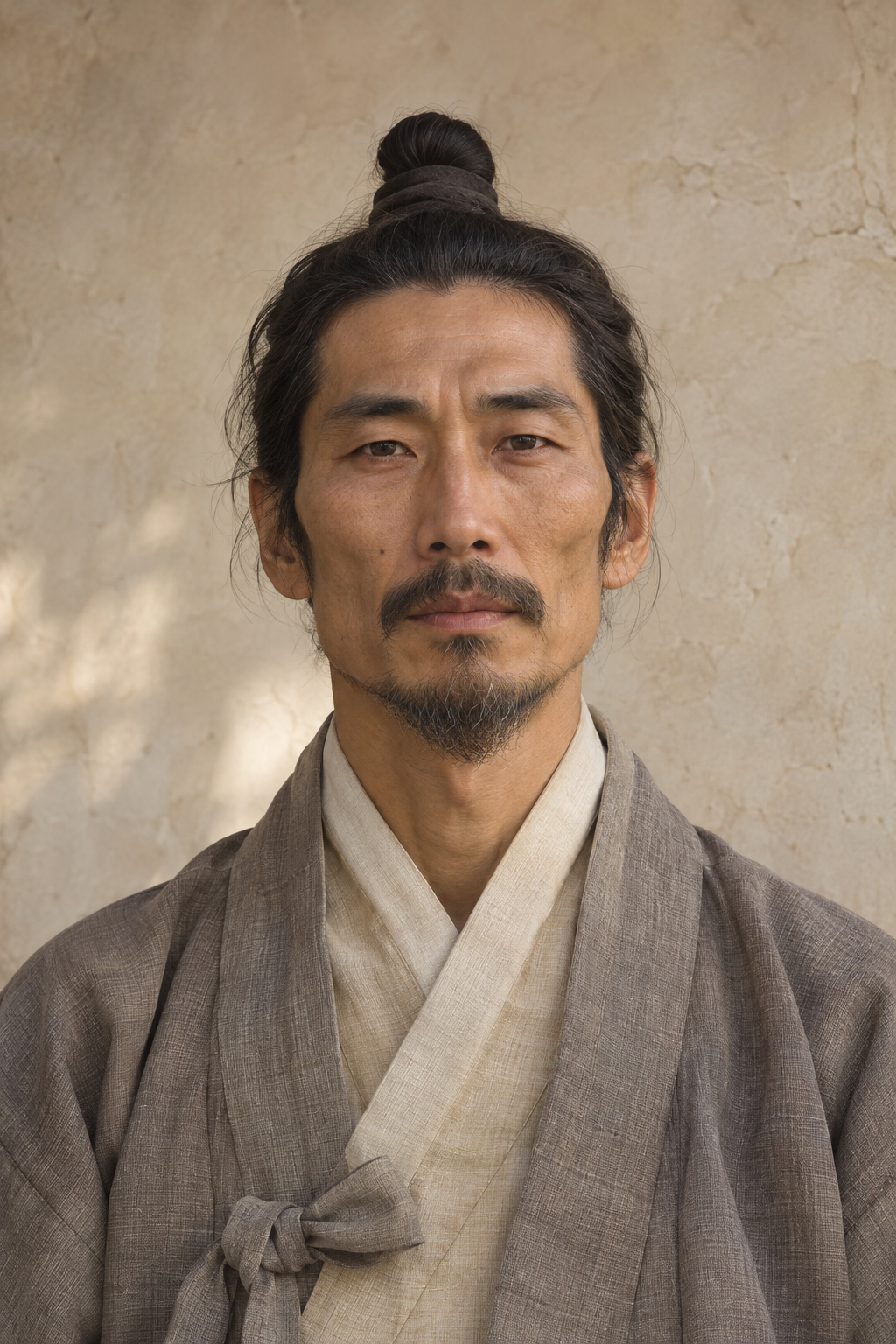
About Augustine Yu Hang-geom
Augustine Yu Hang-geom was born in Chonam near Jeonju in 1756. His encounter with Catholicism took him beyond his home region to the Gwon family at Yanggeun. There Francis Xavier Gwon Il-sin instructed him in the new teaching, and Peter Yi Seung-hun baptized him. Returning home, he taught relatives and members of his household. His position and resources helped make that household an important center of the developing Catholic community in Jeolla-do.
His family belonged to the Jinju Yu lineage, whose standing in Jeonju developed through marriages and educational achievement. Historian Bang Sang-geun’s examination-register study places it among recognized local families, although it lacked the high officeholding of more prominent lineages. His older brother Yu Ik-geom passed the licentiate examination in 1783; Augustine and his younger brother Gwan-geom also pursued examinations. Their father Yu Dong-geun married a daughter to Hong Deuk-yeon of Iksan, another successful candidate in 1783. His brother’s 1783 examination cohort included Yun Ji-chung and the brothers Jeong Yak-jeon and Jeong Yak-yong.
The young Korean Catholic community initially tried to provide religious ministry without an ordained priest. In 1786 Augustine was appointed to its improvised clergy and undertook celebrations and sacramental acts at home. Study then led him to recognize that the arrangement was not valid: a layman could not acquire priestly authority through the community’s appointment. He informed Yi Seung-hun and stopped those activities. His response was to support obtaining an ordained priest rather than continuing a ministry he now believed unauthorized. The attempt to secure guidance from Beijing led to the mission undertaken by Paul Yun Yu-il in 1789.
In 1790 his name appeared among Jeolla scholars petitioning for royal recognition of Dodong Seowon, a Confucian academy in Buan.
The official biography also remembers his generosity toward poor neighbors and people in his own household. It presents that care as part of his attempt to practice what he taught, extending concern across differences of wealth and social position.
Books remained important to his religious life. Bang Sang-geun traces his borrowing from his cousin Yun Ji-chung, his visits to the Gwon household at Yanggeun, and discussion of Catholic writings at Hwang Sa-yeong’s house with Choe Pil-gong and Choe Pil-je. The same study places the Yu brothers in a wider network of copying and lending between Seoul and Jeolla. It distinguishes recorded contacts from a further inference: that books copied around Yun Ji-heon’s community at Gosan supplied religious instruction in Jeonju. Bang also suggests that Gwon Il-sin may have introduced Augustine to the geographic work Zhifang waiji, which Gwon possessed.
His faith had already been tested in 1791. After the prohibition of ancestral rites reached the Korean believers, he buried his ancestral tablets. During the ensuing crisis he went into hiding and later secured release by professing to abandon Catholicism. He subsequently resumed religious activity. Father James Zhou Wen-mo’s arrival made ordained ministry possible. He sent Yu Gwan-geom to invite Zhou, who visited his home during provincial travel undertaken to avoid a royal arrest warrant. In 1796 he joined his brother and a younger relative in providing money for Zhou’s effort to seek foreign help for the mission.
His family participated in that religious life. His eldest son John Yu Jung-cheol married Lutgarda Yi Sun-i, and the couple adopted a shared commitment to chastity. Other children grew up within the same Catholic household.
In 1801 Augustine was arrested and taken from Jeonju to Seoul. The questioning increasingly concentrated on a plan to bring a Western ship and missionaries to Korea. Nam Ho-hyeon’s analysis distinguishes that proposal from the accusation that the believers intended a forceful showdown with the government. Testimony about such a showdown was disputed and changed during interrogation. Under severe torture, Augustine first acknowledged involvement in arranging the ship; in a later interrogation, he attributed a forceful-showdown remark to Yun Yu-il. The investigators treated these answers as evidence of conspiracy. Nam notes that Augustine substituted the name of the dead Yun Yu-il for the living Hwang Sim, protecting someone who remained at large. The surviving interrogation questions are incomplete, limiting reconstruction of exactly what he was asked. The highest treason statute was applied before Hwang Sa-yeong’s Silk Letter was discovered; that later document was not the evidence on which Augustine’s sentence had originally rested.
Convicted of treason, Augustine was returned to Jeonju and executed outside its South Gate on October 24, 1801. His sons John Jung-cheol and John Mun-seok also died during the persecution, and his daughter-in-law Lutgarda was executed the following year.
The household’s destruction also had consequences for children who survived. Three younger children were sent to separate islands as enslaved exiles. The family lost freedom, property, and the ability to remain together.
Augustine’s daughter Seom-i is generally identified with the woman described in Ha Gyeom-rak’s later account of Geoje. That account describes an enslaved seamstress who resisted marriage because she did not want her children to inherit enslaved status.
Wondering how to weigh the stories and sources? Learn how to read a saint biography.