Biography
Aurea of Ostia
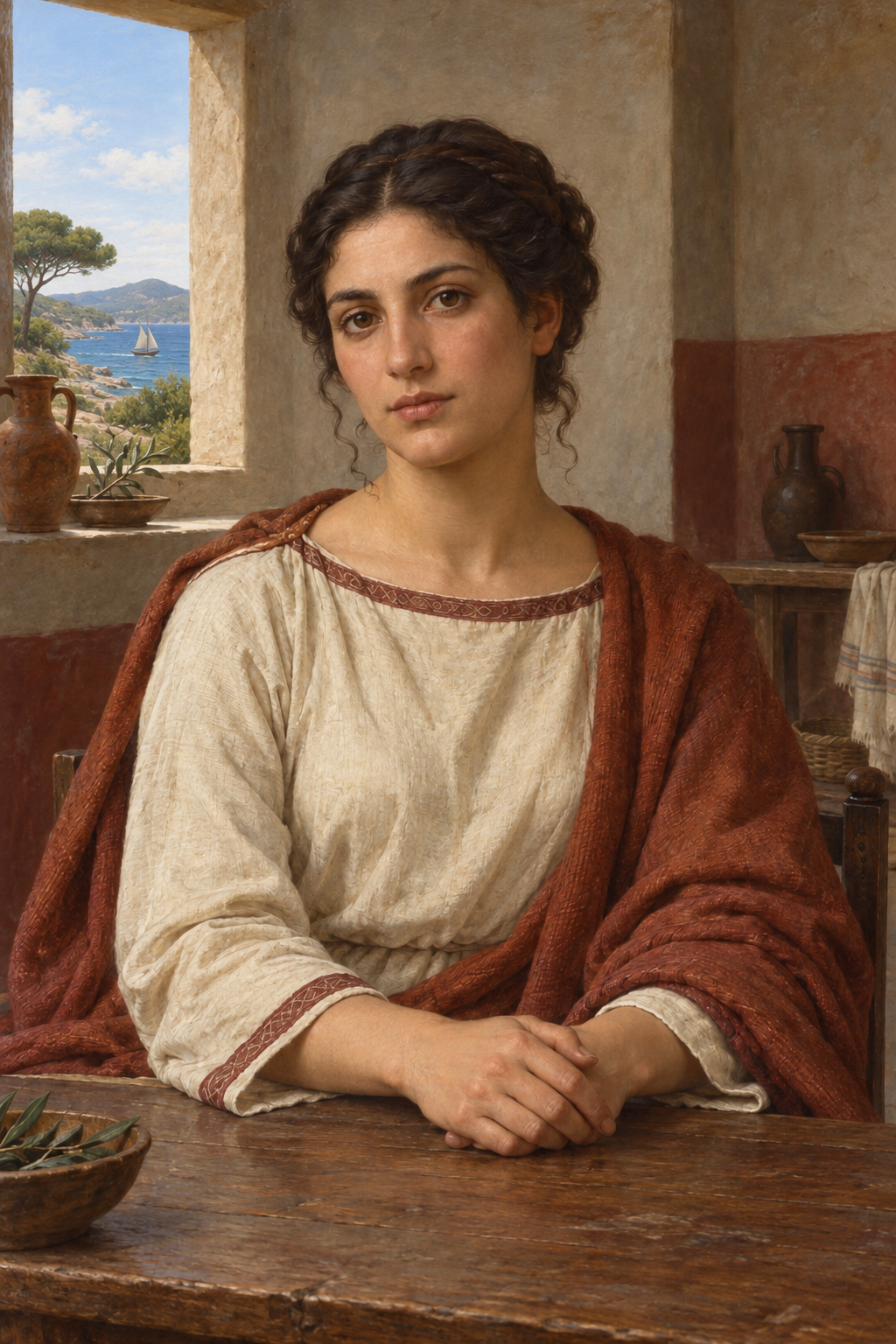
About Aurea of Ostia
Aurea is remembered as a Christian woman of Ostia. A church bearing her name stands in Ostia Antica, with traces of an earlier cult. Evidence is stronger for that remembrance than for the details of her life.
The Passion tells of a woman called Aura who lived on a small estate and cared for an imprisoned Christian, Censorinus. She brought him food and washed his face. Other Christians joined her in this story, including a bishop, a priest and a deacon. Its account of miraculous deliverance and conversions belongs to hagiographic tradition, rather than an independently documented biography.
In the same narrative, Aurea refuses to abandon her Christian faith under interrogation. After repeated punishment, she is thrown into the sea with a stone tied around her neck. Her body washes ashore and is buried outside Ostia’s walls. The story associates her with several other martyrs, but it does not provide a secure historical chronology for her death.
The Latin text was translated from a Greek manuscript and published by Simone de Magistris in 1795. Another Latin recension survives. These are transmitted accounts. The modern online English rendering is provisional; its editor warns that transcription errors were corrected without checking the original.
Material evidence offers a different kind of witness. A fragment found near the church in 1981 bears the Greek name Chryse, equivalent to Aurea, and says that she rests there. Archaeologist Jan Theo Bakker notes that this might be an original funerary inscription or a later addition to a tomb. It therefore supports the history of remembrance without proving an exact date or identifying surviving bones.
A small marble column discovered nearby in 1950 also carries an abbreviated dedication to Saint Aurea and may belong to the fifth century. Remains beneath and beside the present church include an earlier building with three naves and burial places. Bakker compares its masonry with fourth-century buildings at Ostia. This archaeological setting helps explain the lasting association between the martyr’s memory and this part of the town.
Her remembrance also crosses church traditions. The Greek Orthodox Archdiocese of America’s January synaxarion names Chryse among the martyrs commemorated with Hippolytus, Censorinus and Sabainus. That present observance establishes her place in an Orthodox calendar; it does not settle the differing versions of the ancient martyrdom narrative.
At Ostia Antica, Sant’Aurea remains a working Catholic parish and cathedral, served by Augustinians. Its community gathers for worship and parish activities under her name. This living dedication continues the local remembrance whose earlier traces survive in the inscriptions and church remains.
Wondering how to weigh the stories and sources? Learn how to read a saint biography.