Biography
Aurelius of Córdoba
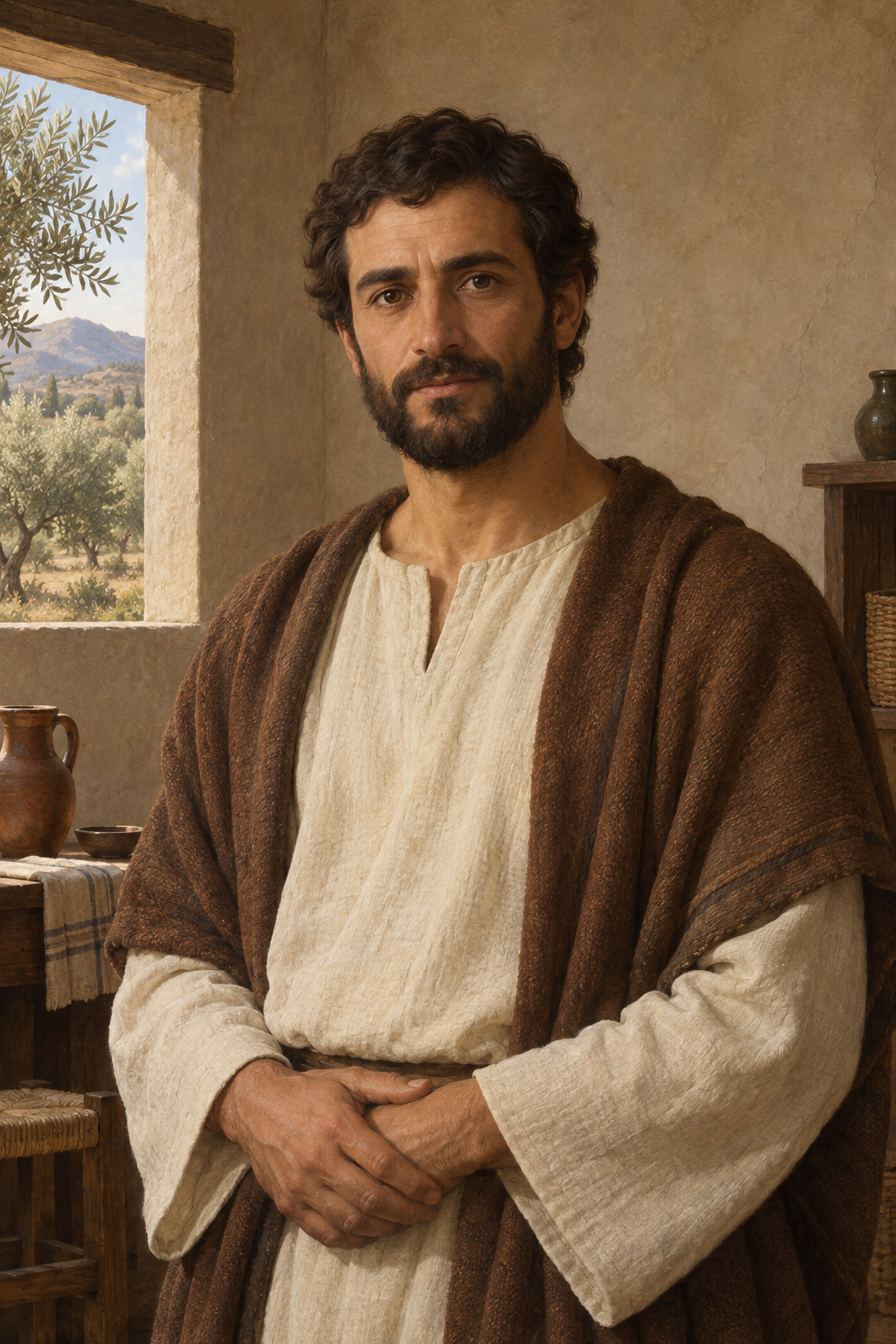
About Aurelius of Córdoba
Aurelius was a married Christian in ninth-century Córdoba. Eulogius, who knew him, describes a man orphaned young and raised in the Christian faith by an aunt. His marriage to Sabigotho brought together two people who practiced their religion privately. The account places their household within a wider circle of relatives and fellow believers.
Their commitment became more public after Aurelius witnessed the humiliation of a Christian prisoner. Eulogius records visits to imprisoned believers and a decision to distribute property while arranging care for their two daughters. He also says Aurelius asked him how to provide for the children before taking the dangerous course he contemplated.
The household was joined by George, a visiting monk. After the women’s churchgoing drew official attention, Aurelius and his companions openly acknowledged their Christianity. Eulogius recounts their arrest, refusal to abandon that profession and execution. The group included Aurelius, his wife, Felix, Liliosa and George. The author presents their deaths as martyrdom and writes as an advocate of their cause.
That viewpoint matters when considering the world in which Aurelius lived. Kenneth Baxter Wolf’s study shows that Christians in Córdoba disagreed sharply about the public acts that led to these executions. Some honored the condemned as martyrs, while others feared that deliberately provoking the authorities would endanger the community. The extent of each party’s support cannot be securely measured. Aurelius’s story belongs within that disagreement; it does not establish that every Christian shared Eulogius’s judgment or followed the same course.
Wolf also explains how the memory of these deaths changed when it traveled beyond Córdoba. Accounts connected with the northern cult left out much of the local controversy that had shaped Eulogius’s defense. Their presentation made the new martyrs resemble the Christians commemorated from Roman times. This distinction helps separate the history of an execution from the history of its remembrance. Aurelius’s later recognition is real evidence of devotion, while the form of the surviving accounts needs its own historical examination.
Another scholarly approach considers the religious language of the account itself. Adriano Duque reads George’s part in the narrative through the practices and theology of Hispanic Christian worship. He argues that professions of faith and scriptural language express a process of spiritual formation and concern for orthodoxy within the Christian community. This is an interpretation of the narrative shared by Aurelius’s companions, rather than independent evidence for every speech Eulogius records. It draws attention to the purposes of the writing: the account seeks to teach and shape Christian identity as well as to remember people who died.
The relic tradition supplies a different kind of testimony. Aimoin of Saint-Germain-des-Prés recounts the journey of two monks, Usuard and Odilard, who went to Spain seeking Vincent’s relics. When that aim proved unattainable, information received in Barcelona directed them toward the recently executed Christians of Córdoba. In the account, the travelers seek assistance from local Christian contacts and obtain a letter requesting help from the governor of Zaragoza. Their journey is narrated as a devotional enterprise requiring negotiation, introductions and protection.
The transfer was not presented as a simple, uncontested handover. Aimoin describes hesitation among the monks who held the remains of George and Aurelius. Agreement depended upon consultation and episcopal consent. When the time for departure approached, renewed resistance brought the bishop into the dispute. The narrative eventually speaks of taking the remains by force. Its account preserves the difficulty of transferring a locally venerated person’s relics, alongside the travelers’ conviction that a more solemn cult would result. These details belong to a later narrative about devotional custody, not to Aurelius’s lifetime or a modern authentication of the remains.
Juan Carlos Lara Olmo’s commentary places that journey within a wider political setting. He distinguishes dangers arising from disorder within the emirate from the diplomatic relationship between the Andalusian and Frankish rulers. A relatively peaceful relationship could coexist with hazards on the road. That distinction challenges any account that pictures these societies as permanently isolated by religion. The story of Aurelius’s remembrance also belongs to a history of contact: religious communities maintained connections across territories governed by different rulers, even while remembering the violence suffered by their fellow Christians.
Lara Olmo further treats the transfer account as a historical document as well as a work of devotion. Its named rulers, bishops, nobles and religious figures allow the narrative to be considered alongside the politics of its period. This does not remove its hagiographic purpose or establish every reported wonder as fact. It explains why the later record has value beyond a list of miracles. For Aurelius, whose personal story reaches us through advocacy and remembrance, those different layers of evidence deserve to remain visible.
The Catholic Church in Norway’s present saint record commemorates Aurelius with his companions on 27 July and gives his Spanish name as Aurelio.
Wondering how to weigh the stories and sources? Learn how to read a saint biography.