Biography
Avitus of Perche
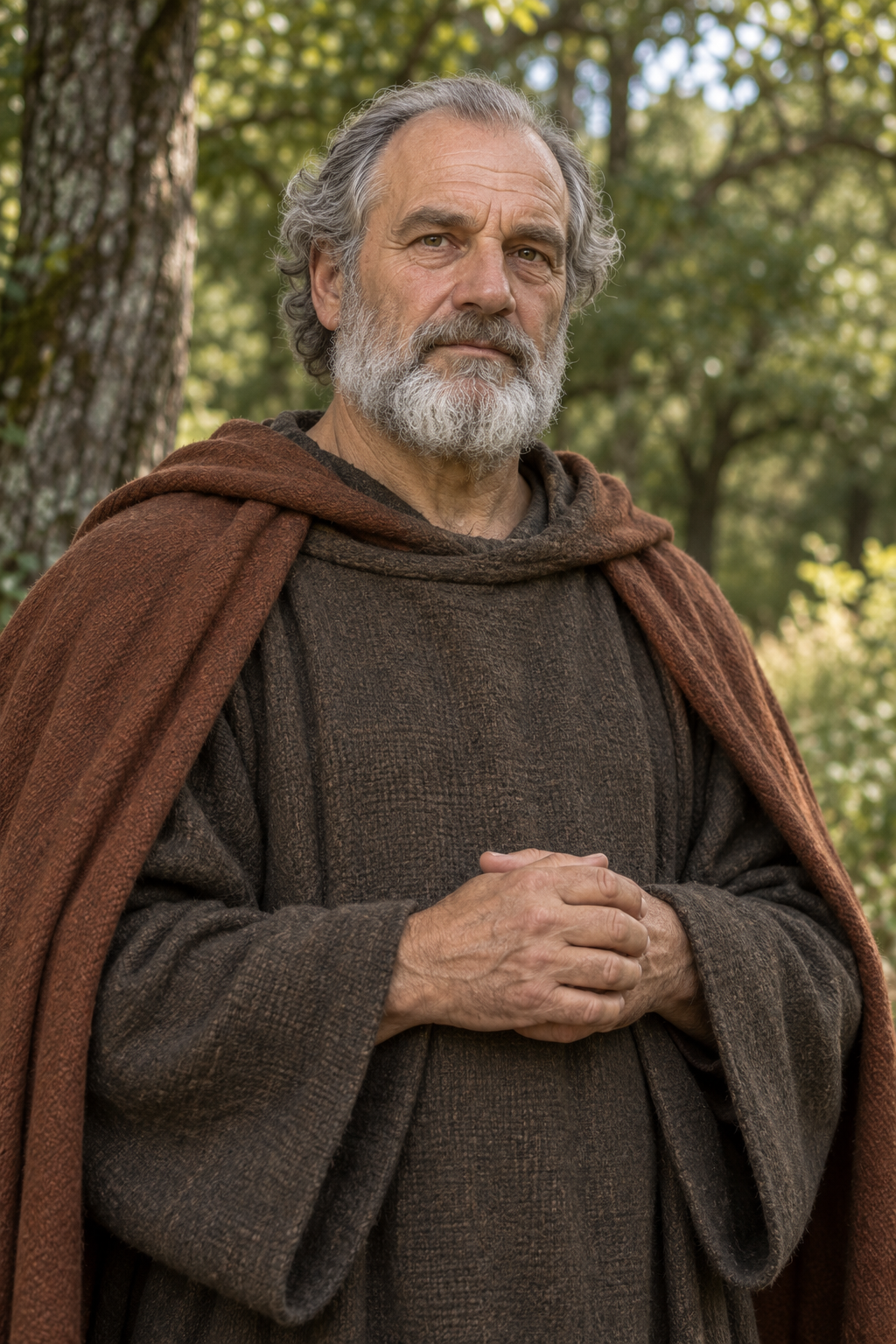
About Avitus of Perche
Avitus was an abbot associated with the Perche, in the territory of Chartres, during the sixth century. Gregory of Tours gives this identification in the Glory of the Confessors and says that he was buried with honor at Orléans, where Christians built a church over his grave.
In Gregory’s Histories, Avitus urges Chlodomer to spare Sigismund of Burgundy and his family. The king refuses. Gregory presents the abbot’s warning of disaster as prophecy.
The fuller account familiar from later tradition developed much later. Satoshi Tada dates the first three Lives of Avitus to around 800 and examines how their manuscripts connect the saint with Micy. In one version, the monastery and its abbot are initially unnamed; the names of Micy and Maximinus emerge only later in the narrative. Tada argues that the connection with Micy may have developed during the Carolingian period.
Tada’s analysis also shows why surviving manuscript dates cannot by themselves decide which wording is earliest. A late copy may preserve an older reading, while an early copy may already contain additions. For Avitus, the distinction leaves the Perche and Orléans connections better supported than a precise place in Micy’s succession of abbots.
Jean-Vincent Jourd’heuil’s institutional history similarly distinguishes Gregory’s testimony from a Carolingian Life that claims Avitus as an early abbot of Micy. The later history of his shrine at Orléans is more visible. A religious community developed around it, and the site eventually became a secular collegiate church. The surviving Romanesque crypt was rediscovered in 1852.
Gregory’s account also describes an annual feast at the tomb. He tells of a man who went to work in his vineyard instead of joining the celebration, suffered a distorted neck, and recovered after sustained prayer at the church. The story witnesses the importance attached to the saint’s feast and shrine; it is a miracle narrative, not evidence that Avitus became patron of vineyard workers.
His local memory survives elsewhere in the Perche. Monique Chatenet’s account of the church at Saint-Avit identifies the site tentatively with the early hermitage called Piciacus and records its later dependence on Saint-Calais. The church itself is dedicated to Notre-Dame. Among its furnishings is a painted wooden statue of Avitus, a reminder of the local saint even though the building bears another dedication.
Nominis explicitly includes Saint-Avit in Loir-et-Cher among the places under his protection. It commemorates him on 17 June and preserves Avy as another form of his name.
Wondering how to weigh the stories and sources? Learn how to read a saint biography.