Biography
Avitus of Vienne
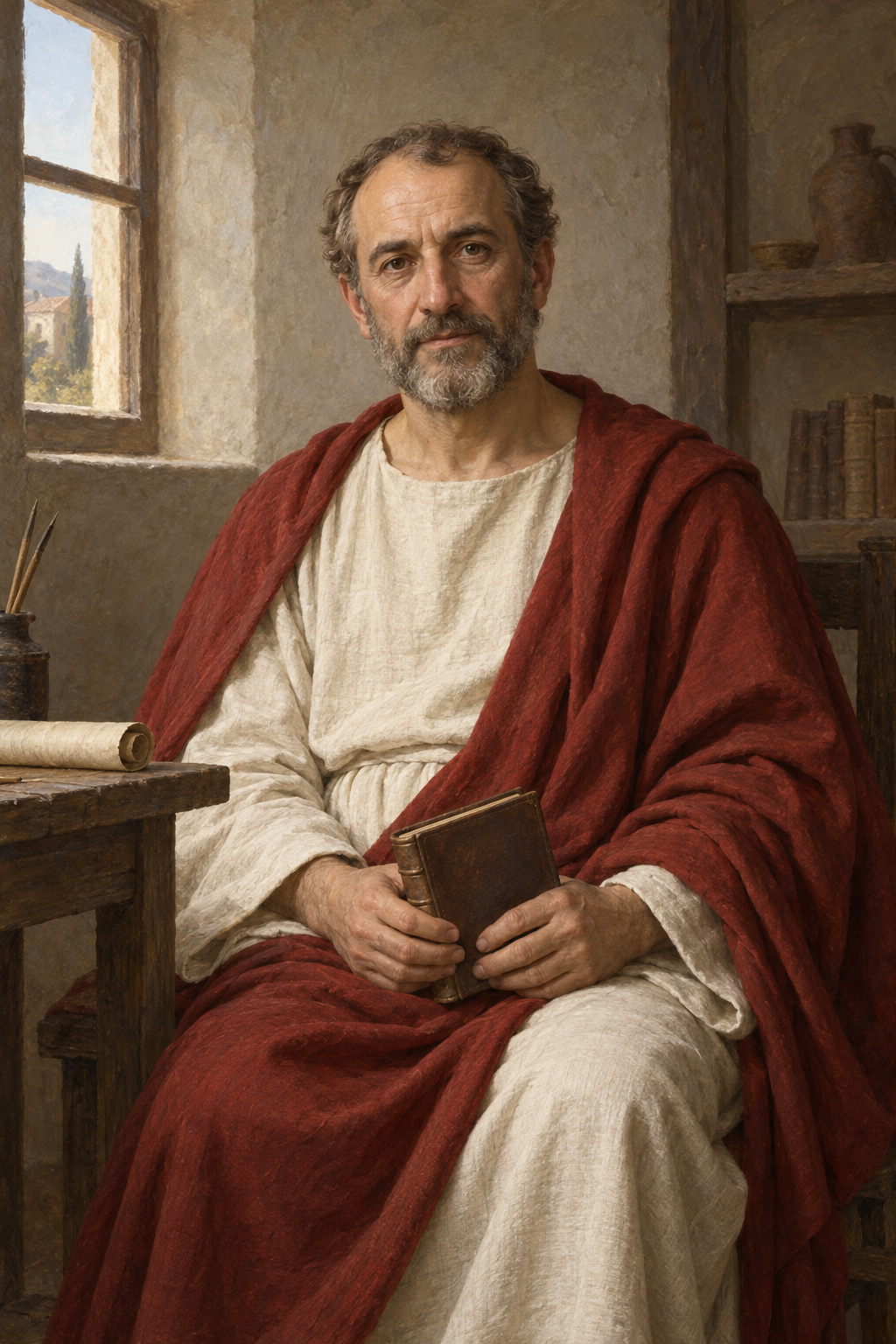
About Avitus of Vienne
Avitus of Vienne combined the responsibilities of a bishop with the work of a poet. Born around the middle of the fifth century at Vienne in Gaul, he came from a family of senatorial standing. His father, Hesychius, also held the city’s episcopal office, and his brother Apollinaris became bishop of Valence. These family connections placed him within the cultivated society from which many church leaders emerged.
He became bishop around 490 and served within the Burgundian kingdom. His work brought him into contact with Gundobad and then with the king’s son and successor, Sigismund. He defended Catholic teaching against the Arian position held by Gundobad, but did not secure the older king’s conversion. His influence was greater with Sigismund, whose adoption of Catholic Christianity changed the religious setting in which the bishops worked. Avitus’s ministry therefore involved both theological argument and dealings with rulers, rather than withdrawal from the political life of his time.
One near-contemporary account connects him to the practical relief of people taken captive. Ennodius, writing the Life of Epiphanius of Pavia, describes a mission to obtain the freedom of Italians held in Burgundian territory. Some were released through negotiation, while others required payment. When the original funds had been spent, the woman Syagria supplied more, and Avitus also contributed. The writer expressly associates their money with freeing Ligurian captives from continued servitude. This places Avitus within a shared effort led by Epiphanius; it does not make him the sole rescuer or assign every freed person to his contribution. The account’s praise of the returning bishop belongs principally to Epiphanius. Avitus’s own recorded part is concrete: he helped provide the resources that made release possible.
Avitus congratulated Clovis on his baptism without attending the ceremony. He also invited bishops to Épaone, allowing authorized representatives only when illness prevented personal attendance.
The baptism letter has become important precisely because it is contemporary evidence, but its interpretation requires care. Danuta Shanzer’s study distinguishes the wording of Avitus from the later narrative of Gregory of Tours. She argues for a later baptism date than the familiar traditional chronology and treats several proposed clues as uncertain. Her conclusion is an argument from textual and historical evidence, rather than an explicit date written by Avitus. The letter can establish his interest in the king’s religious choice without settling every circumstance of the ceremony. It should not be used to place him at a baptism he says he did not attend.
The Council of Épaone in 517 provides another view of church organization during his episcopate. The scholarly source discussion identifies Avitus and Viventiolus of Lyon as its conveners in the new religious setting under Sigismund. It records 24 bishops and one priest representing an absent bishop. The council’s exact location remains uncertain. This is a different kind of evidence from a general portrait of holiness: it shows bishops arranging a gathering and making provision for representation. It also cautions against turning a modern identification of the meeting place into an unquestioned fact. The surviving record does not show every participant traveling in the same manner.
His poetry offers a more personal view of his work as a writer. In a received prologue, Avitus recalls friends encouraging him to publish sermons, the dispersal of many shorter poems during a disturbance, and the recovery of some writings from a friend. He also discusses the obligations of Christian verse. Literary skill mattered to him, but he regarded fidelity to religious truth as more important than artistic display. That concern helps explain why his writing joins cultivated Latin expression with the responsibilities of a cleric. His five-book Spiritual History retells creation, the Fall and expulsion from paradise, the Flood and the crossing of the Red Sea. It presents those narratives as part of a Christian understanding of salvation, rather than as the bishop’s own life story.
He also wrote a poem addressed to his sister Fuscina, remembered as a consecrated virgin. Michael Roberts’s study emphasizes its personal address and its combination of warning and encouragement. The poem presents moral resolve as demanding vigilance, while giving women a capacity for courage and steadfastness equal to that of men. That is an interpretation of the poem’s language, not evidence for an invented episode in Fuscina’s daily life. Roberts distinguishes his own speculation about her possible concerns from what the text actually says. The distinction matters when reading a family poem as biography. Avitus’s surviving words reveal how he offered literary and religious encouragement; they do not disclose everything his sister felt or how she responded.
His death is usually placed around 518, although received estimates also extend into the 520s. The exact chronology remains disputed, and a feast day should not supply an otherwise uncertain death date. Catholic remembrance marks 5 February. His enduring significance is unusually accessible through his writings: alongside his place in the history of the Burgundian church, his poems and correspondence preserve a cultivated bishop’s engagement with faith, public responsibility and the possibilities of literary expression.
Wondering how to weigh the stories and sources? Learn how to read a saint biography.