Biography
Aye
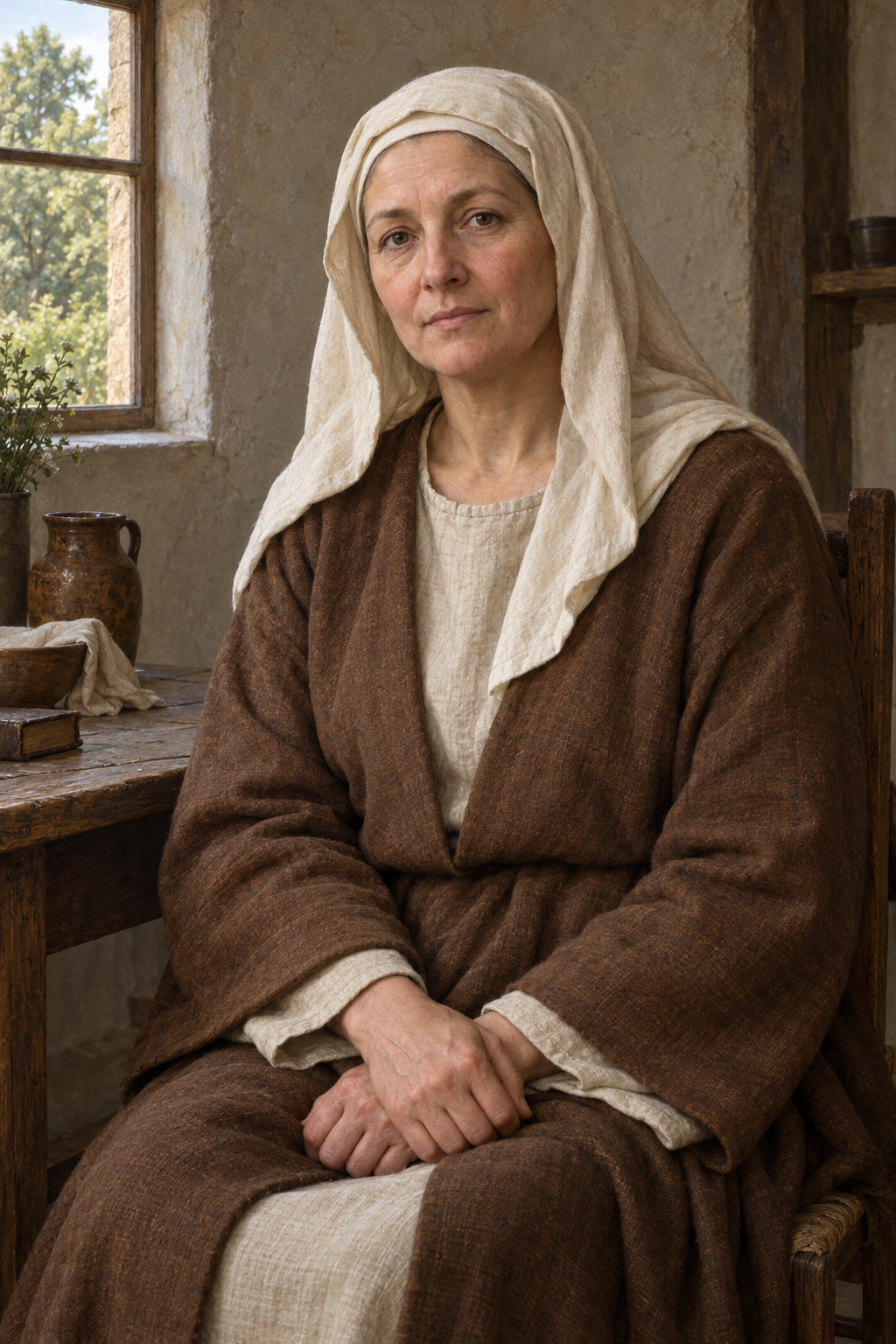
About Aye
Aye, also known as Aya or Agia, is remembered in connection with the religious community of Sainte-Waudru at Mons. A received account describes her marriage to Hydulphe and their support for religious foundations. After years of married life, they reportedly entered religious communities separately: Hydulphe at Lobbes and Aye at Sainte-Waudru. These details belong to a later account rather than a complete contemporary record.
Eugène Coemans’s biographical entry makes several important qualifications. It does not accept the royal genealogies attached to her as established, disputes grand titles such as duchess and countess, and says that her succession as abbess is uncertain. Her remembrance should therefore not be turned into a secure royal pedigree or a precisely documented office.
The curator of Sainte-Waudru describes how that remembrance continued in Mons. A tomb marker calls her the community’s second abbess, while identifying the grave’s location as presumed. A 1904 altarpiece includes a statue of her, and her reliquary preserves the small remains recognized by the bishop in 1854. Such objects record the community’s veneration and its care for relics; they do not settle the uncertain details of her early life.
The same parish account relates a legendary dispute over land left to the community. Aye’s voice was said to answer from her tomb, confirming the donation. The writer presents this as a miraculous tradition associated with later invocation in difficult lawsuits. It is a story about religious memory, rather than verified court testimony.
Coemans places her death at Mons in 708 or 709. The parish account gives a similarly approximate early-eighth-century chronology. Her birth date and birthplace remain unknown. Catholic commemoration marks 18 April, preserving her place in the memory of Mons even where her personal history remains only partly recoverable.
Wondering how to weigh the stories and sources? Learn how to read a saint biography.