Biography
Aymard of Cluny
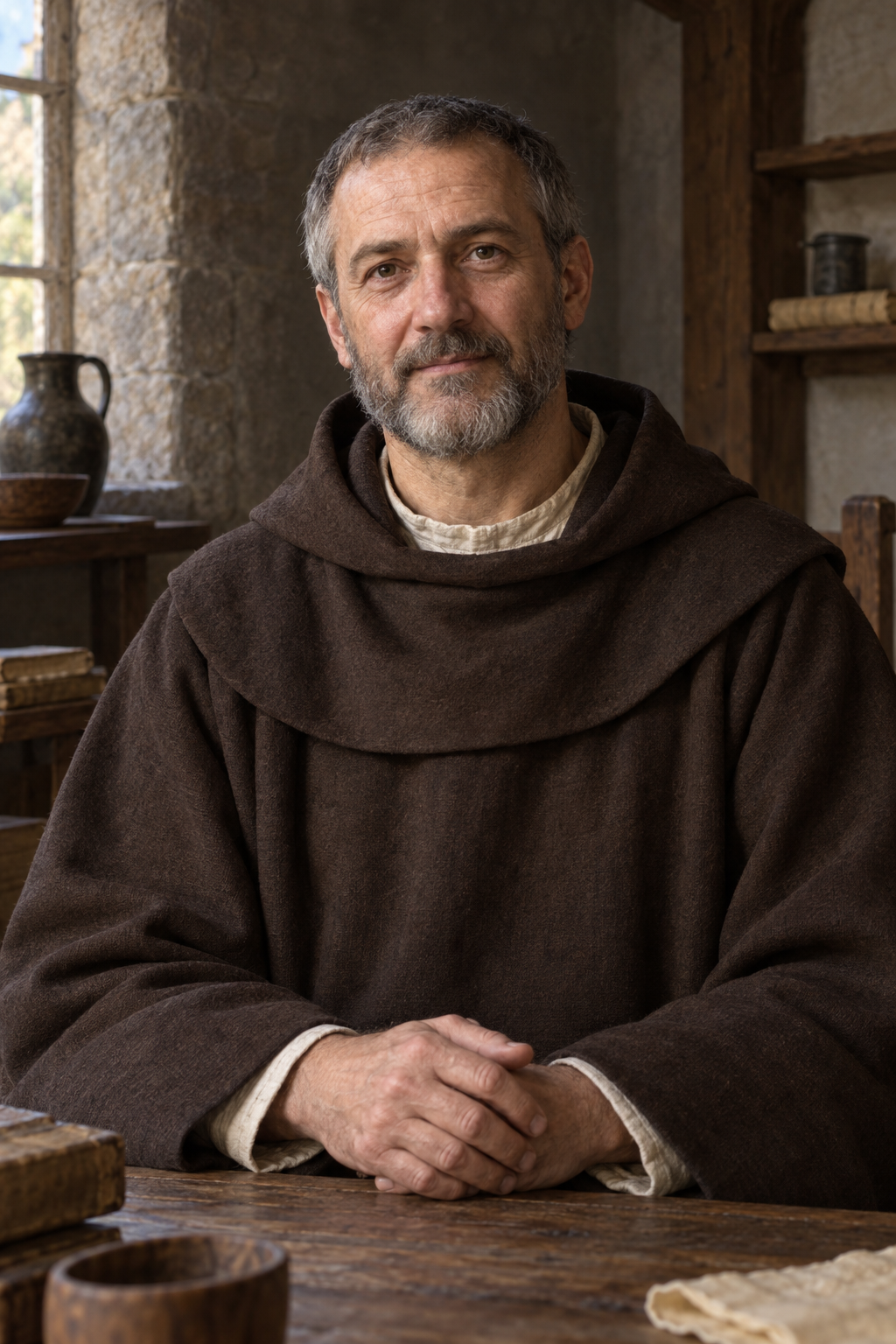
About Aymard of Cluny
Aymard was the third abbot of Cluny, succeeding Odo in 942. His name belongs to the monastery’s early succession of leaders, although his personal history is less fully known than that of Odo or Majolus. A scholarly account of the first abbots describes his role in maintaining and increasing the community’s property, then in making arrangements for Majolus to take over its administration.
A surviving agreement, dated by its editors to February 948, places Aymard and the monks in a transaction with Sinol. The document identifies Sinol as a dependent of Saint Peter, using the Latin term servus. The abbey gave him a field and received a vineyard and another field in exchange. It records boundaries, rights over the exchanged property and a penalty for challenging the agreement. This is evidence of Aymard’s administration of a monastery whose lands and dependents were part of its economic life. It does not describe Sinol’s release from servitude, and an exchange of land should not be presented as a documented act of emancipation.
Another record concerns a chapel dedicated to Saint Taurinus. In 950, Aymard, the monks and Count Leotald requested its consecration from Maimbode, bishop of Mâcon. The bishop consented after considering the request and its effect on other churches. The community provided an endowment that included a holding, a field and three people described as servi: Girbert, Gausbert and Radald. The notice names Aymard among its subscribers as abbot. It shows his involvement in providing for worship outside the monastery, while also recording the unfree labor included in that provision. Aymard requested the consecration; the bishop performed it.
In May 953, a further agreement names Aymard in an exchange with Robertus and his wife Aia. The parties exchanged meadowland, with the parcels’ boundaries and measurements written into the record. Each side received authority to use the transferred property, and the agreement again specified a penalty for interference. The record is preserved through a monastic cartulary rather than an original document examined here. Its modest subject is useful: Aymard appears carrying out the ordinary management of the community’s possessions shortly before the change in leadership. Aia in this agreement is Robertus’s wife; the name alone does not identify her with an earlier saint.
The scholarly account places that change in 954, when Aymard had become nearly blind and chose Majolus as coadjutor. Majolus then carried most of the responsibility for administration. The change was gradual rather than a clean disappearance of Aymard’s name: the same account reports his occasional appearance in the charters through September 965. It also acknowledges conflicting evidence for whether he died in 963 or 965.
Franz Neiske’s catalogue gives 5 October 965 as his death date. That scholarly listing supports retaining approximately 965 while making the disagreement visible, rather than forcing a certainty the other account does not share.
Catholic sources call him Blessed. The Norwegian account gives an individual commemoration on 5 October, while Nominis records a local observance on 19 November. These entries describe differing observances; they do not establish one universal feast.
Wondering how to weigh the stories and sources? Learn how to read a saint biography.