Biography
Baldwin of Rieti
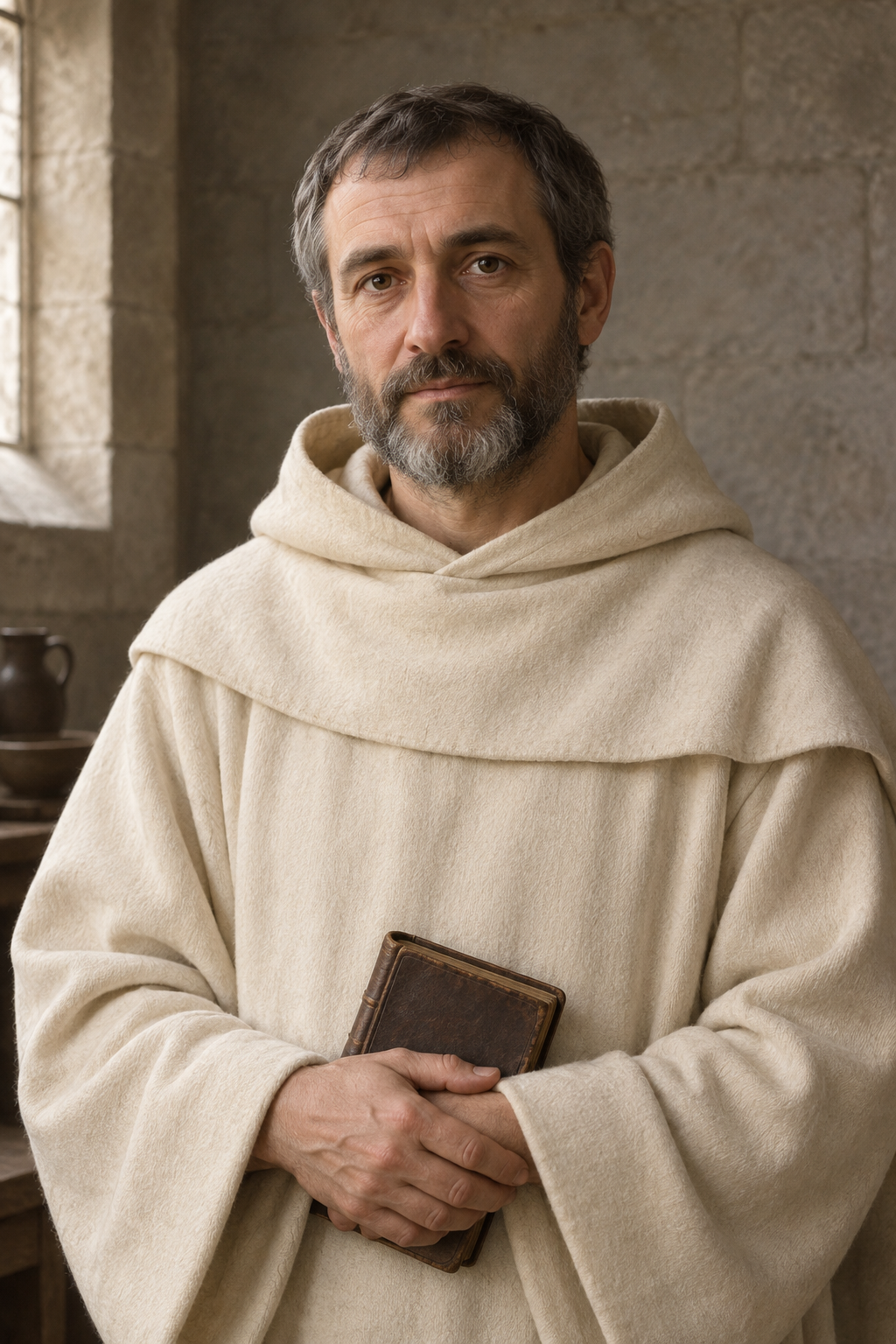
About Baldwin of Rieti
Baldwin of Rieti was a Cistercian abbot associated with Bernard of Clairvaux. The received account places him at San Matteo near Rieti and records his death in 1140.
Bernard’s letter to the abbot gives a more personal glimpse of their relationship. Baldwin had written affectionately, and Bernard assured him that distance had not diminished his love. He compared his attachment to a mother’s care for an only child, while admitting that other demands prevented him from writing as often as he wished.
The reassurance comes with demanding advice. Bernard urges Baldwin to accept the responsibilities of his office rather than withdraw through fear or a sense of inadequacy. He tells him to teach by his actions before asking others to carry a burden. Preaching, example and prayer belong together, with prayer supporting the other two.
The letter closes with concern about a hurt Baldwin had reported. Bernard asks him to explain it. That question leaves the difficulty unresolved, but it preserves a relationship in which affection and pastoral responsibility could include distress as well as encouragement.
Historian Robert Brentano treats the link between this recipient and San Matteo with caution. Although he repeats the familiar identification, he notes how fragile its documentary basis is and records disagreement among earlier scholars. The letter securely names an abbot of Rieti; the fuller story connecting him to a particular monastery depends on later historical reconstruction.
Brentano also explains why Baldwin is often called abbot of San Pastore. The community associated with San Matteo moved to that site in the thirteenth century, after Baldwin’s lifetime. The later name could then displace the earlier one in accounts of the community’s past. Keeping that change in view helps prevent the surviving abbey’s history from becoming an invented setting for every detail of Baldwin’s life.
His relics are venerated in Rieti’s cathedral. The Catholic Church in Norway’s account reports permission for a liturgical office and Mass in 1701; that act concerns an established local cult, rather than a modern canonization ceremony.
Rieti’s diocesan calendar for 2020 lists him as a saint and marks 21 August as his memorial. That dated calendar provides direct evidence for how the local church remembered him.
Wondering how to weigh the stories and sources? Learn how to read a saint biography.