Biography
Barbara Jeong Sun-mae
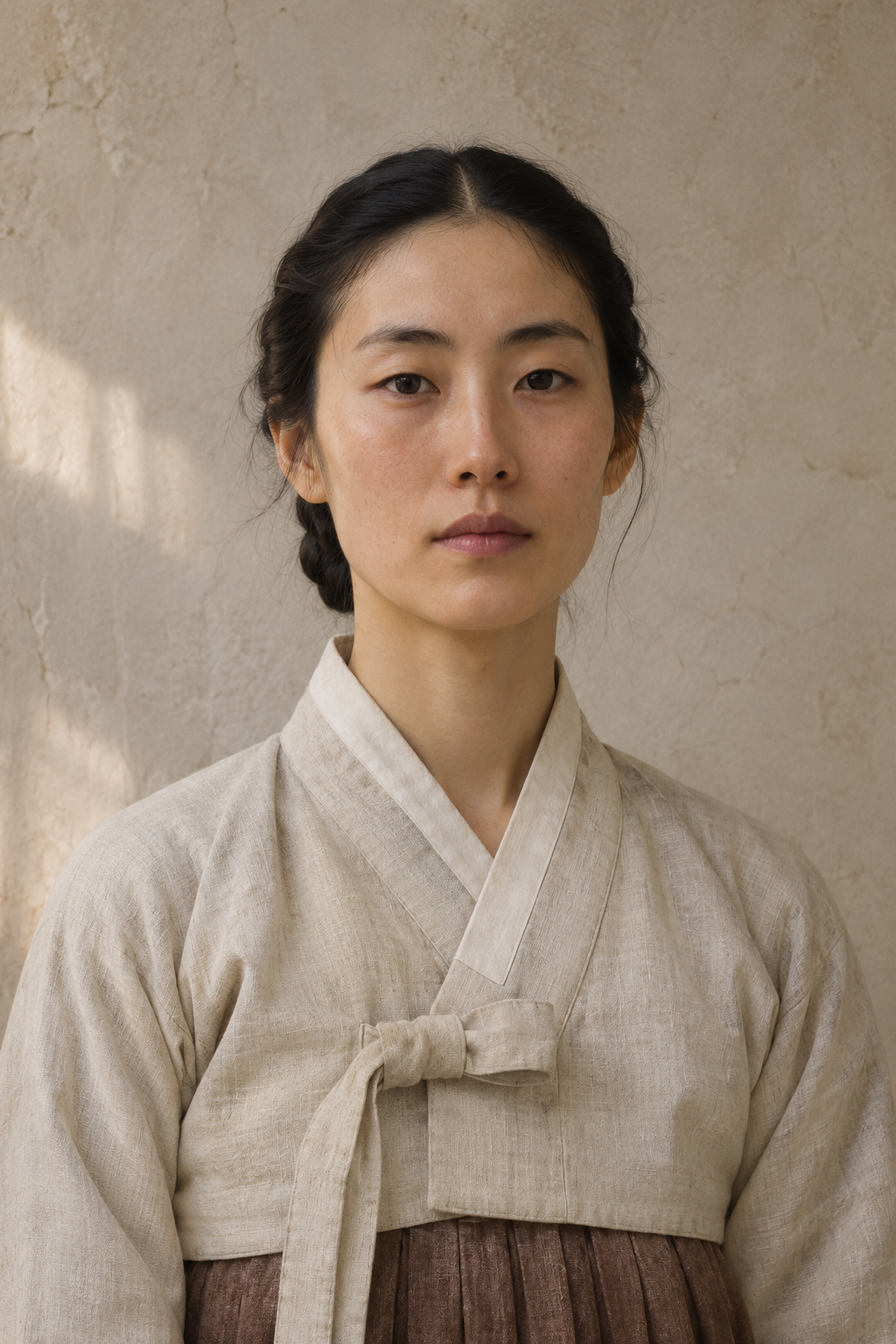
About Barbara Jeong Sun-mae
Barbara Jeong Sun-mae was born in 1777 in Yeoju, in Gyeonggi Province. She learned Catholic doctrine in 1795 through her elder brother Barnabas Jeong Gwang-su and his wife, Lucy Yun Un-hye.
The Catholic Encyclopedia identifies her birthplace as Gamasil, in Dogok-ri, and dates the family’s move to Seoul to 1799. There she lived with her brother and sister-in-law in Byeokdong. She helped them supply religious books and devotional objects to other Catholics. When their home was used for worship, she prepared what the gathering needed.
When Father Zhou came to say Mass, Barbara prepared for his visit and helped the people who gathered for worship. Father Choe In-gak singles out this part of her work.
Barbara also decided to remain unmarried. To those outside the Catholic community she said that she had married a man surnamed Heo and had become a widow. The bishops’ biography describes this assumed widowhood as a way of concealing her decision to live in celibacy.
Historian Park Min Yea found six women who had invented a marriage among some sixty Catholic women executed or exiled around the time of the persecution. Their choice of widowhood made sense to a neighbor. A daughter was expected to marry, but a widow could earn respect by refusing to marry again. Women who really had lost their husbands could move about more freely, and some used that freedom to help the Church. Calling herself a widow gave Barbara a familiar reason to decline a marriage without revealing the promise she meant to keep.
The encyclopedia adds that she put her hair up as a married woman would. It records baptism by Father Zhou in October 1800 and her subsequent life in the community led by Agatha Yun Jeom-hye at Columba Kang Wan-suk’s home. Agatha was the elder sister of Barbara’s sister-in-law. Family ties thus connected Barbara to the woman who led this group.
Go Eun-im names Barbara together with Agatha, Kim Gyeong-ae, Yi Deuk-im and Jo Do-ae among the women who adopted a widow’s appearance. Remaining unmarried appears in the charges against women in this circle. The official questioning that Go reproduces belongs to Agatha, the woman who led Barbara’s community. Go interprets the prosecutions in relation to the prevailing expectation that women would enter a family through marriage. A practice that let these women pass quietly among their neighbors thus became a specific point of accusation once the authorities learned about it.
In a 2026 account, Catholic journalist Ri Gil-jae places Barbara alongside Bibiana Mun Yeong-in and other women who chose celibacy. He explains that the authorities treated rejection of marriage as an attack on family order, while women’s attendance at worship with men also attracted moral accusations. His account names women of different household positions in Columba’s community, including Columba’s daughter Lucy Hong Sun-hui and the household servants So-myeong, Bok-im and Jeong-im. This later interpretation helps explain the social pressure behind Barbara’s assumed widowhood; it does not establish that she suffered every abuse described in the wider history of these women.
Father Choe places the arrest at Columba’s home and names Agatha among those taken to the police bureau with Barbara. When the officers discovered that she had never been married, they branded her an evil woman. Her account of the questioning acknowledges how much the punishments hurt. She explained why she had taken the name of a widow and why she still wanted to live as a Catholic.
When the persecution of 1801 began, Barbara was arrested. The official biography remembers her refusing to reveal the names of fellow believers despite interrogation and punishment. She continued to profess her faith. Sentenced to death, she was sent back to Yeoju for execution. The bishops’ account leaves the day uncertain between July 3 and July 4, 1801. She was 24.
The court record names her Sun-mae, describes her as the supposed wife of a man named Heo, and records the sound of her baptismal name as Balbal-a. It links her to her brother and identifies Zhou as the priest who baptized her. Barbara and Agatha were among the four prisoners whom the authorities ordered escorted to the magistrates of their places of registration.
Her name is remembered with the other Yeoju martyrs. Reporting in 2014, Oh Se-taek described the memorial erected by the parish and city in June 2009, bearing the names of twenty martyrs and a hymn. He explicitly distinguished the monument’s location from the exact execution site. Barbara’s commemoration belongs to that shared local history; the memorial itself cannot establish the precise spot where she died.
Tak Hui-seong painted the moment Barbara put up her hair. Reproduced in the Jeonju diocesan bulletin, the picture shows her seated on the floor in a green jacket, with an older woman tending her hair from behind and another figure seated beside an open box. The painter chose a quiet household scene.
Wondering how to weigh the stories and sources? Learn how to read a saint biography.