Biography
Barbara Ku Seong-yeol
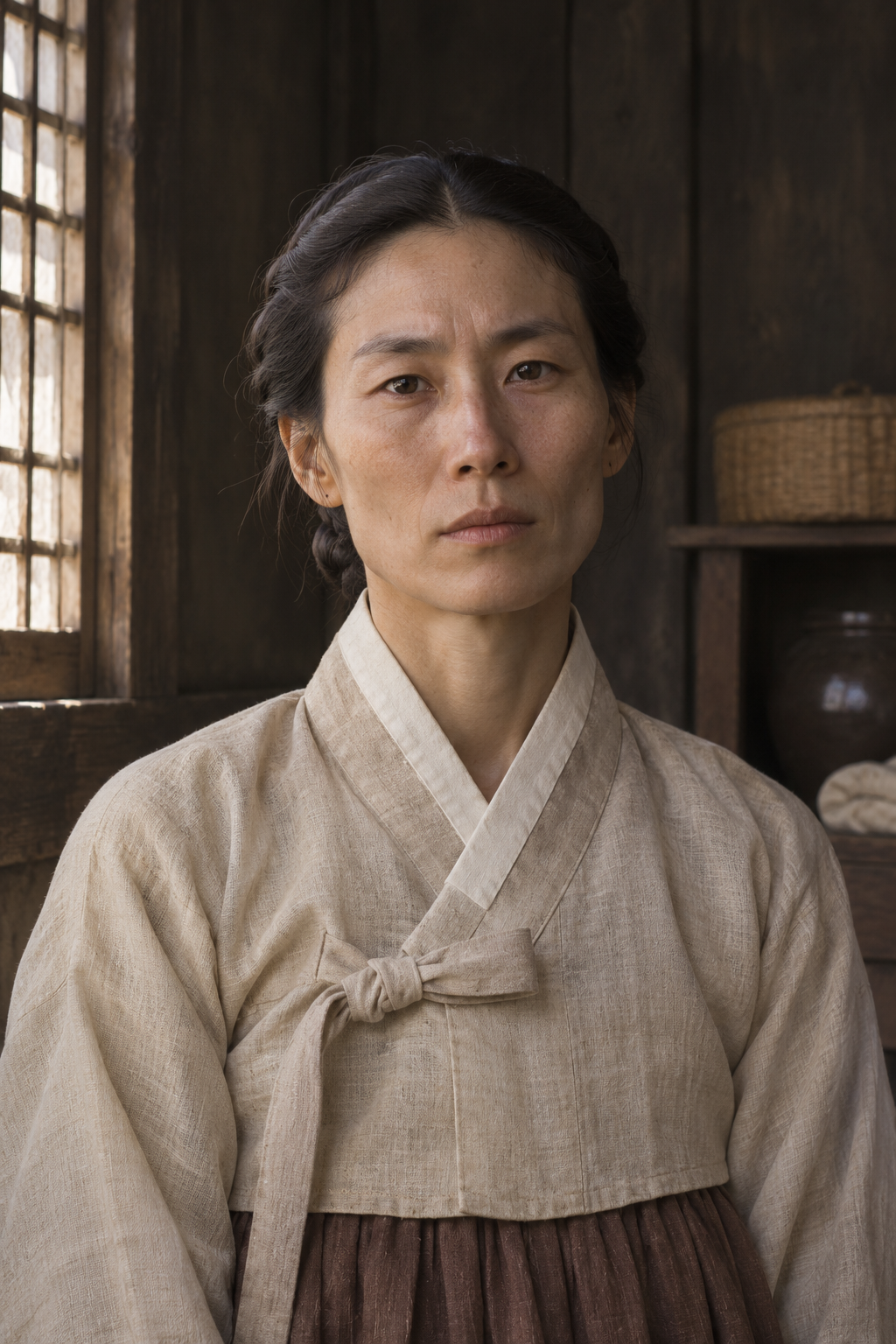
About Barbara Ku Seong-yeol
Barbara Ku Seong-yeol came from Hannaejangbeol in Hongju, Chungcheong-do. The current bishops’ biography estimates her birth around 1776. She became a Catholic before the persecution of 1801, lost her first husband, and married Andrew Seo Seok-bong. Catholics also called her the Widow Seo, a name attached to the household in which her later life is remembered.
Kim Jeong-suk describes Barbara’s first marriage as a marriage to another Catholic and places her within a believing family. After her husband’s death, Barbara did not remain a widow for the rest of her life. She established a new marriage with Andrew. Kim sees that decision as significant in a society where a widow’s remarriage could meet strong disapproval, while the Catholic community accepted marriage after a spouse’s death.
The new household eventually left Hongju. Cha Ki-jin recounts that Barbara and Andrew took only what they could carry on their backs when they fled to Gyeongsang-do. They cultivated the unpromising ground around their refuge and, through several years of work, obtained enough to support themselves. Their mountain home was not simply a place to hide for a few nights: they had to make a living there and provide for the family.
They settled at Noraesan in Cheongsong, among other Catholic families. Barbara and Andrew instructed their children in the faith and gave alms to people in need. Francis Choe Bong-han became their son-in-law. The household therefore included a second married couple, and the four relatives shared life in the village before sharing the consequences of its discovery.
At Easter in 1815, officers led by an informer raided Noraesan. Barbara was arrested and taken to Gyeongju. She endured severe punishment at the time of her capture, followed by more interrogation and blows after reaching the local headquarters. Her husband and son-in-law were also prisoners.
The repeated punishment wore down Barbara’s determination. Back in the prison she showed an intention to abandon Catholicism. Francis noticed her distress and encouraged her to hold to the faith. The encyclopedia records that his intervention helped her regain her resolve. Her perseverance was thus remembered together with this moment of weakness and the help she received from someone who had been arrested with her.
Barbara was transferred with Andrew, Francis and other Catholics to Daegu, where the provincial governor conducted further examinations. The Daegu commission describes an imprisonment lasting more than seventeen months. During that time she was repeatedly questioned and punished. Her husband and Francis both died in custody before she did. She remained imprisoned after losing the two men with whom she had been brought from Noraesan.
Oh Se-taek follows the three members of the family through their different fates. Francis died first; Andrew also died in prison. Barbara survived them and remained in custody until the execution of the Catholics who were finally taken to the Daegu execution ground.
Kim Jeong-suk places Barbara beside Anna Yi Si-im at the end of the executions. Five male prisoners had been killed before the two women. The official again offered them release if they would renounce their religion, but they refused. Kim interprets the women’s refusal as an assertion of responsibility for their own beliefs, in a legal and social order that did not ordinarily treat women and men alike.
Barbara was beheaded at Daegu on December 19, 1816. She was remembered as about forty years old. Her body was initially buried near the place of execution. On March 2 of the following year, relatives and fellow Catholics recovered her remains and arranged another burial.
Cha also records a tradition concerning the recovery of her body. Animals were said to have disturbed part of it, while those who opened the burial found the clothing and the rest of the body preserved after several months. This is a report passed down about the burial, rather than a modern examination of the remains. Writing in 1997, Cha stated that the place of the later grave had not been found.
Her name also required recovery. Older books and Church documents called her Choe Seong-yeol. In comparing the French missionary sources, Kim Jeong-suk established that her surname was Ku. The correction identifies the same woman, Andrew Seo’s wife and Francis Choe’s mother-in-law, rather than another martyr who happened to share her baptismal name. Her family relationships helped preserve her memory, but the scholarly comparison restored her own surname to it.
Kim’s later essay explains the comparison behind that correction. In Daveluy’s manuscript, the surname had been changed from Choe to Ku in five places, while Dallet’s published history retained Choe. Government records preserved the name Seong-yeol without a surname. Kim proposed that the earlier confusion might have arisen through Barbara’s connection with her son-in-law’s Choe family. She presents this as an explanation of the mistaken identification, not as another name Barbara herself adopted during her life.
Wondering how to weigh the stories and sources? Learn how to read a saint biography.