Biography
Barbara Sim A-gi
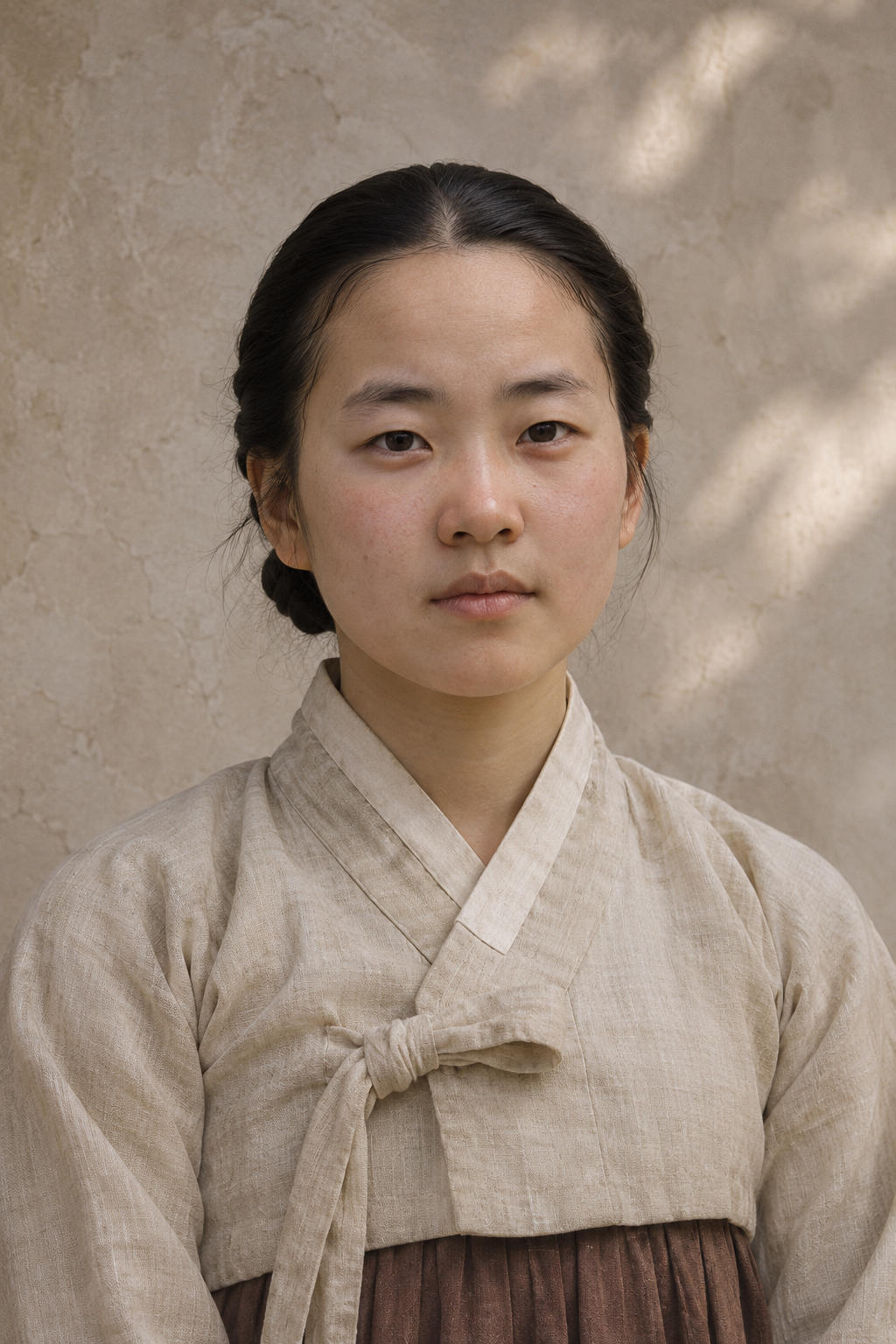
About Barbara Sim A-gi
Barbara Sim A-gi was born in 1783 in Gwangju, in Gyeonggi Province. She first learned Catholic teaching from her older brother, Sim Nak-hun. The Korean Catholic Encyclopedia places that instruction after 1798, when she was already in her teens. She took particular interest in the lives of saints who had chosen to remain unmarried. She decided to follow their example herself.
Her brother also went by the name Yo-san. His son married a daughter of Yun Hyeon, a Catholic who taught other believers at his home in Anguk-dong in Seoul. Ri Gil-jae traces the family’s move to the capital through these friendships. Men whom Nak-hun knew in and around Yeoju had moved there to practise their religion together. Once in Seoul, he kept company with Barnabas Jeong Gwang-su and Jerome Jo Seop as well as with Yun Hyeon.
Historian Jeong Min places Barbara beside her brother in Byeokdong, a part of Seoul where neighbors could find a Catholic teacher just by crossing a threshold. In his reconstruction the Sims lived next to Barnabas Jeong’s household. Another brother and sister, Jerome Jo Seop and Anastasia Jo Do-ae, lived close by. Kim Hong-cheol had come from Gongju, and Yi Jung-pil, who had come from Ganggyeong, lodged in an outer part of Jeong’s house. The households had come from different places. By the time of the arrests the authorities could trace connections between them through the people and books that passed from door to door.
Ri also places Barbara among the women who gathered at the house of Columba Kang Wan-suk. Agatha Yun Jeom-hye guided their religious life. Barbara read Scripture and spent time in prayer and meditation. Several of the women had brothers who knew hers, among them Anastasia Jo and Barbara Jeong Sun-mae. The gatherings gave Barbara companions who had made the same unusual decision about marriage. Ri’s account of these ties adds a dimension to the familiar description of a young woman practising her religion quietly at home.
Barbara made her commitment long before Korean women could enter a Catholic convent in their own country. Oh Se-taek distinguishes these early groups from the community that received Korean women after the Sisters of St Paul of Chartres arrived in 1888. Barbara’s choice was made within a household. It had religious meaning both to her and to the women who gathered in Seoul, although she had neither a convent to enter nor the protection of an established religious order.
When her brother was arrested in 1801, Barbara expected the officers to come for her next. Her mother was there when they arrived. The account kept by the Korean bishops remembers Barbara asking her mother to let her go and trying to ease her grief. She went forward herself and acknowledged that she was a Christian. She changed her clothes before leaving with the officers. It is one of the few occasions in her short life for which the account remembers what she did moment by moment.
Her brother lived to tell what happened after that farewell. Speaking to the authorities, he acknowledged that he had taught his sister the Catholic religion. He identified the place where she died as the police headquarters and said that she had been beaten to death there. He was equally definite about something the officials could not have established from the manner of her death alone. In his account she had held to what he taught her until the end.
The manner of her death matters because the records differ. The missionary notes of Bishop Daveluy passed down an account of beheading. Oh explains why the modern Catholic biography follows the account of death under beating in the Korean judicial records. It preserves the memory of a woman who died in police custody during the investigation. Her brother, who gave way under punishment, was sent into exile.
When the Korean artist Tak Hui-seong painted Barbara’s story, he chose the farewell at home. A woman in light clothing turns toward a figure low to the ground while a man reaches for her from behind. A thatched house stands to one side. On the other, an open gate leads away from the courtyard. The Korean Catholic Encyclopedia identifies the scene as Barbara taking leave of her mother. It gives the mother a place in the picture at precisely the point where she disappears from the written account.
Barbara is remembered at Eonong in Icheon, where the memorial grounds grew up on land belonging to the Papyeong Yun family. A Catholic Times report names her alongside Barbara Jeong Sun-mae and Won Gyeong-do among the young people honored there. Their ages helped shape the shrine’s work with young pilgrims. The 2019 report recalls a youth music festival and a retreat, and describes planned camps for school pupils and young adults. Barbara is remembered there by name, far from the police headquarters where she died.
Wondering how to weigh the stories and sources? Learn how to read a saint biography.