Biography
Barbara Sim Jo-i
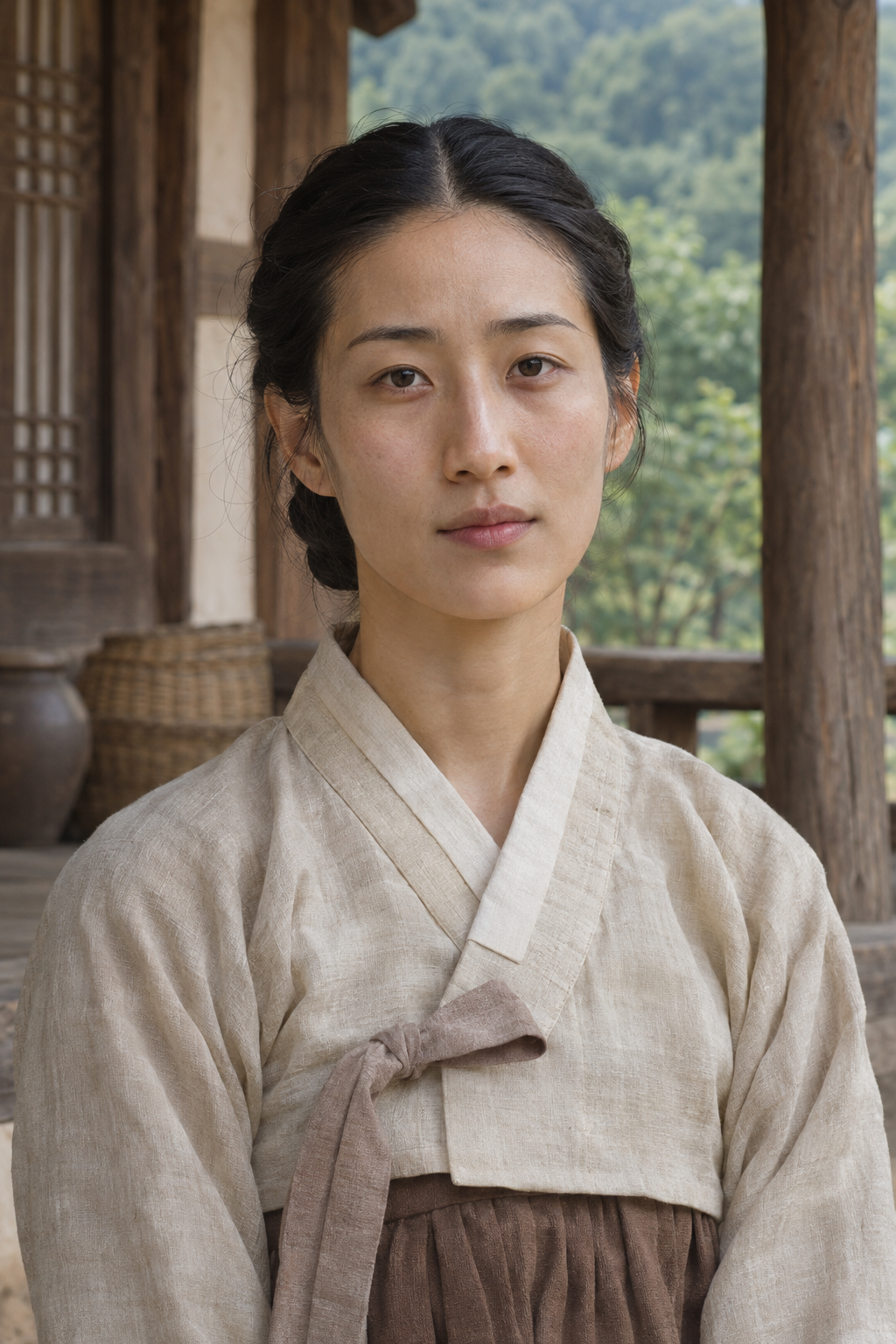
About Barbara Sim Jo-i
Barbara Sim Jo-i came from a yangban family in Incheon. At about twenty she married Thomas Hong Bong-ju. He belonged to a Catholic family that had lived through the persecution of 1801. His grandfather Luke Hong Nak-min had been executed in Seoul. His father, Protase Hong Jae-yeong, had gone into exile in Gwangju. It was there that Barbara made her home when she married Thomas.
Thomas himself had been born in Gwangju, where his father had been sent after renouncing Catholicism in custody. His mother was a daughter of Jeong Yak-hyeon, older brother of the Catholic teacher Augustine Jeong Yak-jong. Thomas had received religious instruction from both his parents. Barbara entered a household where the older generation had resumed practising a faith that had first brought the family to the attention of the authorities.
In accounts of her life the characters following the family name Sim are pronounced Jo-i. The term is sometimes taken to mean that the woman so designated was a widow. A historical study found that it was used for women in a range of circumstances, including unmarried women. Barbara’s husband Thomas survived her and appears in later records under his own name.
Barbara found it difficult to learn long explanations of Catholic doctrine, although she kept trying. The Church’s account remembers her knowing the principal teachings and being eager to help other people. What that meant for the household became clear when Catholics in danger of arrest began arriving in Gwangju. She welcomed them and shared the food she had, without making them feel that the family resented their presence.
Ri Gil-jae identifies four people who found shelter with the family. Anastasia Kim and her daughter Yi Bong-geum needed somewhere to stay while the child’s father was away. Magdalene Yi and Barbara Choe also came. Sim helped provide sleeping places as well as meals. The two women who shared the Christian name Barbara now lived under one roof, one as a member of the household and the other as a guest.
Officers arrested Barbara along with Protase and the people who had taken refuge with them. She was brought before the provincial administration in Jeonju. The family account remembers her remaining composed amid the officials’ demands and insults. The authorities hoped that the prospect of more punishment would make her renounce her faith. Her refusal left her in the provincial prison with the people her family had sheltered.
The royal diary credits Barbara with seven years of instruction.
Her youngest son was with her in prison. Sources disagree about his age, but all describe a small child who depended on her care. The Church remembers watching him grow weak from hunger and illness as her greatest suffering. Although she could share food freely with the people who had come to her home, in custody she could do little to relieve the hunger of her own child.
Both Barbara and her father-in-law appear by name in the account of the cause kept by the Honam church history institute. When their diocese first petitioned Rome in the 1980s, it had put forward just five martyrs. Barbara and Protase were among nineteen others whose cases were taken up when the bishops brought the separate diocesan inquiries together.
Barbara became ill with dysentery in prison. She had also been injured under questioning. Although sentenced to die, she did not live to be taken to the execution ground. She died in Jeonju on November 11, 1839. The little boy who had shared her imprisonment died a few hours later.
The bishops’ guide to the Jeonju prison site gives the child a name, Peter Hong. His mother’s own official biography calls him simply her youngest son.
Thomas had also been arrested in 1839. He renounced the faith and was released. After the deaths of his wife and father he moved to Yesan, the family’s ancestral home. It was not until 1853, when he met Father Thomas Choe Yang-eop, that he returned to Catholic practice. He went on to assist missionaries and died in a later persecution in 1866. Barbara’s story belongs to the earlier ordeal, when Gwangju was still their family home.
In 2006 the diocesan investigation in Jeonju took evidence about the place where Barbara had died. The investigators visited the former prison site, identified by comparing maps from two different periods. The report names her alongside Anastasia Kim and Yi Bong-geum, two of the people who had received food and shelter from her. Their stories can be traced from the house in Gwangju to the same prison in Jeonju.
Barbara is also commemorated in Incheon, where her life began. In September 2016 Bishop John Baptist Jung Shin-chul blessed a retreat house bearing her name at the diocesan youth center in Songnim-dong. The diocese had adapted a former girls’ school for the project. It chose Barbara, who had died at twenty-six and been beatified two years before the opening, as a local example for young people. The name on a house intended to receive guests recalls the hospitality she offered in Gwangju.
Wondering how to weigh the stories and sources? Learn how to read a saint biography.