Biography
Bartolomé Díaz Laurel
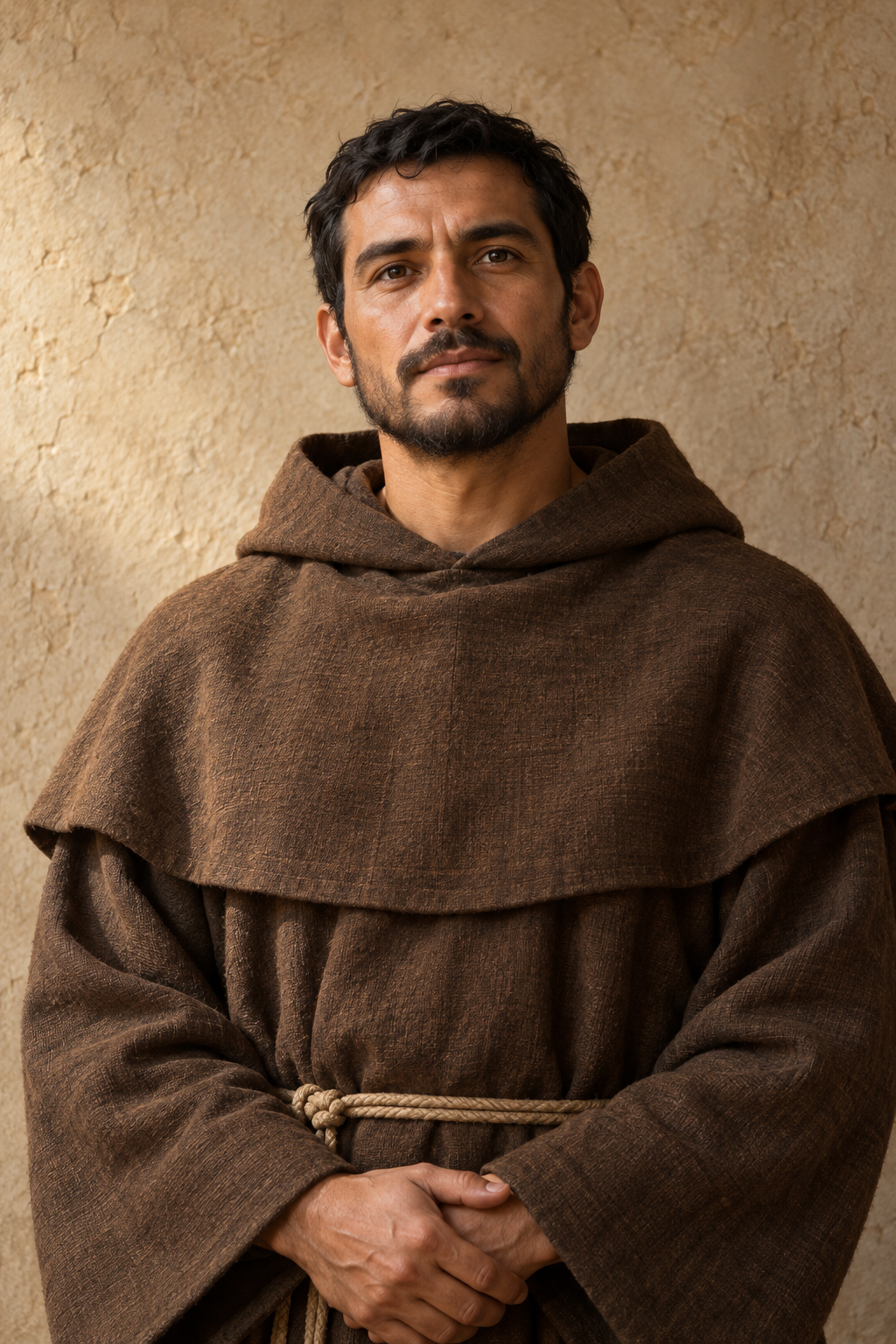
About Bartolomé Díaz Laurel
Bartolomé Díaz Laurel entered Franciscan life in Valladolid, now Morelia, Mexico. The historian Nicolás León published documents concerning his admission and profession, including testimony gathered after earlier papers from Acapulco had been lost. León’s account describes a first period in the habit, a departure and a return, followed by profession as a lay brother in 1617.
The replacement inquiry asked friars who had examined his earlier admission papers to confirm that they had approved them. Their testimony allowed the lost papers to be replaced so that his profession could proceed. León printed the statements together with a later provincial certification that his copy matched the original.
His birthplace remains disputed. Mexican tradition claimed him, while Spanish accounts associated him with El Puerto de Santa María. A possible baptism there has not securely established his identity.
León defended an Acapulco birthplace using later oral testimony and reports about local families. The baptismal record was not available to him, so this argument does not settle the question.
Laurel later lived in Manila, where his work included caring for sick people and learning skills used in the mission. The New Catholic Encyclopedia places his arrival in Japan in 1623.
He accompanied the priest Francisco de Santa María and worked with the Japanese catechist Antonio de San Francisco. Laurel helped plan their journeys and identify places where the priest could minister safely during persecution. He carried supplies for worship, taught catechism and prepared children for the sacraments. His care for sick people extended beyond the Christian community.
He was imprisoned in Nagasaki in 1627 and executed that August. The Catholic Church recognizes him among the blessed martyrs of Japan.
The Franciscan account places his arrest at the home of Gaspar Vaz, where Christians had gathered for the Eucharist. He faced imprisonment and death alongside the people who had sheltered and supported the mission.
His name remains part of Franciscan institutional life in Mexico. In a 2026 report, the Province of Saints Peter and Paul of Michoacán identified its chapter house in Celaya as dedicated to Blessed Bartolomé Laurel and Blessed Luis de San Francisco.
Wondering how to weigh the stories and sources? Learn how to read a saint biography.