Biography
Basil the Great
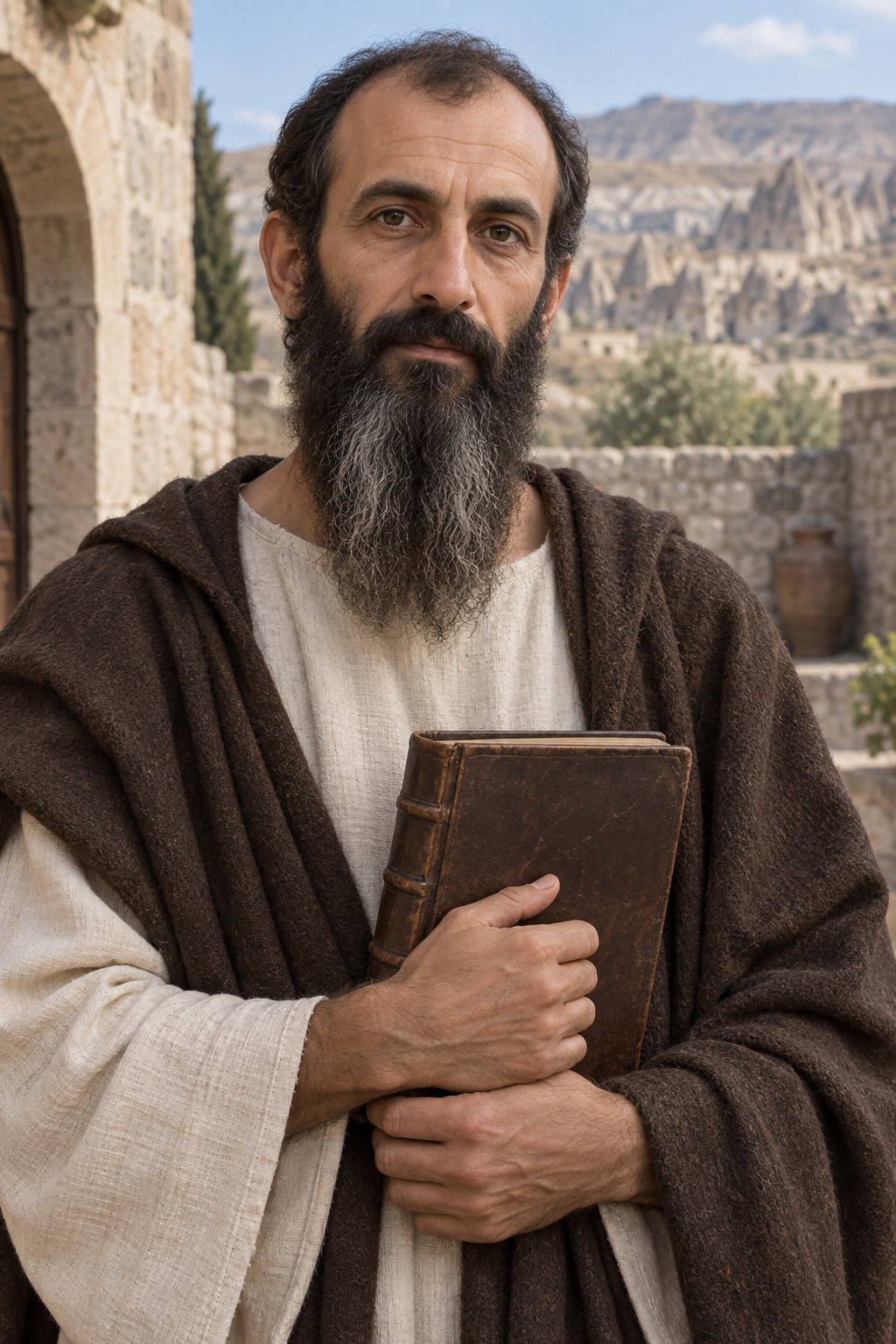
About Basil the Great
Basil the Great joined Christian teaching to the practical organization of care for people in need. He became bishop of Caesarea in Cappadocia in 370, after pursuing an ascetic life shaped by prayer and Scripture. Born around 330, he belonged to a Christian family in which his sister Macrina offered an example of religious commitment. His education included study in Constantinople and Athens. The learning he acquired eventually served communities whose needs included both religious instruction and material assistance.
Gregory of Nazianzus remembered their student friendship in Athens as a shared pursuit of learning and Christian practice. His funeral oration describes their admiration for one another and their efforts to direct youthful ambition toward a common purpose. That account was written to honor Basil after his death. It preserves a friend's testimony, with the affection and rhetorical praise appropriate to a eulogy, rather than an impartial assessment of every stage of their relationship.
Basil's own description of his change of direction appears in Letter 223. Looking back, he judged much of his earlier ambition to have been wasted. Reading the Gospel led him toward sharing possessions and seeking companions committed to a disciplined life. He reports meeting ascetics in Egypt, Palestine, Syria, and Mesopotamia, and admiring their endurance. The letter is also a defense against opponents, so its account of his development belongs within an argument about the consistency of his faith.
His advice to Gregory in Letter 2 gives that discipline an everyday shape. Basil recommends beginning the day with prayer and carrying remembrance of God into work. He treats Scripture as a source of examples for conduct, and urges care in conversation: listening, asking without showing off, and acknowledging the source of another person's knowledge. The letter connects the management of time and speech with religious formation. Its demanding instructions describe an intended way of living, not proof that Basil always fulfilled his own advice.
As bishop, Basil faced questions about the resources and responsibilities of the church. In Letter 94 he answers the provincial governor Elias about buildings associated with his ministry. He defends accommodation for travelers and for people needing medical attention, together with the personnel and transport required to support them. The practical details matter: hospitality needed buildings, skilled workers, and administration. Basil presents these provisions as a public benefit, while responding to complaints that had brought his work under official scrutiny.
He also appealed for assistance beyond his own region. Letter 90 addresses western bishops after correspondence had reached him through Athanasius. Basil describes divided and distressed churches and asks for prayer and support. He argues that geographical distance should not prevent communion between them. His language about opponents is severe, and reflects his position within the conflict. The letter nevertheless shows how much his episcopal work depended on messages, messengers, and relationships across communities, rather than on the resources of one city alone.
The same attention to relationships appears at the opening of On the Holy Spirit. Basil addresses Amphilochius, commending questions asked to learn rather than to trap a speaker. He explains why small differences in religious language deserve careful examination. Later he presents the Spirit as the giver of holiness and life, drawing on Scripture and inherited Christian teaching. For Basil, precision in words served the church's worship and understanding of God. His argument treats theological study as work requiring patience, instruction, and an honest willingness to ask questions.
A shorter letter reveals the regular practice behind his concern for worship. Writing to Caesaria about communion, Basil approves frequent reception and reports receiving it four times weekly, with additional occasions for saints' commemorations. He also discusses people receiving communion in circumstances where a priest was unavailable. This is evidence for practices he described in a particular setting. It should not be turned into a claim that every Christian community followed an identical schedule or that later liturgical customs were already uniform.
Basil's approach to education did not require rejecting everything written outside the Christian tradition. In his address to young people, as discussed by Benedict XVI, he encouraged discerning use of classical literature. Examples of good conduct could be retained while other material was set aside. His image of bees choosing what they need from flowers made selective reading concrete. The purpose was moral formation, with readers actively judging what they encountered rather than accepting an author's whole outlook because some passages were useful.
The Orthodox Church in America's account remembers Basil's brother Gregory as bishop of Nyssa and his sister Macrina as an important influence on his ascetic life. It also preserves the received date of Basil's death, January 1, 379. Those family relationships help place him within a wider community of Christian teachers and ascetics. The calendar's devotional account is evidence of Orthodox remembrance; its praise and detailed traditions require distinction from the direct testimony of Basil's surviving letters.
Wondering how to weigh the stories and sources? Learn how to read a saint biography.
Explore similar vocations
Prayers for Basil the Great
Basil the Great: prayer excerpt
God grant that I may both receive the reward of silence, and gain some strength to confute my opponents