Biography
Beatrice of Silva
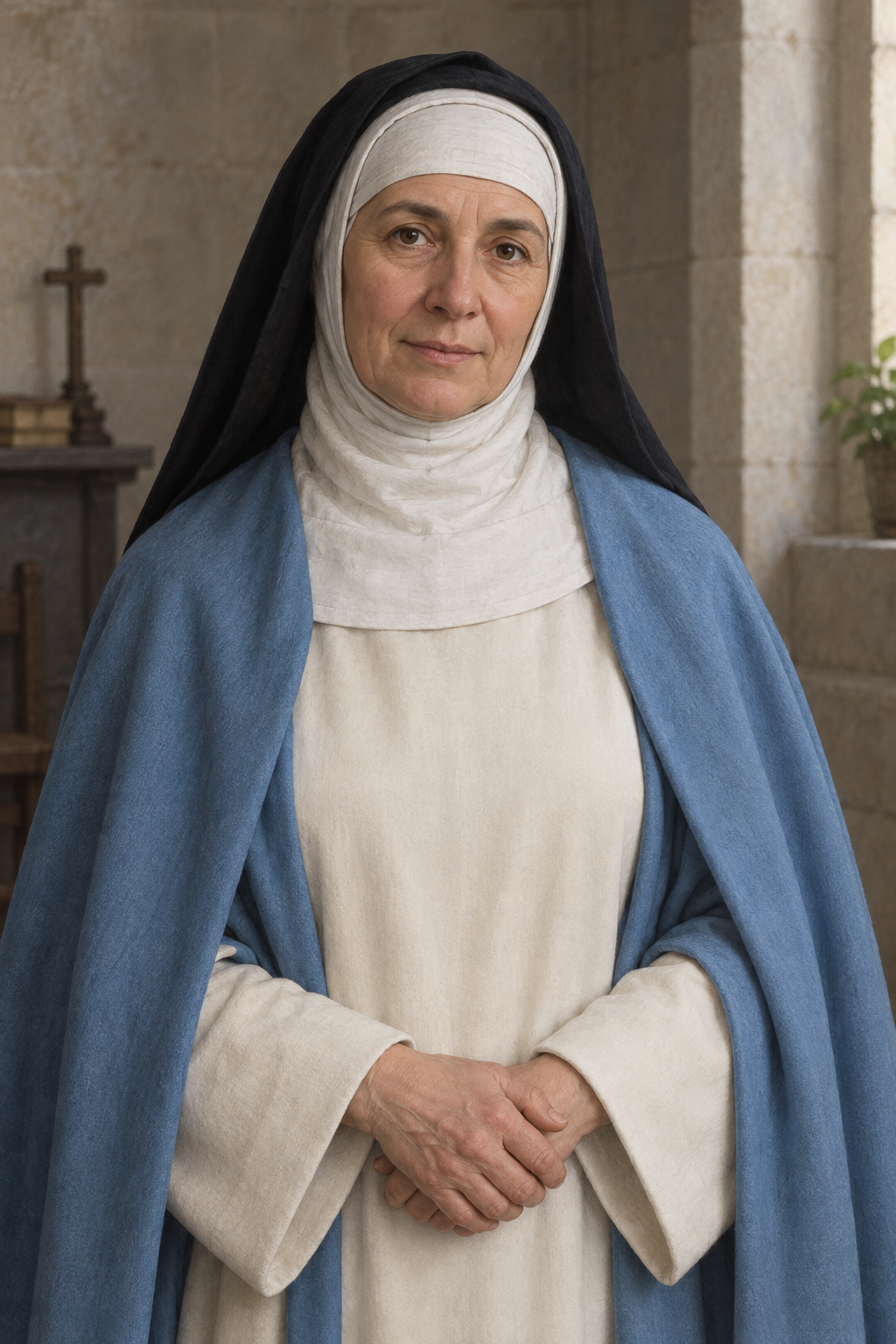
About Beatrice of Silva
Beatrice of Silva founded the community from which the Order of the Immaculate Conception developed in Toledo. Portuguese by origin, she lived within the world of the Castilian court before seeking a quieter religious life. Later accounts connect her departure with jealousy at court and an apparition of Mary during confinement. Those episodes belong to the received devotional narrative. Her work as a founder is more securely visible in the surviving authorization for the community.
She lived for years at Santo Domingo el Real among Dominican nuns, without simply becoming a professed Dominican herself. There she pursued prayer and a plan for a community devoted to Mary’s Immaculate Conception. Isabella the Catholic supported the project. The distinction matters: Beatrice’s residence with one religious community and her foundation of another were different stages in her life, and the order’s later rule was not yet in place.
The papal document Inter universa, dated April 30, 1489, records a petition from Beatrice, a resident of Toledo. It describes Isabella’s gift of a substantial house known as the Palacios de Galiana, with an adjoining chapel. Beatrice and her companions were already living there together. Their request was for the erection of a monastery under an approved rule, with the dedication of the Conception. The document therefore preserves the work of organizing a community as well as the religious intention behind it.
Innocent VIII authorized designated church officials to establish a Cistercian monastery. The community would remain under the Archbishop of Toledo and could make statutes consistent with church law. White habits and scapulars, a sky-blue mantle and a hemp cord were specified. The arrangements also made the Marian office central to its worship, with exceptions for other required observances. This was a concrete authorization for shared religious life; it should not be confused with the independent rule the order received later.
Historian Margarida Garcez Ventura examines the foundation alongside Isabella’s plans for religious reform. Her study distinguishes the familiar miraculous account of Beatrice’s departure from alternative historical reconstructions, which place her move to Toledo considerably later. It also sets the project within the queen’s relationships with religious communities and the papal court. This approach leaves room for Beatrice’s religious purpose while recognizing the institutional circumstances in which it took form. The exact chronology of her earlier life remains disputed.
After Beatrice’s death, the community continued to develop. In 1511 Julius II issued Ad statum prosperum, freeing it from the previous rules of Cister and Saint Clare and confirming a rule of its own. Its twelve chapters regulate admission, government, poverty, enclosure, prayer and work. The text belongs to the life of the order after its founder; it cannot be treated as a surviving statement written by Beatrice herself. Her foundation continued through decisions made by the women who followed her and the church authorities responsible for its governance.
That rule joins contemplation with obligations of care. It requires the abbess to serve the sisters without partiality and provides for an infirmary, where sick members are to receive help with humility and kindness. It allows necessary dispensations for the weak and expects the abbess, or her deputy, to visit the infirmary daily. These provisions show how the order’s ideal of prayer was given a practical communal form. They describe the rule’s requirements, rather than undocumented acts from Beatrice’s personal life.
At her canonization on October 3, 1976, Paul VI spoke openly about the limits of the surviving record. He noted the absence of her own writings and of a secure portrait, while affirming the historical reality of her foundation. His homily placed its contemplative vocation at the center of her legacy. The women of the order, he explained, had chosen to remain in their communities rather than attend the ceremony, seeking closeness to their founder through prayer. He presented their quiet and sustained attention to God as a reminder that human life has a spiritual dimension, even amid the distractions of modern public life.
The canonization decree enrolled Beatrice among the Catholic saints and established August 17 for her annual celebration in Mass and the Liturgy of the Hours. It connected that day with a traditional account of her death. The commemoration does not settle the conflicting dates preserved in biographical sources. Her birth year and birthplace are also disputed. Respect for the founder includes keeping those uncertainties visible rather than assigning precision that the evidence does not support.
The community she began remains active. The federation describes a life that includes prayer, formation and work such as sewing, bookbinding and other crafts. In 2026 it marked the fiftieth anniversary of her canonization with celebrations across its monasteries and opportunities to learn about her life. Beatrice’s memory is carried by that continuing common life: a religious foundation whose purpose survived the uncertainties and difficulties surrounding its beginnings.
Wondering how to weigh the stories and sources? Learn how to read a saint biography.