Biography
Benedict Daswa
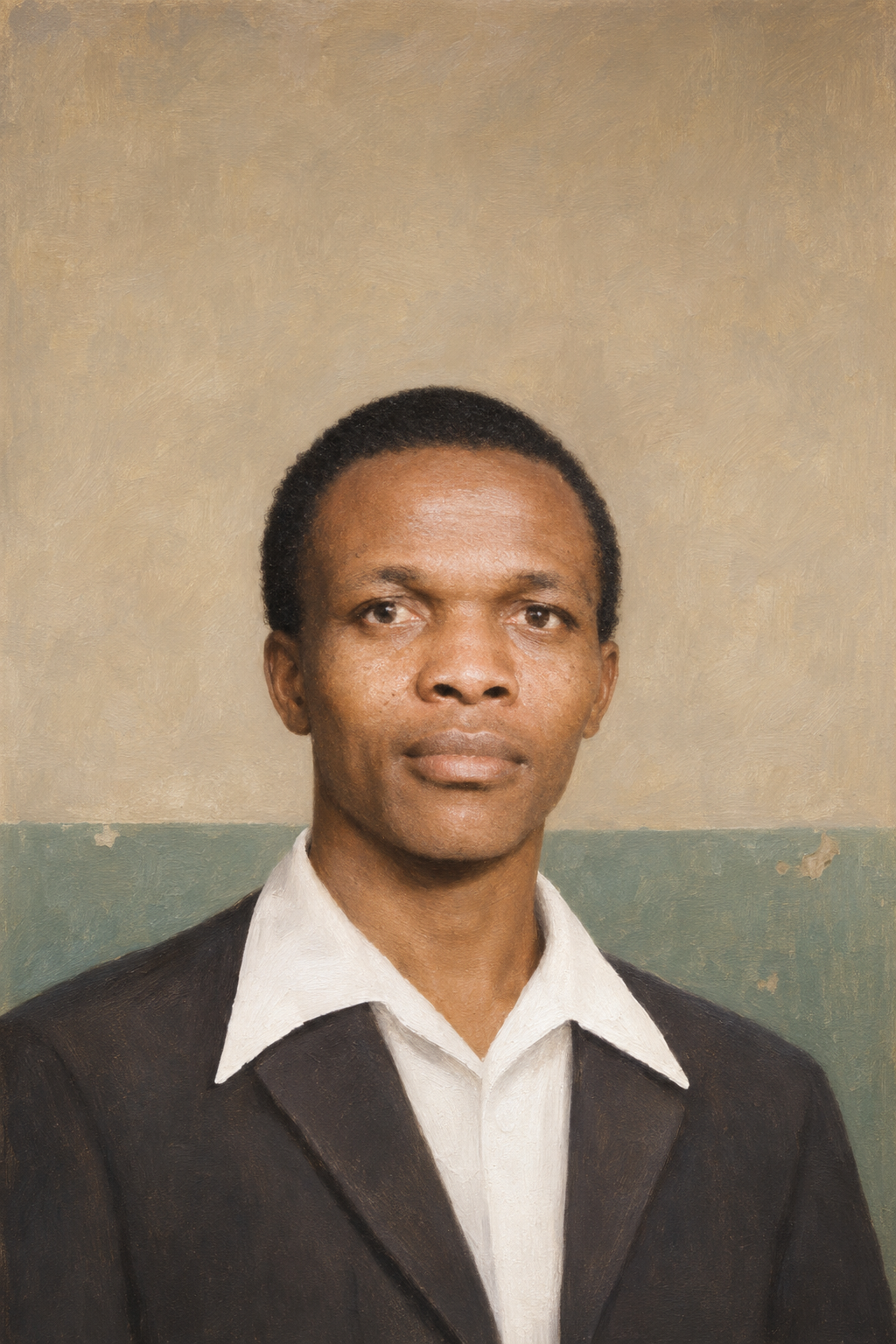
About Benedict Daswa
Benedict Daswa built his life around a village school, a growing family and a parish in northern South Africa. Born Tshimangadzo Samuel Daswa at Mbahé in 1946, he became a Catholic while still young. He qualified as a primary-school teacher in 1973. His responsibilities later grew when he became principal of the school at Nweli. The Catholic account of his life remembers a public role grounded in ordinary responsibilities: teaching, family prayer and practical service to his neighbors. He was the eldest of five children. He received baptism in 1963.
He married Shadi Eveline Monyai, who was Lutheran, in 1974. Anthony Egan’s historical discussion distinguishes their traditional marriage from the later civil and Catholic ceremonies. After Eveline became a Catholic, their marriage was convalidated in the Church in 1980. They had eight children. Daswa also became a valued collaborator of the Missionaries of the Sacred Heart working in the district. His growing involvement in parish life accompanied his work as a parent and educator, rather than replacing either responsibility.
Within the parish, Daswa taught children and adults preparing to understand and practice the faith. He was elected president when its first pastoral council was formed. When no priest was present, he helped lead the Sunday gathering. He visited sick people and those who had stopped participating in parish life. His service also included help for poor neighbors and involvement in starting a nursery school. A small Christian community sometimes met at his home, where its members prayed and reflected on Scripture.
His educational responsibilities extended beyond classroom instruction. The Comboni account describes his concern for students’ character as well as their academic progress. At school he encouraged discipline, fairness and cooperation. As a principal he worked with his staff to improve teaching and drew parents into the educational process. This account presents school leadership as a daily undertaking involving teachers, children and families, with Daswa taking responsibility for their shared work. Beyond school and parish, he also served as a counselor and adviser to the village chief. These responsibilities placed him within local community life as well as within the Catholic congregation.
The conflict that ended his life followed destructive thunderstorms. In January 1990 lightning burned houses in the area. Community members concluded that someone had caused the damage through witchcraft. They proposed hiring a person to identify the supposed offender, with each resident required to contribute five rand. Daswa challenged that explanation of the storm. He argued that lightning was a natural phenomenon. When the decision stood, he refused to pay the levy because he considered participation incompatible with his Catholic faith.
His refusal deepened existing hostility. On 2 February a group ambushed his car. Injured, he sought shelter, but his attackers found him and brought him outside. He was killed after kneeling in prayer. The later Vatican News reconstruction identifies his opposition to witchcraft accusations as central to the attack. It preserves the recollection of a man who did not seek revenge even when confronted by fatal violence.
Local remembrance eventually became a formal Catholic inquiry. The assessment of his death involved theologians and the Congregation for the Causes of Saints. Their task was to examine whether the killing constituted martyrdom in the Church’s understanding. Pope Francis authorized the promulgation of the relevant decree in January 2015. That judgment concerned the connection between Daswa’s Christian commitment and his death. It opened the way to beatification, while the public ceremony still had to be arranged.
In September 2015, as the ceremony approached, South African Catholic broadcasters described the significance of his witness as a lay leader. Vatican Radio interviewed the Dominican Emil Blaser and the journalist Gunther Simmermacher. They emphasized a life whose meaning extended beyond the circumstances of the murder. The Church’s public recognition brought wider attention to someone already remembered locally for family responsibility, kindness and courage. His beatification was celebrated on 13 September, with Cardinal Angelo Amato representing Pope Francis.
His family continued to shape that remembrance. At a later celebration of his feast, Bishop Jeremiah Masela shared the recollections of Daswa’s daughter. She remembered receiving a strong Christian foundation at home and described a father willing to stand by his convictions. The gathering at Tshitanini included the local bishop, João Rodrigues, and Bishop Emeritus Hugh Slattery. Such testimony keeps his story connected to the people who lived with him and to the community that continued to remember his work.
Egan cautions against interpreting Daswa’s life as a blanket rejection of African religious culture. His discussion distinguishes varied traditional religious practices from accusations that can expose innocent people to violence. That distinction matters to the historical account: Daswa’s refusal concerned a particular proposed response to misfortune. His Catholic recognition preserves the memory of a teacher and family man whose public commitment placed him in danger when he resisted that response.
Wondering how to weigh the stories and sources? Learn how to read a saint biography.