Biography
Berardo of the Marsi
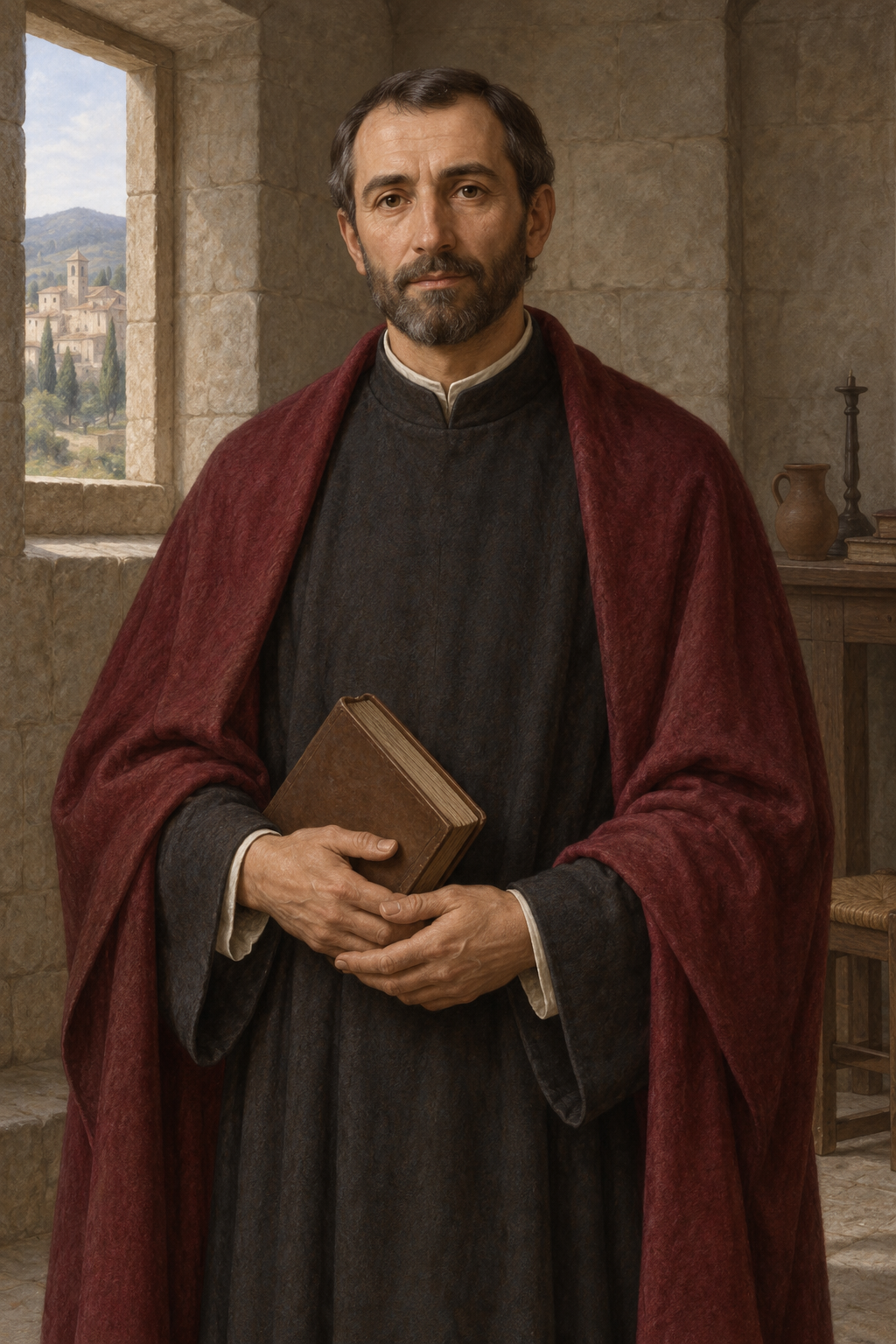
About Berardo of the Marsi
Berardo of the Marsi was a bishop whose memory remains closely connected with the Cathedral of Santa Sabina. Giovanni of Segni, a former pupil, wrote his life after his death. The narrative presents a pastor who opposed the sale of church offices, confronted powerful landholders and cared for people in need. It also preserves the difficulties of a reform that met resistance.
Zelina Zafarana places his birth around 1080 at the castle of Colli. Her study follows his education at Santa Sabina and Monte Cassino, and his service to Paschal II before he became bishop of the Marsi. It distinguishes evidence for his cardinal diaconate from the disputed assertion that he also held the priestly title of San Crisogono. These offices should not be treated as equally secure. The same study records his death on 3 November 1130, after illness during a visit and his return to Santa Sabina.
A papal privilege addressed to Berardo gives a more concrete picture of his responsibilities. Paschal II answers the bishop’s petition by confirming the boundaries of the diocese and the rights of his successors. Within that territory, the document protects episcopal authority over ordinations, church dedications, tithes and discipline. It also restricts monks from performing baptisms, leaving their monasteries to anoint sick people or admitting people whom the bishop had excluded from communion. These provisions show that reform involved disputes over who could minister and exercise authority, as well as the moral conduct of individual clergy. Santa Sabina is confirmed as the mother church and episcopal seat, followed by a list of dependent churches and possessions. The protection is institutional: it extends beyond Berardo’s lifetime to legitimate successors. The published text has a dating difficulty, with 1114 in the editorial heading and 1115 in its concluding formula. Its provisions can be described without deciding between those years or treating a modern anniversary as proof of the date.
Giovanni’s account describes practical care alongside discipline. In its picture of Berardo’s ministry, assistance reached poor households in several settlements, especially when food was scarce. The bishop is also shown insisting that his clergy live together and seek agreement. Near the end, the narrative gives him an exhortation to charity, humility and reconciliation. Giovanni says he gathered what he could remember of these words; the passage is an attributed speech preserved by the biographer.
The Life also gives a difficult example of discipline and mercy: Berardo excommunicates a count, but later absolves him when witnesses report his request for reconciliation. The author interprets the episode religiously.
Jacques Dalarun’s study shows why the history of this remembrance requires care. Working with the surviving copies, he distinguishes the bishop’s life from successive collections of posthumous miracles. The account grew through different stages and hands. Dalarun also examines signs of disagreement within the cathedral community. His interpretation suggests that a shared memory of the bishop did not automatically produce agreement about promoting his recognition at Rome. Some explanations remain hypotheses, including the part played by disputes over common life among the canons. The final exhortation itself may have been shaped by the writer’s later concerns. This makes the narrative valuable evidence of a community remembering its pastor, while leaving questions about the words spoken at his bedside. Dalarun also traces changes in the miracle collection: visitors initially seek help at the tomb, while later stories give greater prominence to promises and gifts made from a distance. The places named remain chiefly local. His analysis describes the development of devotion and its written record, rather than proving the cures reported by those seeking Berardo’s help.
Grégory Combalbert’s review of Dalarun’s later French translation explains another feature of the work. The Life and the miracles can be approached through their introductory study or through notes accompanying the translated text. Those notes identify people, institutions and places, helping readers follow a difficult medieval narrative. Combalbert stresses the distinction between this accessible translation and the separate publication containing the critical Latin edition. His review also describes the challenge of conveying Giovanni’s style, with its long insertions and sometimes uneven grammar. These are reminders that a readable modern account depends on choices made by editors and translators. Neither the surviving story nor its later presentation should be mistaken for an unmediated record.
The Diocese of Avezzano continues to honour Berardo locally. Its historical profile identifies his birthplace as Colli di Monte Bove and locates his relics today in the basilica and co-cathedral of Santa Maria delle Grazie at Pescina. It gives two feast days, 3 November and 2 May. These present places of remembrance should be distinguished from the cathedral where the medieval account places his final days. A diocesan announcement for the November feast in 2025 again recalled the exhortation attributed to him. The emphasis on living together and settling disagreement remains part of the way this local community receives his memory.
Wondering how to weigh the stories and sources? Learn how to read a saint biography.