Biography
Bernard degli Uberti
About Bernard degli Uberti
Bernard degli Uberti was a Vallombrosan monk who became bishop of Parma. His first surviving life presents the city as the setting of both resistance to his work and growing reverence for him. It tells of an attack during worship, his imprisonment and his later appointment as bishop. The narrative also portrays him as concerned with peace during conflicts involving Parma and neighbouring communities. Its account of his final days returns to the importance of agreement within the Church.
Raffaele Volpini’s study traces a career that reached beyond one city. Donations associated with Bernard’s entry into San Salvi document the change from family property to monastic life. The surviving records later identify him as an abbot, a cardinal priest and a papal representative in northern Italy. Volpini warns that gaps in the evidence leave some appointments uncertain. Even the name degli Uberti belongs to a later stage of the family’s history and is not a contemporary birth surname. Volpini’s reading leaves room for moderation and mediation, rather than treating every encounter as a simple confrontation.
The same study identifies a concrete rule of his leadership: new local superiors were required to promise obedience to assignments from the head of the congregation. The authors connect this requirement with the chapter at San Salvi around 1101. They also note opposition to these measures and Bernard’s appeal to Roman authority, showing that greater central control was contested within the community.
One surviving act places him beside Matilda when an abbot sought the return of disputed property. Alberic of San Benedetto of Polirone complained that an estate official had interfered with the monastery’s island land and that other land had been taken from a dependent church. The record states that the reasons were examined and witnesses heard before restitution was made. It names Bernard as the pope’s representative and records Matilda’s commitment to defend the settlement. This gives a practical example of the business brought before him: the security of a religious community’s resources depended on resolving claims involving a powerful patron’s own officers. The document was drawn up on 4 May 1101, but Volpini distinguishes that recording date from the earlier meeting. It therefore supports Bernard’s participation in the settlement without establishing his presence at Governolo on that exact day.
The medieval life describes his religious discipline alongside his public responsibilities. Its opening follows him from San Salvi to leadership among the Vallombrosans and then to service at Rome. Later episodes place him among travellers, civic opponents and fellow clergy. These stories were written to commend a saint, and their religious purpose remains visible. The author’s prologue directs praise towards God’s work in the saint. It is a perspective on Bernard’s memory rather than a complete record of all his decisions.
The politics surrounding his work were not a simple division between religious and secular interests. In his cathedral history, Guido Bellocchio interprets Bernard’s support for monastic independence as part of a policy that strengthened the monasteries’ connection with Rome. A bishop’s authority and a monastery’s freedom could therefore pull in different directions. Bellocchio also stresses the limits of describing Bernard only as an uncompromising opponent of rulers: negotiation and continued contact could serve the reforming cause. This interpretation helps explain the demands of the office, but it does not establish every motive assigned to him. In particular, Bellocchio’s suggestion that Bernard advised the pope’s proposed settlement over temporal possessions remains a suggestion. Nor does the author claim evidence that Bernard personally negotiated the Concordat of Worms. Keeping those limits visible prevents a broad account of Church reform from becoming an invented list of achievements for one bishop.
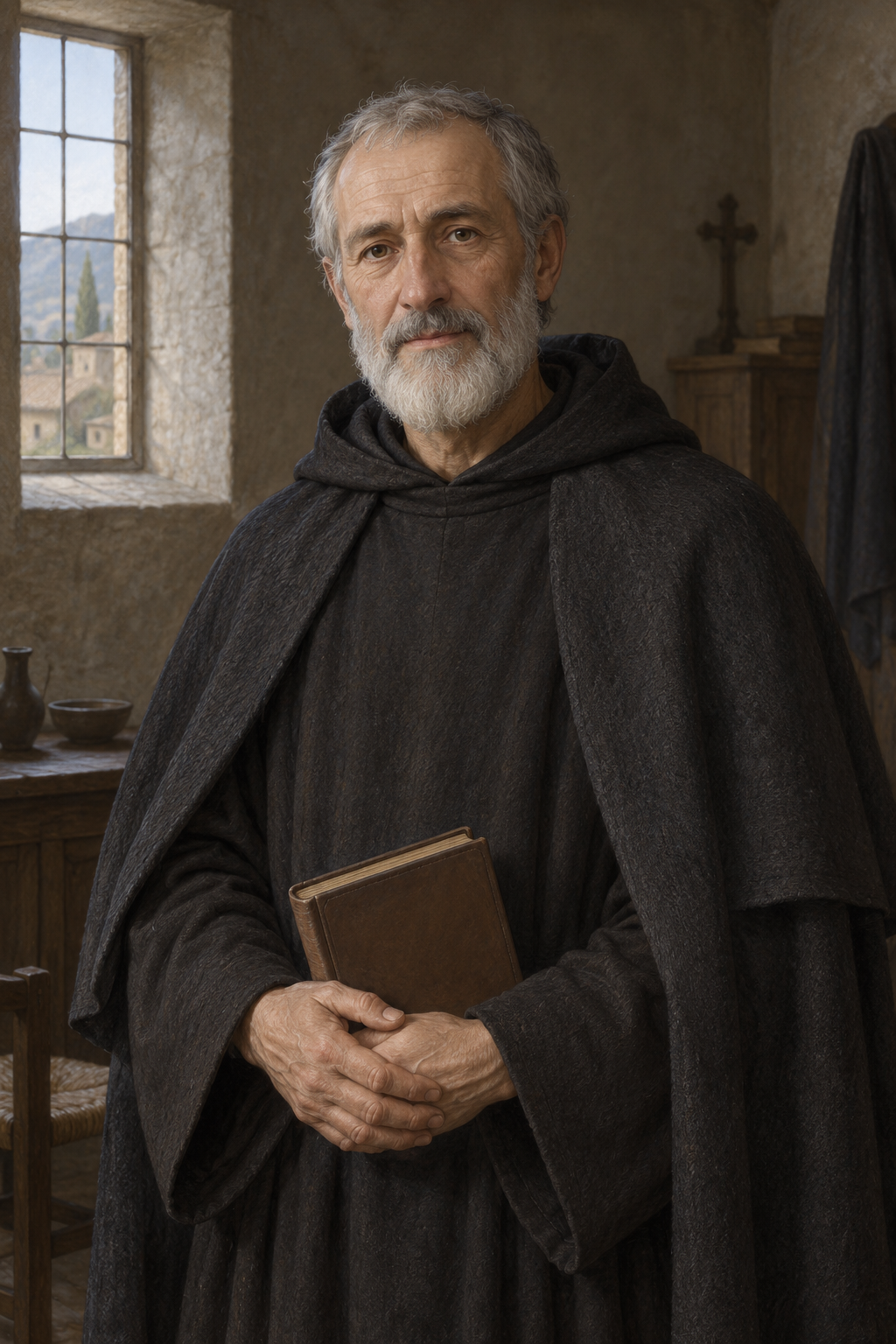
The study published by ERSAF draws out the different perspectives within Bernard’s biographies. The account connected with Parma concentrates on his episcopate and his place within the urban community. The Vallombrosan account gives more attention to the monk, abbot and defender of the Church. The authors also examine how his leadership helped turn a movement of religious protest into a more organised ally of the papacy. This change required rules and institutional relationships as well as personal commitment. In later remembrance, Bernard stood beside Benedict and Giovanni Gualberto among the fathers honoured by the congregation. The same study follows the development of paintings and other images that gave his memory a visible place within Vallombrosan history. These later works express what communities wanted to remember about him; they do not provide a contemporary likeness.
Volpini records Bernard’s death at Parma on 4 December 1133. He also describes the elevation of the relics by Bernard’s successor, Lanfranc, in 1139, a form of recognition used in that period. This local act should be understood in its historical setting.
The Diocese of Parma still lists Bernard as its patron and celebrates him on 4 December. His connection with the local Church continues through this shared remembrance.
Wondering how to weigh the stories and sources? Learn how to read a saint biography.