Biography
Bernardo Tolomei
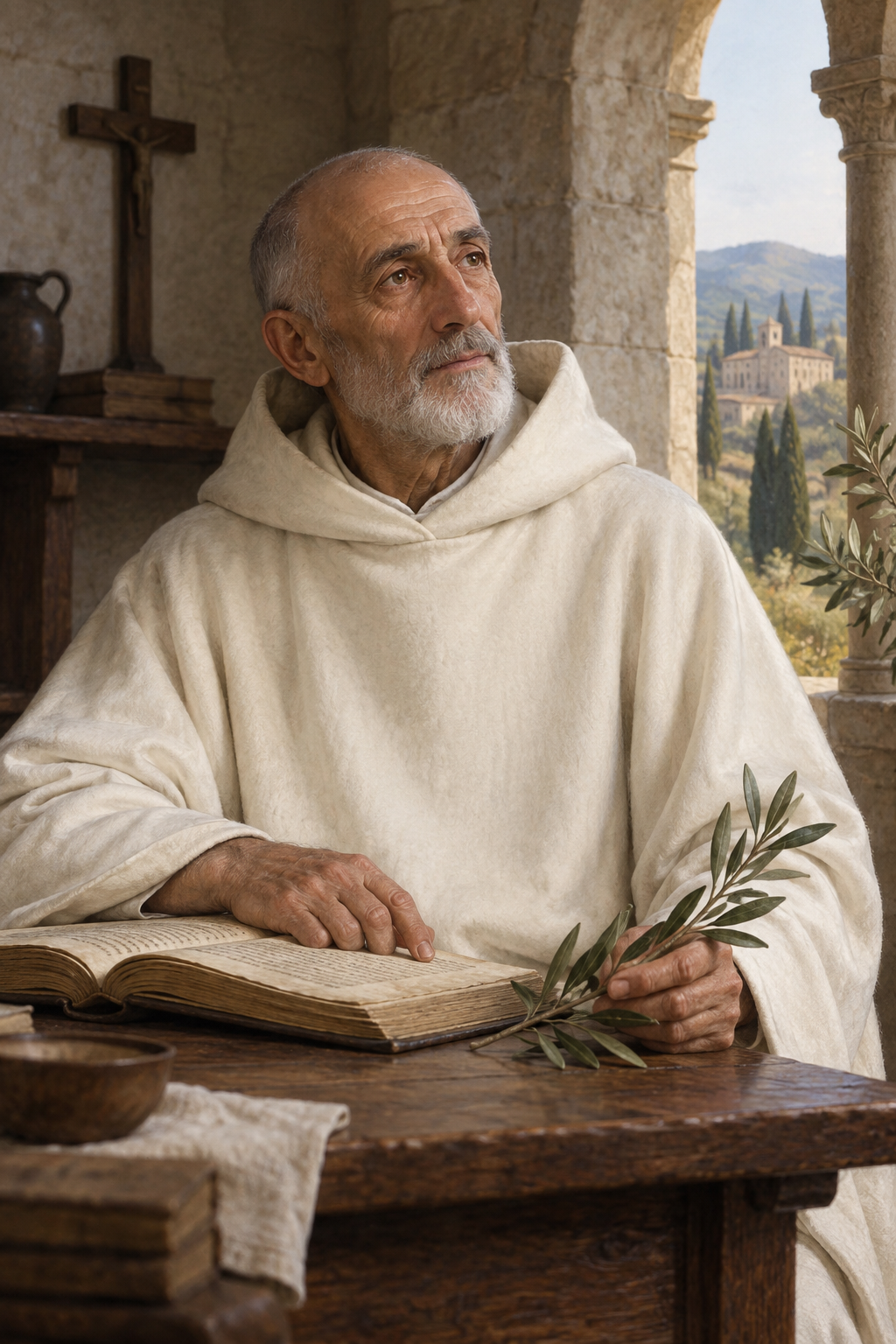
About Bernardo Tolomei
Bernardo Tolomei was born in Siena on May 10, 1272. The Vatican biography gives his baptismal name as Giovanni and places his early life inside a noble Sienese family.
The catalog records Siena as his birthplace, and this draft preserves that field. Siena is not only a birthplace label; it is the city whose public, religious, and charitable life formed him before monastic withdrawal.
Giovanni studied law and was connected with the Confraternity of Santa Maria della Notte, which served the sick at Siena's hospital. That background matters because charity appears before the monastery in his story.
His movement toward monastic life was not an escape from all responsibility. It was a change in form: public skills, discipline, and concern for the sick were drawn into a life of prayer, silence, manual work, and community.
The sources also connect his withdrawal with serious illness or progressive blindness. The page can mention the interruption of public life without making medical detail the whole explanation for his vocation.
That restraint matters because the heart of the story is not the illness itself but the religious response that followed. Bernardo's life changed direction toward prayer, community, and service.
In 1313 he withdrew with companions to Accona, about thirty kilometers from Siena. There Giovanni took the name Bernardo in honor of Saint Bernard and began a penitential, eremitic life.
That beginning should be written simply. The landscape, caves or austere dwellings, prayer, manual labor, and silence are enough to show the shift without romanticizing hardship.
The monastery that emerged at Monte Oliveto gave its name to the Olivetan Benedictine congregation. The olive branch is therefore a useful symbol, but it should be a quiet cue rather than decorative excess.
Monte Oliveto should be presented as a place of reform, not merely scenery. The community's identity joined Benedictine roots with a distinctive Sienese and Olivetan memory.
The catalog classifies Bernardo as `Monk / Nun`, and this draft preserves that class. Artwork should show the white Olivetan habit, not a black Benedictine habit, bishop vestments, or ceremonial abbatial regalia.
The Holy See biography describes the community's life through prayer, manual work, and silence. Those themes can structure the public page better than a long institutional timeline.
Bernardo was drawn into leadership despite his desire for humility and withdrawal. The page can mention monastic governance, but it should present him primarily as founder and father of a community, not as an administrator alone.
Papal approval in 1344 gave the new congregation a formal place in church life. That event is important, but it should be concise because the page's heart is the monastic witness itself.
Formal approval also shows that Bernardo's retreat did not remain a private experiment. The way of life became stable enough to be recognized and passed on to others.
Treccani provides useful historical context for the name Monte Oliveto and the foundation's early recognition. It should be used for context without turning the biography into an institutional chronicle.
The last episode of Bernardo's life returns the article to charity. During the plague of 1348, he went to Siena to assist monks who had been struck by the epidemic.
The page should state that with restraint. It should not show a plague-bed scene in the artwork or make suffering graphic; the point is his decision to serve rather than protect himself.
That decision completes the arc of the biography. The monk who had withdrawn from public ambition did not withdraw from charity when the monastery and city were in danger.
Bernardo died on August 20, 1348. The catalog gives the death place as the Monastery of San Benedetto at Porta Tufi, Siena, and this draft preserves the field exactly.
The feast field is August 20, matching the death date in the catalog. The draft does not change feast observances or add local calendars before final review.
Bernardo was canonized in 2009. That recent canonization can be mentioned, but the biography should not spend much space on the modern ceremony.
The Dicastery profile highlights prayer and manual work as central marks of Bernardo's witness. It also helps keep the page rooted in official Catholic recognition rather than a purely monastic family memory.
His relevance is clear for anyone tempted to separate contemplation from service. Bernardo's life joins both: silence and work, withdrawal and responsibility, monastery and plague charity.
This relevance should stay concrete. Prayer formed a person able to act when others were suffering; it did not become a reason to ignore them.
The final page should leave readers with a Sienese founder in white habit, holding the Scriptures and an olive branch, formed by prayer and willing to return to suffering people when charity required it.
Artwork should show an elderly Italian Olivetan monk in simple white habit, with book, olive branch, Tuscan monastery, and distant Siena or Monte Oliveto context. Avoid black habit, bishop vestments, plague-bed scenes, crowd scenes, rendered text, halos, and exact-likeness claims.
The badge crop should keep Bernardo's face, white habit, book, and olive branch visible. It should read as Olivetan monastic founder before it reads as generic medieval monk.
Wondering how to weigh the stories and sources? Learn how to read a saint biography.