Biography
Bernat Calbó
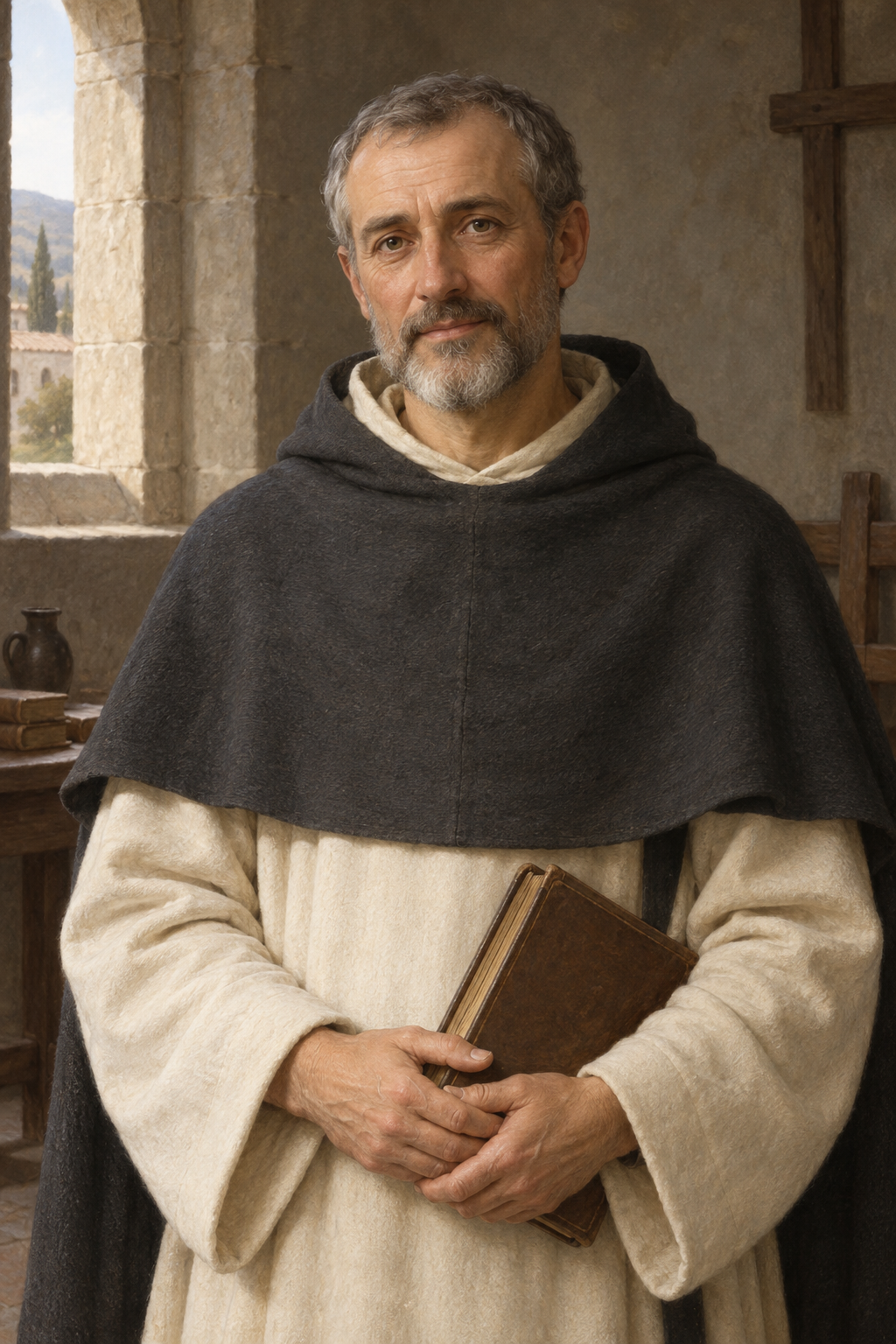
About Bernat Calbó
Bernat Calbó was a Cistercian abbot and bishop of Vic whose career began in legal and administrative work. The Gran Enciclopèdia Catalana follows his service to the archiepiscopal court at Tarragona, his entry into Santes Creus and his later leadership of the monastery. It records his election to Vic in 1233 and his consecration in the following year. As bishop, he continued a form of community life with monks while working on church discipline and the disputes that divided the diocese.
The story of his decision to become a monk needs care. Eufemià Fort i Cogul distinguishes the surviving reference to an illness at Tarragona from the later reconstruction of a dramatic conversion near death. The illness is mentioned in the testament of 1215, but its precise circumstances and the chain of motives attributed to Bernat are less secure. Fort also rejects the claim that his earlier legal service proves he had already held ecclesiastical office. These qualifications leave a change of vocation without pretending to recover every private reason behind it.
Fort’s account of that testament supplies more concrete detail. While still a novice, Bernat arranged the distribution of property among relatives, directed that debts be paid and left his books to Santes Creus. A bequest intended to help a boy enter the monastery remained payable even if he did not become a monk. Such provisions show practical obligations being settled alongside the decision to enter religious life.
His birthplace is traditionally associated with a fortified house now known as Mas Calbó. Rosari Moya i Guerrero’s study of the building distinguishes that tradition from the surviving architecture. The estate appears in medieval documentation, and the study reports the older name Mas de Porpres in Bernat’s testament. The present building has been extensively altered and restored. Its current appearance therefore cannot show exactly what the place looked like during his childhood. This distinction matters when a familiar site carries the memory of a saint: the continuity of remembrance can outlast major changes to the structure itself.
The Diocese of Vic’s historical account also places Bernat within the political and religious responsibilities of his office. It records his appointment as an inquisitor in the province of Tarragona and his participation in the siege and conquest of Valencia. These responsibilities belong alongside the remembrance of his work for peace. A medieval bishop’s public role could include judicial power, royal relationships and the conflicts of his time. The same diocesan account remembers him as an abbot brought to Vic amid disputes left by his predecessor.
Ramon Ordeig i Mata’s research follows a different part of this history: the burial and the developing remembrance of the bishop. He records Bernat’s death on 26 October 1243 and examines the cathedral’s necrology, which places his grave beside the baptismal fonts. The study traces offerings at the tomb, an altar and the later institution of a feast. It also shows why written records matter for the history of the cathedral. Many earlier tombs disappeared when the Romanesque building was demolished, while later memorials and older transcripts preserved different parts of the evidence. The surviving objects should be read together with those records.
The present chapel gives another form to that remembrance. A diocesan heritage announcement describes its inauguration in 1694 and the transfer of the alabaster sarcophagus that had previously held the saint. It explains that a silver urn by Joan Matons replaced that sarcophagus in the early eighteenth century. These later works express the continuing honour given to Bernat at Vic. The announcement gives his local feast as 25 October.
Clothing preserved from his tomb adds material evidence, although it comes from several periods. The Museu d’Art Medieval de Vic describes fragments of silk vestments, including cloth bearing an Arabic inscription and fabrics decorated with animals. It cautiously suggests that James I gave valuable older textiles to the bishop after the conquest of Valencia. That proposed origin remains a museum interpretation, not a documented gift asserted with certainty. The objects also record later interventions: the original mitre was replaced in 1362, and other garments were added during subsequent transfers. Some fragments cannot be assigned securely to a particular vestment. The museum dates the group across several centuries and records the removal of old clothing from the tomb in 1888. It would therefore be misleading to treat everything preserved there as an outfit Bernat wore while alive.
A diocesan reflection published in 2014 presents Bernat as a man of peace and a friend of people in need. Its emphasis falls on humility, prayer, listening and a concern for justice. It recalls his monastic manner of life within his episcopal responsibilities and invites the community to receive that example in its own time. This is a pastoral reading of his memory. Alongside the historical record of his offices and conflicts, it explains why ordinary care remains central to the way the local Church honours him.
Wondering how to weigh the stories and sources? Learn how to read a saint biography.