Biography
Bonitus of Clermont
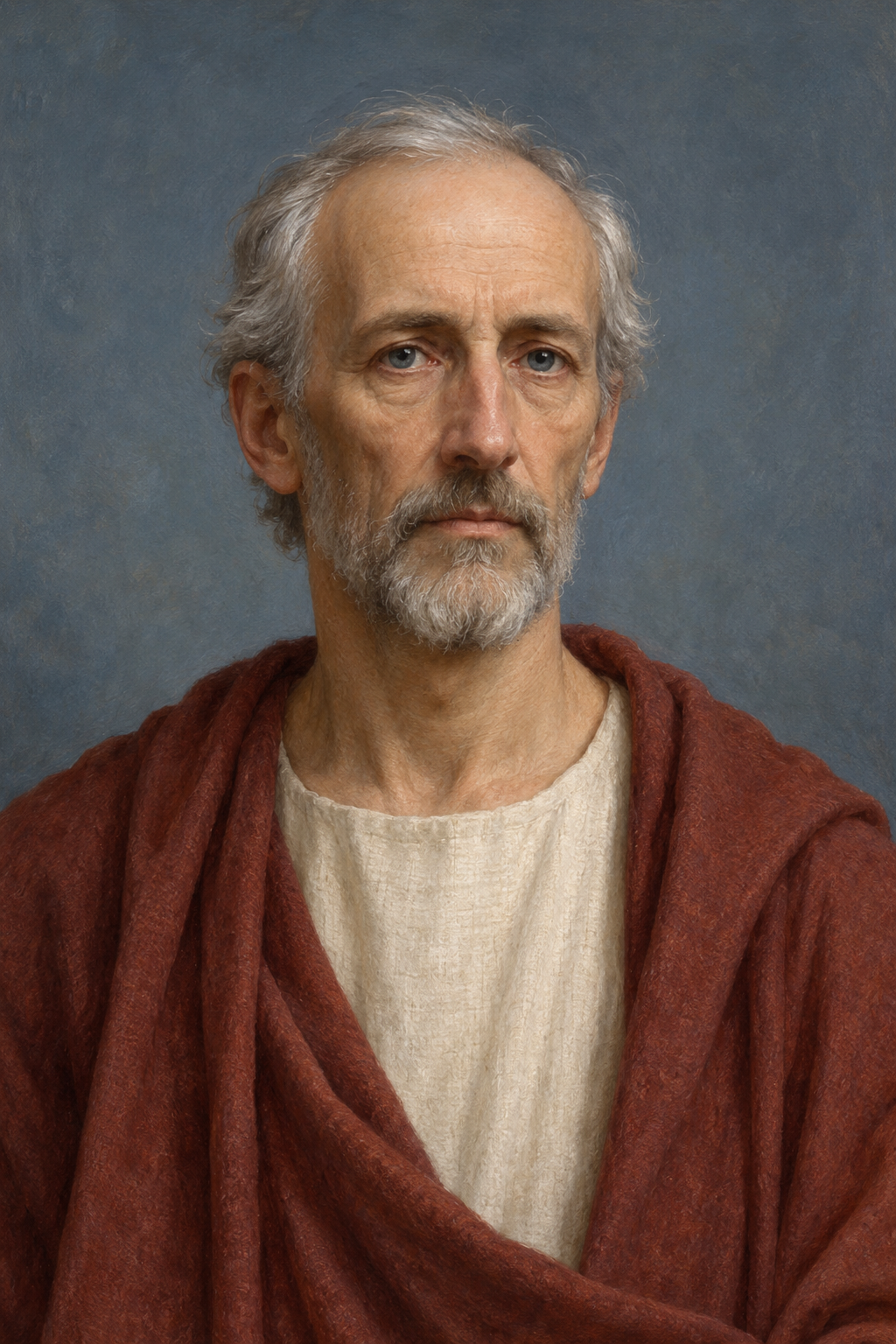
About Bonitus of Clermont
Bonitus, known in France as Bonnet or Bonet, was a royal official who became bishop of Clermont near the end of the seventh century. From an Auvergnat family described as Roman senatorial, he received an education in grammar, rhetoric, and law. His career led him to the court of Sigebert III and then to administration in Marseille.
His early biography portrays public authority as a responsibility toward vulnerable people. It credits him with opposing the sale of people into exile and buying back captives so they could return home. The same account describes a gentle manner toward disputing parties and a disciplined life of prayer and fasting.
Historian Thomas MacMaster cautions that stories of saints freeing captives often follow familiar literary patterns. Bonitus’s account resembles others associated with Marseille. This does not establish that the episodes were invented, but it limits how confidently the biography can be read as a record of particular acts. It is insufficient evidence for a claim that he abolished slavery throughout the region.
Bonitus succeeded his brother Avitus with royal approval. His biographer says that he later worried about receiving the office through his brother’s recommendation and sought advice from Tillo at Solignac. The narrative treats his decision to relinquish the bishopric as an act of conscience rather than merely a wish for retirement.
The New Catholic Encyclopedia also notes the possibility that he was compelled to resign. He withdrew to Manglieu, made a pilgrimage to Rome, and died in Lyon after his return. The surviving accounts do not give a consistently secure chronology for these final years.
Clermont Cathedral preserves his memory in a chapel whose windows recount his life. Its guide describes a chasuble, kept until the French Revolution, that was believed to have been given to him by Mary. This belongs to the history of devotion to Bonitus rather than to a documented encounter.
He is honored as patron of potters. The pottery fair at Saint-Bonnet-les-Oules explicitly acknowledges that the origin of this patronage is unknown; its account of his funeral procession passing through the area is presented as legend.
Nominis identifies him as patron of the churches at Lubilhac and Saint-Bonnet-le-Froid in the Diocese of Le Puy. An 1887 collection of patron saints also records invocations of Bonitus for gout and paralysis. These are historical devotional associations, not claims about medical treatment or guaranteed recovery.
Wondering how to weigh the stories and sources? Learn how to read a saint biography.