Biography
Bonitus of Montecassino
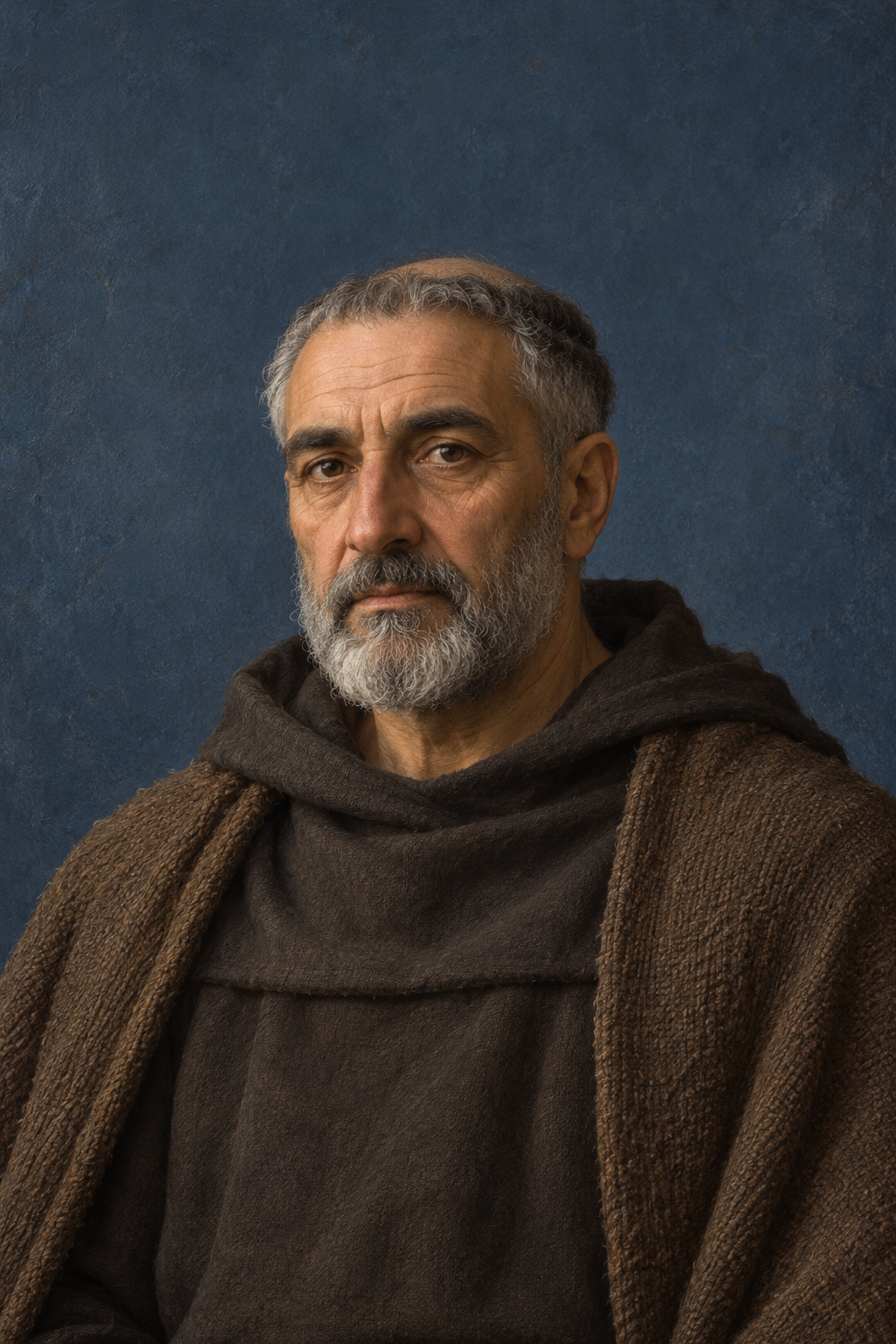
About Bonitus of Montecassino
Bonitus was a sixth-century monk and abbot of Montecassino in Italy. He is remembered as one of the early successors of Benedict, and his feast is July 7. Very little is known about his personal life before he became abbot.
Paul the Deacon names him after Constantine, Simplicius and Vitalis in the succession following Benedict. Bonitus therefore stands as the fourth successor to the founder, or the fifth abbot when Benedict is included. Paul places the monastery’s destruction by Lombard attackers during his rule.
In Paul’s account, the attackers came at night and plundered the monastery, but the monks escaped. They made their way to Rome with the manuscript of Benedict’s Rule, other writings, and what possessions they could carry. The history records bread and wine measures among the things saved. These details concern the fleeing community as a whole; they do not identify particular objects carried by Bonitus himself.
Later accounts place the refugees at the Lateran in Rome. The Benedictine historian John Chapman questioned that reconstruction, observing that Paul says only that the monks went to Rome. He considered it possible that they dispersed among other monasteries instead of continuing together under one roof. The surviving evidence therefore leaves their immediate arrangements uncertain.
The chronology is also difficult. Chapman discusses alternative dates for the destruction and treats attempts to reconstruct Bonitus’s later years as conjectural. A firm date of death cannot safely be built from these calculations. A Catholic account traditionally places his death around 582. His commemoration preserves the memory of an abbot whose community faced the loss of its home, even though the details of his own response have not survived.
Wondering how to weigh the stories and sources? Learn how to read a saint biography.