Biography
Boris I of Bulgaria
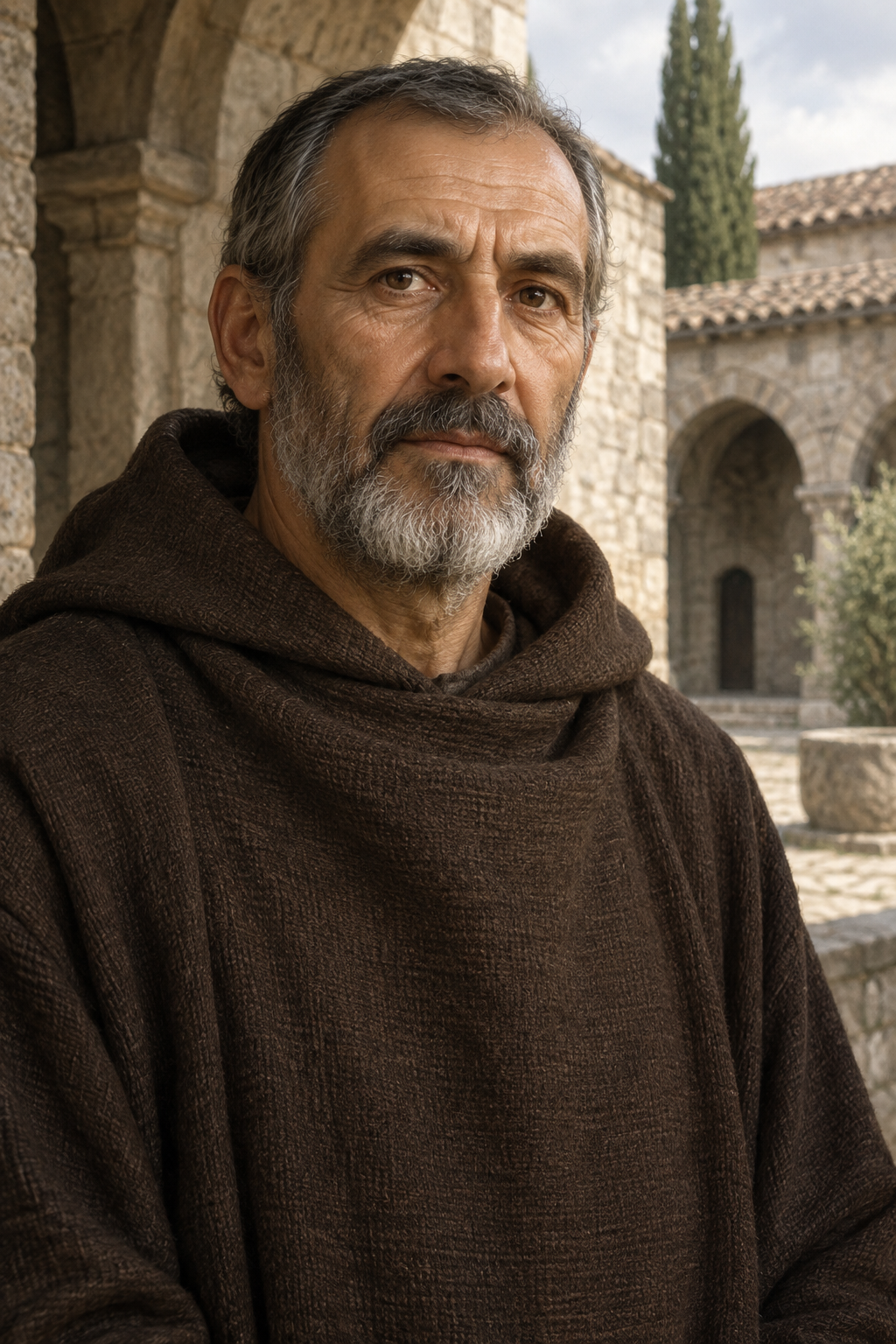
About Boris I of Bulgaria
Boris I ruled Bulgaria during a century when its leaders had to negotiate with the Byzantine Empire to the south and the Frankish world to the west. He inherited the throne around 852 from his father Presian. Little secure evidence survives about Boris’s childhood or birthplace. Early in his reign he faced failed campaigns against neighboring peoples. The decision for which he is best remembered—the acceptance of Christianity by its ruler and, increasingly, its people—came amid these political and social pressures, not in a record of private spiritual experience that historians can reconstruct with confidence.Byzantine and western accounts show that Boris explored Christian ties beyond one court. Pope Nicholas I knew of an intention to convert before the baptism. Byzantine pressure then shaped the terms under which Boris accepted the faith. The surviving accounts describe famine and military danger, and say Emperor Michael III became his sponsor. Boris took Michael as his baptismal name. The baptism is commonly dated to 864 or 865; its precise date remains uncertain. Later stories tell of a Christian sister or a painting of the Last Judgment moving him to conversion. Those stories belong to the remembered conversion, but they cannot safely be treated as a verified account of his motives.Baptism did not make the change easy. A revolt followed among leading families. The contemporary reply that Pope Nicholas later sent to Bulgaria reports that the rebels threatened Boris’s rule and that he had their leaders and children executed while sparing lesser participants. Nicholas explicitly reproved the killing of children who had not taken part in their parents’ actions. Other accounts cast Boris’s victory as a providential triumph by a small Christian band. The evidence supports a severe political and religious conflict, but it does not give every rebel’s reason. Boris may also have been reducing the old nobility’s influence as he remade court and church life. His legacy therefore includes both the establishment of Christianity and violence that a contemporary Christian leader challenged.The newly baptized ruler faced practical questions about worship, law, marriage, fasting, and warfare. He and his envoys sought guidance from both Constantinople and Rome. Patriarch Photios wrote him a long letter on doctrine and Christian rulership. In 866 a Bulgarian embassy brought questions to Pope Nicholas, whose extensive written answers survive even though the original questions do not. The pope’s reply preserves a rare glimpse of a society trying to work out how an inherited way of life would change: it addresses the treatment of captives, customs before battle, church services, and penalties for wrongdoing. Boris also asked how Bulgaria could have its own senior church leader.Roman clergy led by Bishop Formosus served in Bulgaria for a time. Boris pressed Rome to appoint a church head acceptable to him, but successive popes did not grant the appointments he wanted. A settlement reached in Constantinople in 870 placed the Bulgarian church within the eastern ecclesiastical sphere, with its own archbishop and a measure of independence. That decision should not be reduced to a simple personal change of allegiance. Boris was seeking a church capable of serving his kingdom without leaving it entirely subject to either neighboring center. The resulting institutions connected Bulgaria closely to Byzantine Christianity while giving it room to shape a distinct Christian culture.The arrival of disciples of Cyril and Methodius after their expulsion from Moravia in the later 880s opened another chapter. Clement, Naum, and others found refuge in Bulgaria and helped organize teaching and church life. Their work helped Old Church Slavonic develop as a written and liturgical language alongside Greek. Boris did not invent the Slavic alphabet, nor is there secure evidence that he personally made a particular script the official language at a council. His support and the refuge his kingdom offered nevertheless gave those teachers a setting in which their work could endure.Around 889 Boris left power to his son Vladimir and entered monastic life. The exact circumstances of that retirement are unclear. A later account says Vladimir tried to bring back the older religion and that Boris left the monastery, deposed and blinded him, and placed another son, Simeon, on the throne in 893. Historians accept the change of ruler but question whether Vladimir truly attempted a pagan restoration and how much of the account was written to justify his removal. The monastic father who intervened in politics is therefore part of Boris’s historical memory, but his son’s motives should remain qualified. The often repeated picture of a single 893 council instantly moving a capital and establishing an official language is also less secure than popular accounts suggest.Boris died on May 2, 907. A colophon transmitted in a later manuscript records his death date and names him Michael. Eastern Orthodox Christians commemorate him on May 2 as Boris-Michael, the prince and baptizer of Bulgaria, and honor him as equal to the apostles. Some scholars suggest that veneration began early, but the evidence does not establish a clear formal canonization date. Boris’s enduring significance lies in the institutions and communities that followed his choice: a Christian Bulgarian church, a place for Slavic teachers, and a cultural tradition that continued under Simeon.
Wondering how to weigh the stories and sources? Learn how to read a saint biography.