Biography
Braulio of Zaragoza
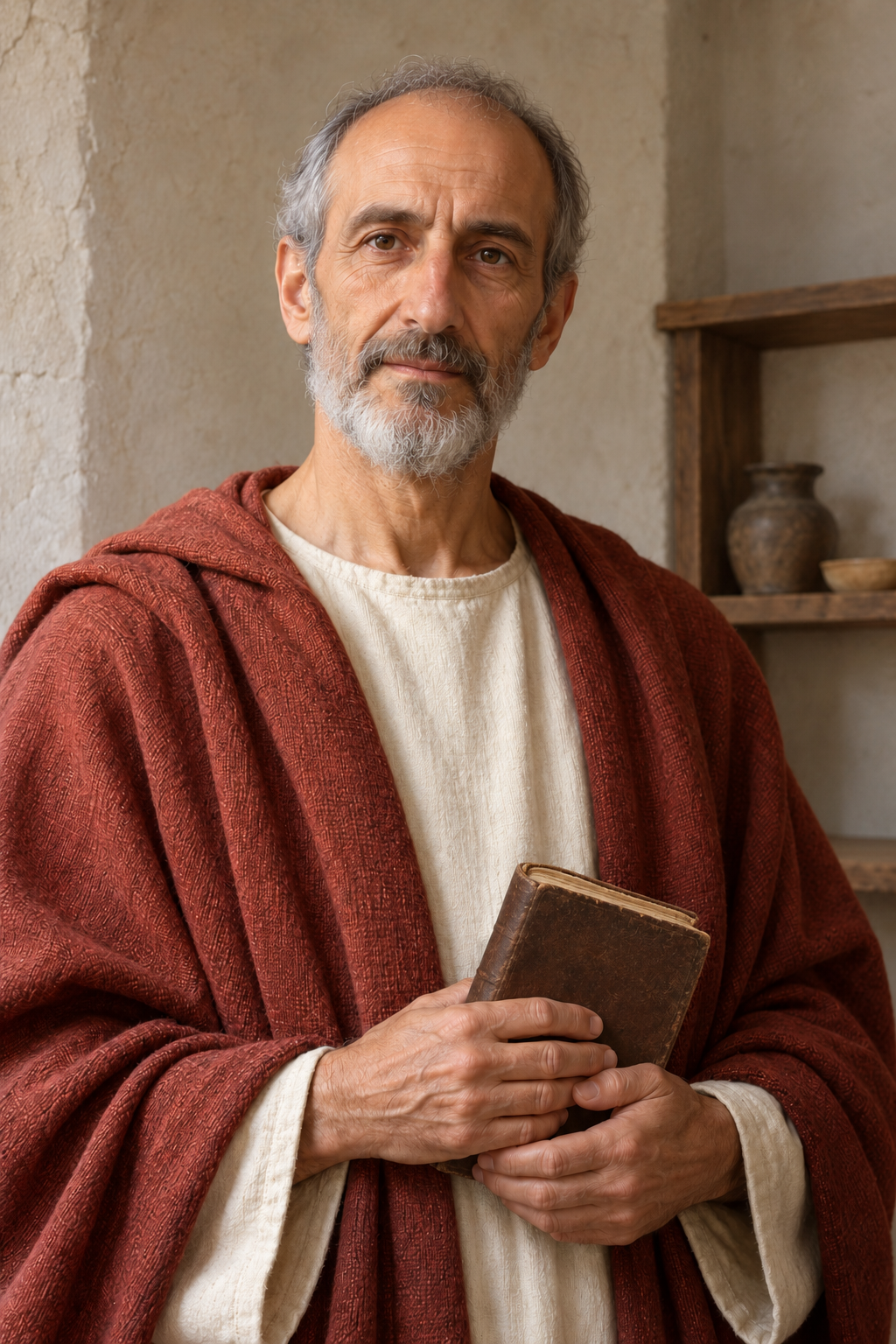
About Braulio of Zaragoza
Braulio served as bishop of Zaragoza in seventh-century Visigothic Spain. Before succeeding his brother John in 631, he had worked as John’s archdeacon. His responsibilities drew him into councils at Toledo and correspondence with kings, while his writing helped preserve the learning of Isidore of Seville.
His friendship with Isidore is easier to trace through their letters than through a detailed account of their meetings. Modern historians caution that the circumstances in which they first came to know one another remain uncertain. Braulio’s surviving correspondence includes letters he wrote and letters addressed to him by bishops, abbots, and rulers. Its preservation depends on a manuscript kept at León.
In one letter, he presses Isidore to send the promised Etymologies, reminding him that he had encouraged the undertaking. In another, he complains that years of requests have produced excuses instead of the book. These passages preserve the impatience as well as the affection behind a scholarly friendship.
Braulio helped organize the Etymologies into twenty books and compiled a notice of Isidore’s life and writings. He also wrote a Life of Emilian, remembered as San Millán de la Cogolla, and a hymn in his honor.
His public role also involved policies directed against Jewish people. In 638, he answered Pope Honorius on behalf of the bishops assembled at Toledo, rejecting accusations that they had neglected their duties. As Juan Antonio Jiménez Sánchez explains, the dispute concerned especially baptized Jews who had returned to Jewish practices. Braulio urged gentler correction and questioned the severity of penalties proposed by the pope, whose letter has not survived.
That objection did not amount to support for freedom to return to Judaism. Braulio defended the bishops within a system that required baptized Jews to remain Christian, and he praised the king’s religious aims. The council of 638 supported a kingdom in which only Catholics could remain. His request for restraint therefore belongs within a coercive religious policy, not outside it.
The letters also reveal a pastoral understanding of friendship. In their study of his correspondence, Marcelo Aguirre Durán and Ángel Gordo Molina describe a spiritual life centered on Christ, charity, and the bonds between Christians separated by distance.
His later cult has left material traces in Zaragoza. The Alma Mater Museum preserves a twelfth-century wooden chest once used for remains venerated as his, while the museum identifies the Basilica del Pilar as their present location. It tells the story of their discovery through a bishop’s revelation as a received account, rather than evidence from Braulio’s own lifetime.
Braulio is the patron of the University of Zaragoza. The university continues to mark his feast with an academic ceremony: its 2021 announcement describes awards, a lecture, and a tribute to retired members of the university community.
Wondering how to weigh the stories and sources? Learn how to read a saint biography.