Biography
Brigid Choe
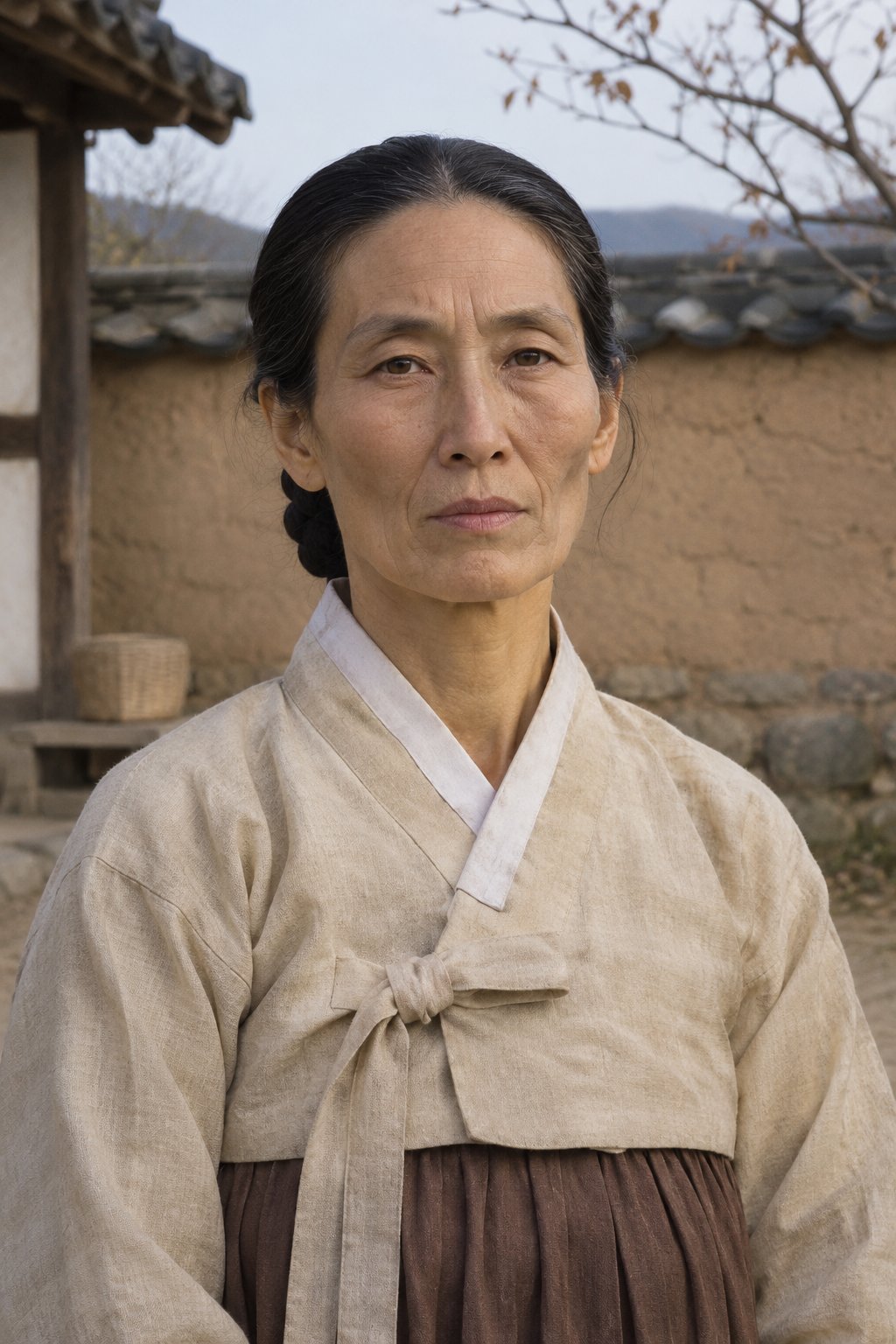
About Brigid Choe
Brigid Choe was born in 1783 in Chungcheong-do, Korea. By the time the authorities began arresting Catholics in 1801, she and her husband were already practicing the religion together. Her husband, remembered by the family name Yu, had given shelter to a fellow Catholic, Alexius Hwang Sa-yeong. The authorities arrested Yu and sent him into exile. The sentence was his, but Brigid chose to go with him.
In exile Yu fell seriously ill. Brigid wanted him to be baptized before he died, and she could find no other believer to come to his bedside. She decided to baptize him herself. The Korean Catholic Encyclopedia preserves a detail about what this decision meant to her: if he lived, she intended that they should remain together but live as brother and sister. Historian Yeo Jin-cheon relates her promise to the spiritual kinship Catholics then understood baptism to create between the person who administered it and the person who received it. Yu died, and Brigid saw to his burial. Yeo identifies two men named Yu in the surviving list of exiles, but neither entry says that the man had sheltered Hwang. It does not establish where the couple spent their exile.
As a widow Brigid went to her elder brother. She made her home with his family at Seoji, a small settlement in the Wonju area. His son, John Choe Hae-seong, was the nephew Brigid would later risk visiting in prison. Catholic families had come to this village to practice their faith together. John became their lay leader. Although poor himself, he was remembered by the community for sharing what he had with people still poorer.
Daveluy records a tradition: lacking a calendar, Brigid ate meat, learned afterward that Lent had begun, and resolved to abstain from meat for the rest of her life. Historian Kim Jeong-suk draws a distinction that helps explain the story. Going without meat and limiting the number of meals were different practices. Even keeping track of the days on which a particular rule applied could be difficult. And what a person ate could give away a religious allegiance: people outside the Church had learned to recognize Catholics by their observances at meals. Kim describes Brigid’s lifelong promise as her own response, rather than a rule binding all Catholics.
During the arrests of 1839 John took his parents and the rest of the household to safety. Then he went back for the community’s religious books. Officers caught him on that return journey and demanded that he tell them where other Catholics were. They took him to Wonju, where the governor of Gangwon conducted provincial business. A map drawn less than a decade before the arrests marks the prison as well as the governor’s audience hall. This was the seat of government to which Brigid went when she heard where John was being held.
Brigid expected to be able to visit him without much difficulty. Asked who she was, she called herself John’s mother and said that she had come to see her son. The account identifies her plainly as his paternal aunt; it is in her own reported answer to the officers that he becomes her son. Asked whether she too was a Catholic, she answered yes. The officers told her that she could neither see John nor leave unless she gave up her faith. She refused even on the understanding that she might die without seeing him. She had come as a visitor; the authorities now held her as a prisoner in her own right.
An official ordered her tortured, then confined with instructions that she should be allowed to starve. The bishops’ account says that the order was not carried out as given. She remained alive through four months of imprisonment. During her confinement, according to Yeo’s account of the two relatives, word reached her that John had been executed. It was in prison that she learned what had happened to the young man she had set out to visit.
An official finally demanded word of her death within three days. The guards entered her cell at night and strangled her. The Church places her death on the night between December 8 and 9, 1839. She was fifty-six. A later tradition names the mother of a guard as the person who told another Catholic prisoner that a light had risen from Brigid’s body. The woman understood it as a sign that Brigid had gone to heaven.
After the beatification of Brigid and John in 2014, a woman from the local parish gave her home and land for a memorial at Seoji. A memorial church and hall were built there in 2025. The Diocese of Wonju explains why the church also remembers people whose names have been lost. It was a whole community that had lived here under persecution. The plain white interior leaves room to remember them alongside the two relatives whose names the village kept.
Wondering how to weigh the stories and sources? Learn how to read a saint biography.