Biography
Brynolf Algotsson
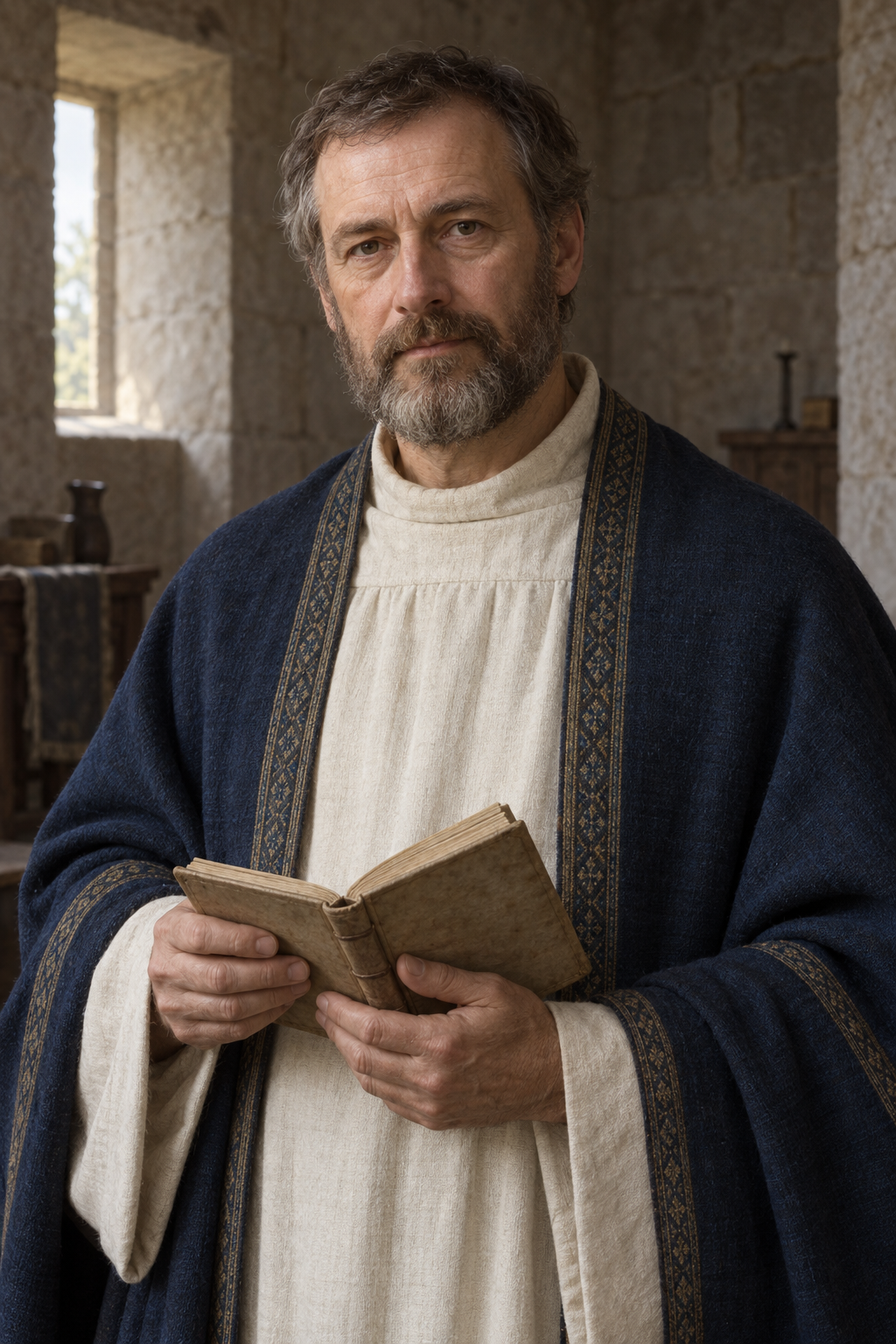
About Brynolf Algotsson
Brynolf Algotsson became bishop of Skara in 1278, after studying in Paris and returning to Sweden. His family belonged to the powerful landholding circles of Västergötland. As bishop, he worked where the obligations of parish clergy, the authority of the cathedral chapter and royal government met. His career is preserved through church legislation and political records, alongside much later testimony about his holiness. Those kinds of evidence illuminate different parts of his life.
In 1288, a crisis involving his family endangered his position. His brother Folke abducted Ingrid Svantepolksdotter, upsetting a politically important marriage arrangement. Brynolf subsequently gave written assurances of loyalty to King Magnus. The surviving notices place him within struggles among leading families and rulers. They offer a more complicated setting than later accounts that presented the conflict chiefly as a defense of church rights. During disputes between King Birger and his brothers, Brynolf guaranteed their agreement at Örebro in 1308. He also served as an arbitrator in 1316.
His church statutes show a practical side of his vocation. Issued with the chapter’s approval in 1280, they required annual confession and public announcement of proposed marriages on three Sundays. They also regulated the carrying of the Eucharist to sick people, specifying a suitable container and, where possible, a bell to announce its passage. These were directions for clergy and parishioners, setting out how worship and pastoral care should take place.
Other provisions concerned shared responsibility for church property. The parish treasury was to be kept by the priest together with two trustworthy parishioners, and lending from it required parishioners’ consent. The text also addresses the care of sacred cloths and errors during the celebration of Mass. At its close, officials are instructed to obtain copies before leaving the synod and explain the rules plainly to those under their care. The statute thus joins detailed regulation with an express duty to make its requirements understood.
Brynolf’s name is also associated with four Latin liturgical offices honoring Eskil, Helena of Skövde, Mary and the Crown of Thorns. Their traditional attribution to him is disputed. Dagmar Lagerberg’s study describes the criticism advanced by the musicologist Ingmar Milveden and cautions against treating his authorship as settled. One sequence associated with the thorn office appears in a Dominican manuscript earlier than the event to which later tradition connected it. This complicates an attribution based simply on the story of a relic’s arrival.
The same study examines liturgical statutes transmitted under Brynolf’s name. Their wording draws on the Dominican order’s regulated worship, rather than arising wholly from an individual bishop’s invention. Lagerberg completed a comparison begun by Milveden, using manuscript and printed versions. The connection places the material within the movement of texts between religious communities. It also distinguishes writings traditionally attributed to Brynolf from later services composed to celebrate Brynolf himself. The surviving books carry both kinds of remembrance, and the distinction matters when identifying an author.
Brynolf died in 1317. The subsequent effort to have him canonized preserved testimony about his life, but Anders Fröjmark distinguishes the local investigation from a completed process at the papal court. The commissioners opened their inquiry in Skara Cathedral in 1417, long after the bishop’s death. Few witnesses could supply memories of his lifetime, and much of that testimony came through clerical or family networks. Reports of later miracles came from a wider range of people. These differences help explain both the strengths and the limits of the surviving dossier.
Fröjmark also examines the influence of Birgitta of Sweden’s revelations on the cult. The commission accepted testimony about those writings even when the relevant passage could not initially be produced. The historian nevertheless finds signs of remembrance beyond a single written source, including oral transmission and local devotional activity. The inquiry records how a community argued for Brynolf’s holiness; it does not independently establish every miraculous event reported by its witnesses.
Later Catholic recognition included permission for the elevation of his remains and liturgical celebration in 1492. The Catholic Church in Norway’s account describes this as recognition of a local cult, while explaining that formal canonization was not completed. It continues to identify him as a saint and records 16 August as his principal memorial. These forms of remembrance should not be turned into an unsupported date for a completed papal canonization.
Material remembrance continues at Skara cathedral. Its present account describes an altar made by Gunnar Nylund in 1949, linking Brynolf’s memory with the tradition of the Crown of Thorns. It also discusses a grave found during work in the crypt in 1948. The suggestion that this might be Brynolf’s burial remains uncertain. Neither the discovery nor the later artwork supplies an authenticated likeness or proof of the identity of the person buried there. The cathedral’s account leaves the subsequent fate of the thorn relic unresolved.
Wondering how to weigh the stories and sources? Learn how to read a saint biography.