Biography
Bruno of Segni
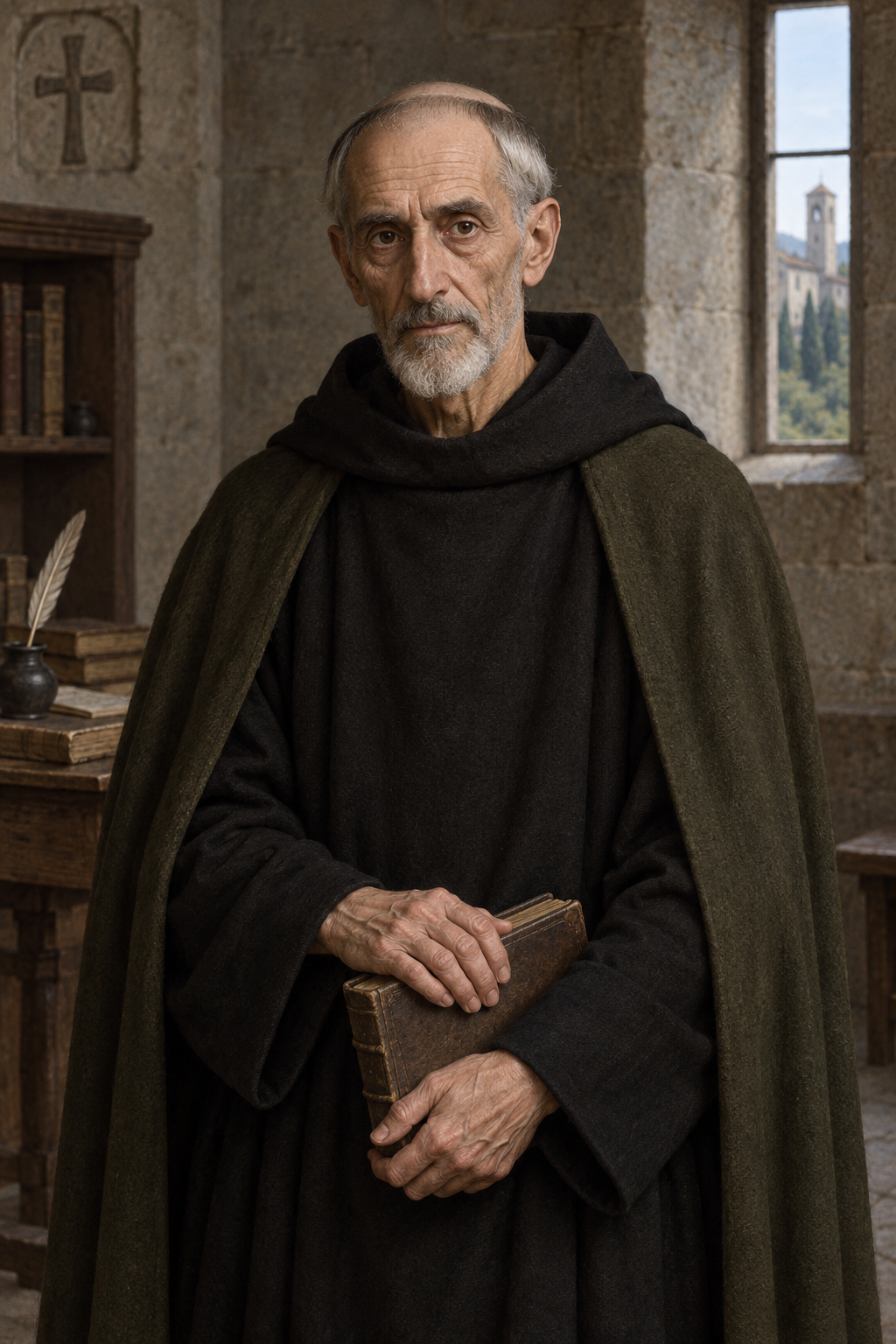
About Bruno of Segni
Bruno of Segni combined service as a bishop with monastic life and a substantial body of biblical writing. He came from the area near Asti and received a clerical education before studying the liberal arts at Bologna. He served as a canon at Siena and then entered the circle of church leaders at Rome. His appointment to Segni is generally placed around 1079, although his first surviving semi-official appearance as bishop comes from the Roman synod of 1082.
The struggle between imperial and papal authority brought imprisonment and interrupted ordinary diocesan work. Bruno became a close collaborator of successive popes and accompanied Urban II into France. He later entered Montecassino as a monk, while retaining responsibilities to his diocese and the papal court. Election as abbot placed him at the head of a major monastery. After his dispute with Paschal II, he relinquished the abbacy and returned to his episcopal work.
His surviving letters make the dispute more than an account of rival offices. Writing to Peter of Porto, Bruno condemned the defense of practices already rejected by church councils. He treated active support for what he called heresy as a serious breach of communion. An additional passage preserved in one witness distinguishes people who maintained their earlier teaching despite being taken captive. The letter’s forceful language belongs to the conflict itself; it also shows that Bruno’s argument concerned what people defended, rather than merely whether they had undergone pressure.
His letter to Paschal begins with a direct assurance of loyalty. Bruno rejects the accusation that he does not love the pope and says that he wants no other pontiff during Paschal’s lifetime. Yet this promise does not make him accept the agreement allowing lay investiture. He argues that love of God takes priority and that the agreement compromises the Church’s freedom. Appealing to earlier canons and the pope’s own legislation, he asks Paschal to reaffirm the prohibition publicly. His criticism is severe, but his stated aim is reconciliation under the same pope. The letter preserves both commitments together: obedience to the pontiff and resistance to an action Bruno believed contradicted the Church’s teaching. He frames the appeal through Scripture.
Other letters show the circulation of his arguments. To the provost and brothers of St George, Bruno reports that the pope does not welcome either him or his counsel. He nevertheless intends to maintain the position associated with Gregory and Urban and asks that a small accompanying work be shown to others. A surviving letter to Roman bishops and cardinals distinguishes willing defense of the disputed position from temporary consent under necessity. It also acknowledges that both sides condemned simony, while locating their central disagreement in investiture and ecclesiastical freedom. The correspondence reveals disagreement within a shared religious world, rather than a claim that every opponent rejected every reform.
Bruno’s pamphlet on simoniacs addresses a related difficulty in a more sustained way. Its opening honors Leo IX and recalls Gregory VII urging that Leo’s deeds be recorded. Bruno later explains his own decision to write through an account of a reported dream and its interpretation. These passages are testimony to his method of remembrance, not verification of a supernatural event. The second part turns to the argument that widespread simony had broken the continuity of the priesthood. Bruno distinguishes buying sacred office from being ordained unknowingly by someone guilty of simony. In the latter case, he recognizes the ordination as valid within the Church. He also examines purchases of churches and benefices, considering the intentions behind those transactions. His conclusion is more qualified than a blanket rejection of every sacrament associated with a corrupt minister.
The theologian Dario Vitali places Bruno’s understanding of the Church at the center of his writing. He describes a thought expressed through biblical interpretation rather than a single systematic treatise. The image of the Church as Christ’s bride joins spiritual meaning to the realities of ecclesiastical life. Vitali also reads Bruno’s account of the Church’s adornments through virtues such as faith, hope, charity, humility and mercy. In this interpretation, ecclesiastical order does not exhaust the Church’s meaning. The community’s holiness and the conduct of its members matter alongside its structure. Vitali connects these themes with Bruno’s commitment to reform while emphasizing the symbolic method of his theology. This modern reading helps explain why political controversy and biblical commentary belong together in the study of his work. He contrasts this symbolic and spiritual account with an explanation limited to legal powers, without denying the importance of the community’s institutions.
Bruno died at Segni in 1123. The Vatican City saints calendar remembers him on 18 July as a bishop who served the Church and produced theological and liturgical writings. His surviving correspondence and treatment of simony remain particularly revealing: they preserve a reformer reasoning through loyalty, conscience and the consequences of corruption.
Wondering how to weigh the stories and sources? Learn how to read a saint biography.