Biography
Burchard of Würzburg
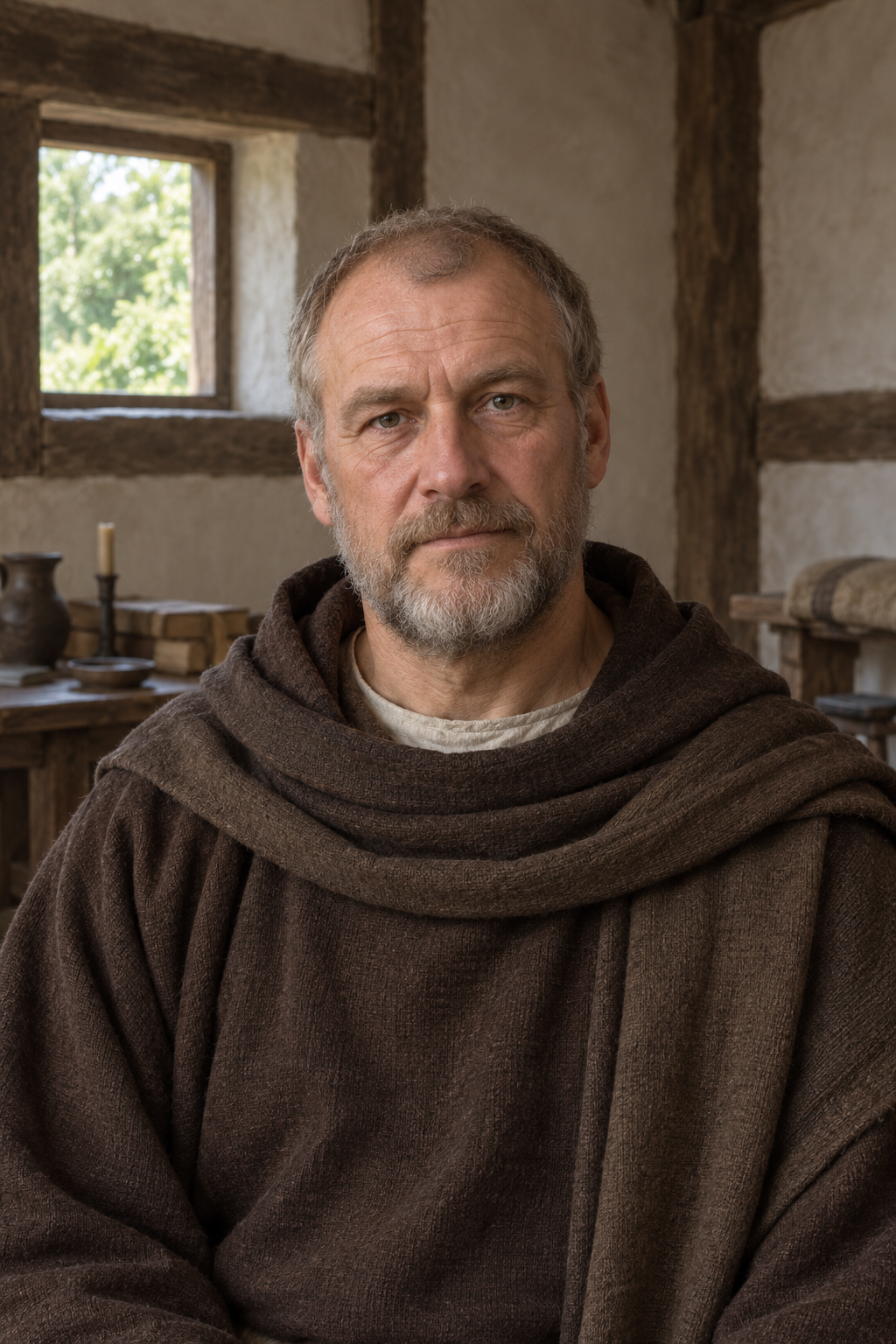
About Burchard of Würzburg
Burchard was an Anglo-Saxon Benedictine monk who became the first bishop of Würzburg. A companion of Boniface, he helped establish a lasting Church organization in the Frankish world. His work brought him into episcopal assemblies and entrusted him with journeys to Rome. The surviving record is clearest about this public service; it gives far less secure detail about his upbringing.
A letter from Pope Zacharias provides a firm point of reference. Dated April 1, 743, it addresses Burchard at Würzburg and confirms the new episcopal foundation. The pope describes Boniface’s establishment of three sees and supports their continued stability. He also sets limits: bishops are not to encroach upon one another’s dioceses or take their churches. The document places Burchard within a developing organization whose boundaries and succession required protection, while calling him to persevere in Christian ministry.
Burchard’s connection with Rome was personal as well as institutional. In a letter dated May 1, 748, Zacharias acknowledges that Burchard has appeared before him carrying Boniface’s correspondence. The pope responds at length to questions about baptism, clergy and councils, and welcomes a profession of faith sent by Boniface with Frankish bishops. Burchard appears here as the trusted bearer of a demanding exchange. The theological judgments in the reply are the pope’s answers to Boniface; they do not become Burchard’s own writings simply because he carried the earlier letter.
Engel also records a later mission with Fulrad of Saint-Denis on Pippin’s behalf concerning the Frankish succession. At Würzburg, Burchard founded Saint Andrew’s monastery and promoted the remembrance of Kilian. These activities connect the young diocese’s organization with both the wider Frankish Church and the local memory of its earlier missionaries.
Later stories describe retirement in a cave at Homburg. Wendehorst finds the abdication account historically unreliable and places Burchard’s death probably at Würzburg in 753. The precise chronology remains disputed.
The Diocese of Würzburg’s present account gives 755 instead and explicitly treats the Homburg retirement story as legendary. Such differences matter because a vivid local tradition is not the same as a contemporary record of a person’s last days.
Burchard’s remembrance remains visible in Würzburg. The church and former monastery of Saint Burkard bear his name, and his relics are honored there in a shrine made by the goldsmith Theo Sebald. The diocese observes his feast on October 14. Local devotion also survives at Homburg, where an October procession recalls the cave tradition. These places preserve different strands of his memory, while his securely attested role as Würzburg’s first bishop continues to anchor that remembrance.
Wondering how to weigh the stories and sources? Learn how to read a saint biography.