Biography
Cadfan of Tywyn
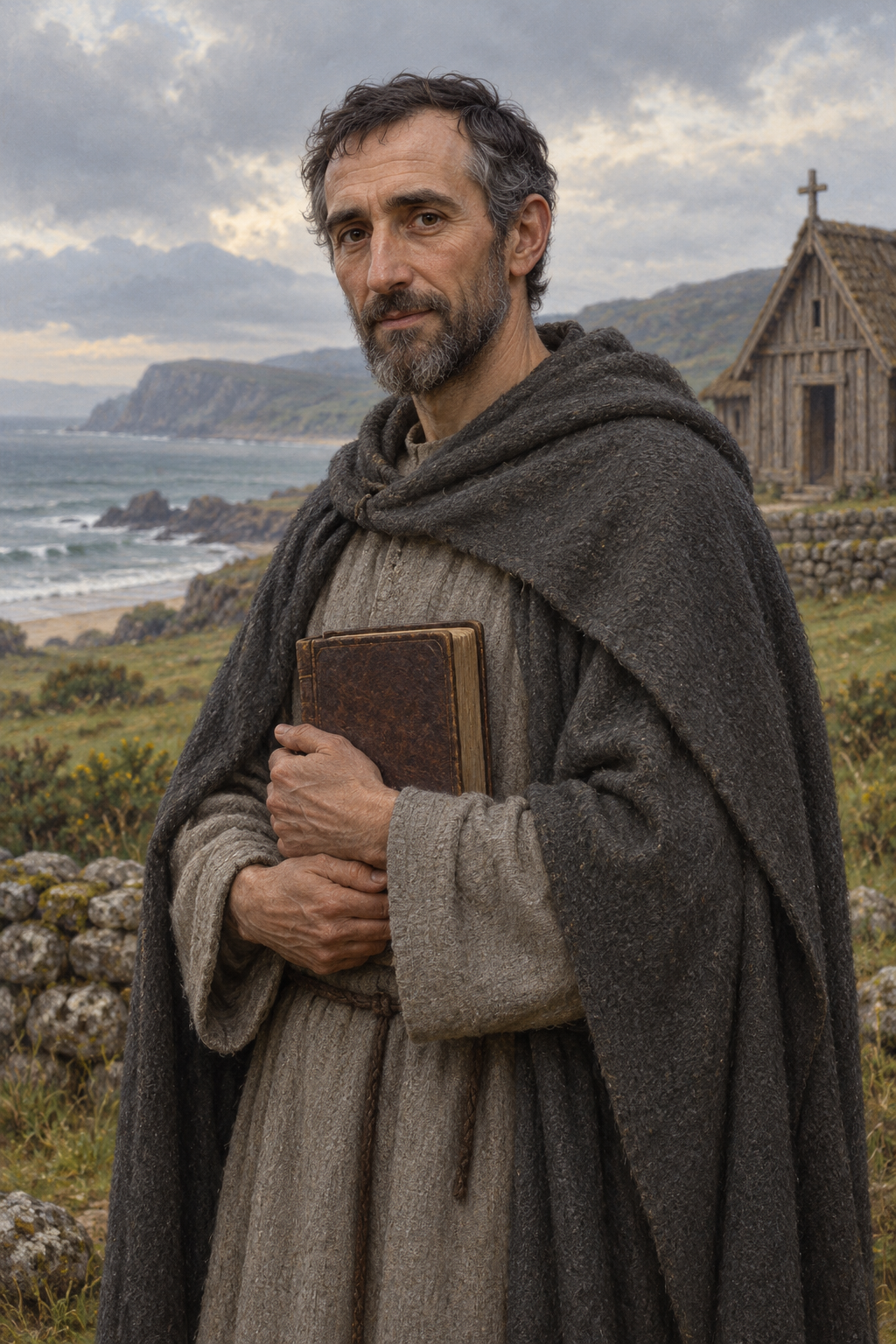
About Cadfan of Tywyn
Cadfan of Tywyn is remembered as a religious leader associated with Tywyn and Enlli, or Bardsey Island. A twelfth-century poem celebrates him as the island monastery’s first abbot. The same poem and the Life of Padarn describe an arrival from Brittany. No Life devoted to Cadfan is known to survive, so these later witnesses offer traditions about his beginnings rather than a continuous account of his life.
The evidence is richest at Tywyn. A church, a separate chapel and a well carried his name there, while medieval poetry celebrated his protection of the community. Other dedications need more caution. Cadfan was not an unusual name, and the scholarly record questions whether the church at Llangadfan necessarily commemorates the same person. The distribution of names alone cannot establish the route of his travels.
His most substantial literary memorial is Llywelyn Fardd’s praise poem. Its modern editor, Ann Parry Owen, places it shortly after an attack in 1147 that changed the political leadership of Meirionnydd. She presents the suggestion that Abbot Morfran commissioned it to reaffirm his church’s standing under a new ruler. That is a historical interpretation of the poem’s setting, not an episode from Cadfan’s own lifetime.
In the poem, Cadfan leads a Christian company from Brittany to a home prepared by God. The church shelters a Gospel book and a staff believed to carry his power. Particularly striking is the claim that the staff prevents enemies from killing one another. These images belong to the language of praise and devotion: they show how the medieval community remembered its saint as a protector and a bringer of peace.
The poem also uses the language of warfare. Parry Owen cautions that this need not prove a distinct historical vocation as a soldier or a special patronage of warriors. The poet’s interests, wordplay on Cadfan’s name and the concerns of his own patrons may all have shaped the portrayal. The uncertain relationship between Cadfan and Lleudad on Enlli likewise should not be turned into a documented succession of abbots.
Tywyn’s surviving church preserves later layers of that remembrance. Its heritage record describes a medieval religious community that continued into the twelfth century and an existing building repeatedly altered afterward. The inscribed stone kept there commemorates named people other than Cadfan; its presence does not supply his birth or death date. The church remains dedicated to him and open for worship.
His name also gives a focus to present-day pilgrimage. In 2024 the Church in Wales announced Llwybr Cadfan, a route from Tywyn to Ynys Enlli through churches and holy wells. The trail connects places of worship with walking, landscape and reflection. It is a contemporary expression of the memory that medieval poetry and the church at Tywyn had already preserved.
Wondering how to weigh the stories and sources? Learn how to read a saint biography.