Biography
Caecilia of Remiremont
About Caecilia of Remiremont
Caecilia is remembered as an early abbess of the women's community on the Saint-Mont at Remiremont in the Vosges. Her identity survives through several names: Cecilia or Cécile, Sigeberge, Claire, and Clarisse. These names do not identify Cecilia of Rome. They belong to local monastic memory recorded long after Caecilia's lifetime. Nominis describes Clarisse as a seventh-century abbess and the third leader of the community. Historical study places Cecilia or Sigoberge after Ercantrude in the remembered succession. No reviewed source offers a contemporary record of her childhood, education, profession, or daily governance.
Later tradition says Caecilia entered the community with a sister called Azaltrude and eventually became abbess. Another account attributes to her the commissioning of a Life of Romaric. These reports preserve a picture of women sustaining communal memory and leadership, but they do not establish when she entered, how she was chosen, or what the commissioned text contained. Nominis labels the claim that she was Romaric's daughter as tradition. Kraemer and Chenal connect that family story and the name Claire with the later second Life of Romaric, so the relationship cannot be treated as contemporary genealogy.
Chronology remains unsettled. Nominis reproduces an approximate death around 653, while Odden's compilation gives about 670. Neither estimate supports an exact month or day, so the inherited calendar-like endpoints are removed. The references also report different commemorative dates. Nominis identifies August 12 as a local feast, documenting calendar practice rather than Caecilia's death date. Later devotion associated her grave with prayer for eye ailments. That patronage belongs to reception history and does not supply a medical episode from her life.
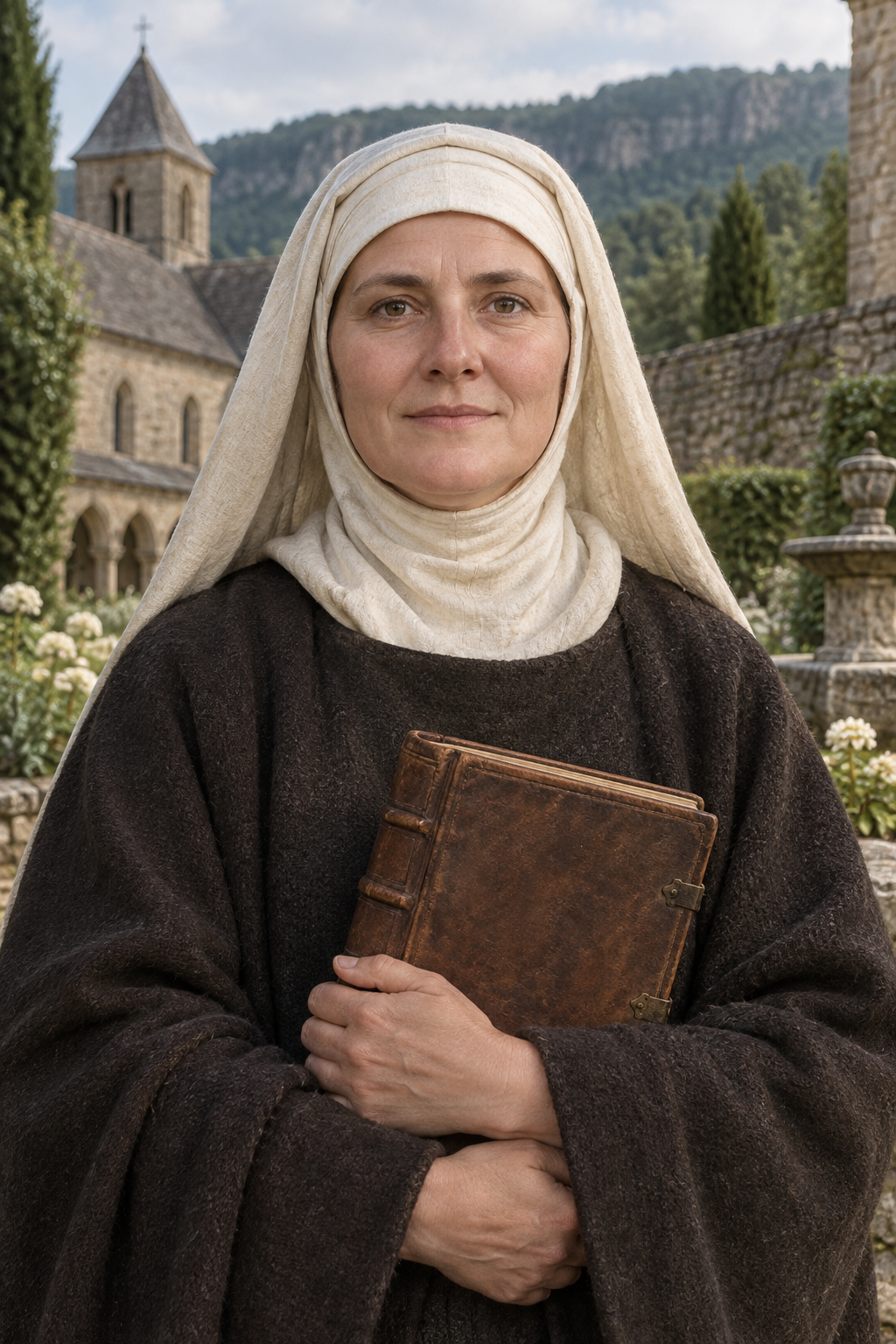
Abbess and monastic religious are appropriate traditional classifications because the accounts place Caecilia in leadership of the women's community. Service and leadership can be connected to that remembered office, but specific reforms, schools, scriptoria, charities, or adoption of a later Benedictine rule cannot responsibly be assigned to her. No reliable personal quotation survives, and no prayer is stored without verified provenance and reusable text. Her AI-generated artwork is devotional interpretation, not evidence of her face, clothing, book, buildings, or landscape.
Caecilia remains significant as a woman remembered for responsibility in an early monastic community and for preserving its founder's story. Historical restraint keeps that significance visible without borrowing later achievements of Remiremont Abbey. The evidence supports only two personal pivotal events: succession to leadership and the traditionally attributed commission. A third would be manufactured. This short profile therefore states what local tradition preserves while leaving chronology, family, and much of her personal life unresolved.
Wondering how to weigh the stories and sources? Learn how to read a saint biography.