Biography
Caesaria the Elder
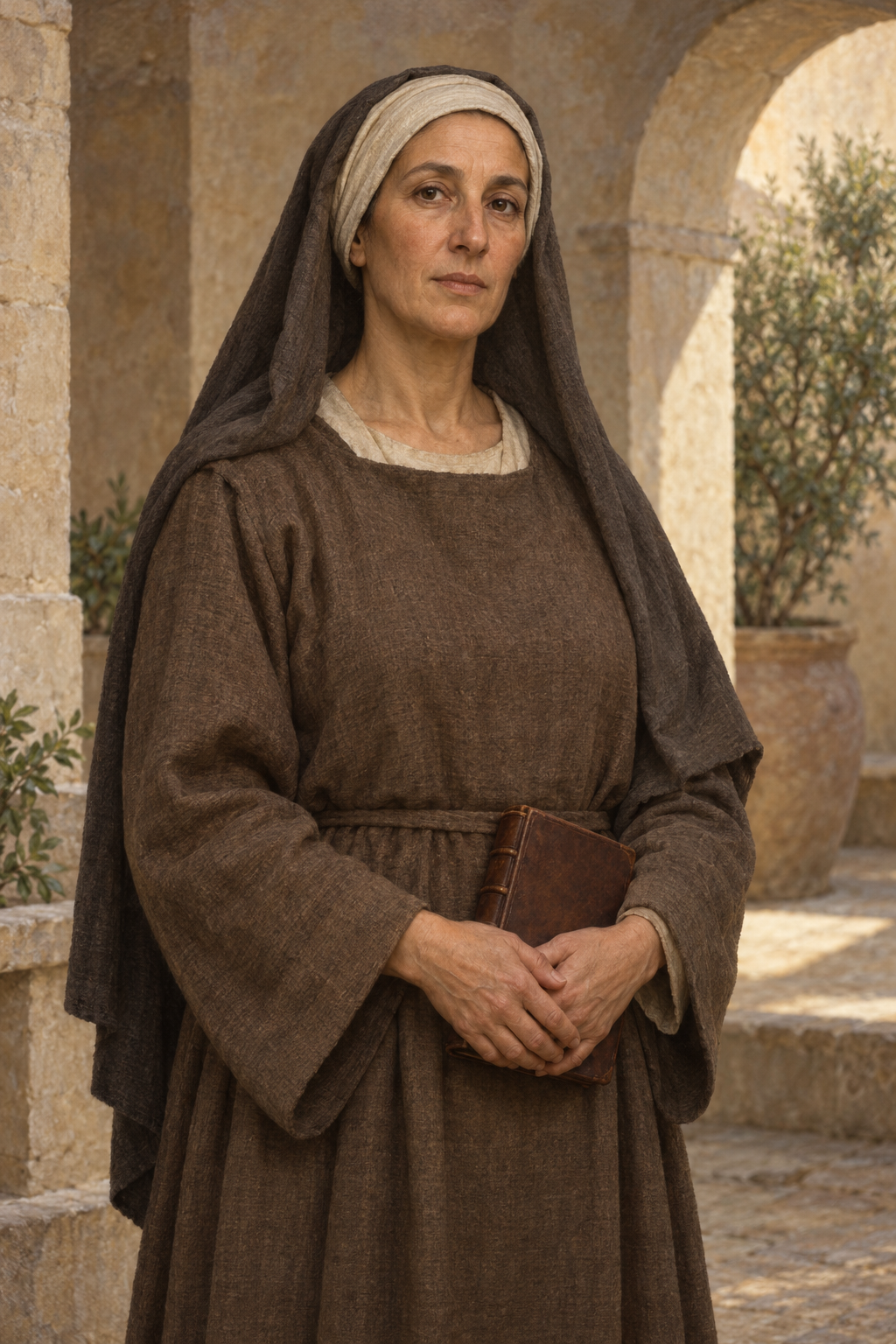
About Caesaria the Elder
Caesaria the Elder led the first community of women at the monastery of Saint-Jean in Arles. Her brother, Bishop Caesarius, supported its foundation and wrote a rule for its religious life. A letter from about 510 already addresses her as an abbess. The women may then have been living in Marseille, although their exact setting is uncertain.
Warfare destroyed their first building outside Arles in 507–508. Its replacement within the walls was dedicated in 512. Caesaria governed for more than a decade and died around 525; she was buried in the community’s church of Saint Mary.
The religious programme gave the women a shared life of prayer, scriptural reading and work, with common ownership and strict enclosure. Caesaria’s responsibility was to lead that community, but the surviving evidence does not provide a detailed account of her childhood or daily decisions as abbess.
Her name is easily confused with that of her successor. Columbia University’s Epistolae project distinguishes the first abbess from Caesaria the Younger, for whom the bishop revised his rule in 534. The younger woman corresponded with Radegund and helped transmit the rule to Poitiers. Those later activities should not be added to the elder Caesaria’s biography.
The revised rule itself looks back on years of experiment. Caesarius explains that earlier instructions had been added to and reduced in light of what the women could sustain. He also asks the sisters to pray for their leaders, whom he holds accountable for their care. This later text reveals the continuing religious project associated with Caesaria’s foundation; it does not establish that she personally approved every provision in its final form.
Modern historians also place this community within the social inequalities of late antiquity. E. T. Dailey and Justin Pigott note that the rule barred each nun, including the abbess, from keeping a personal enslaved attendant, while it did not prohibit the monastery from owning slaves collectively. This distinction prevents common property and religious discipline from being mistaken for the abolition of slavery. The authors also suggest that Caesaria herself helped shape the community’s distinctive practices.
Her lasting place in this history is as the first leader of the women for whom that rule began. The monastery continued under another Caesaria, but its beginnings belong to the elder abbess and the community she guided.
Wondering how to weigh the stories and sources? Learn how to read a saint biography.