Biography
Caesarius of Arles
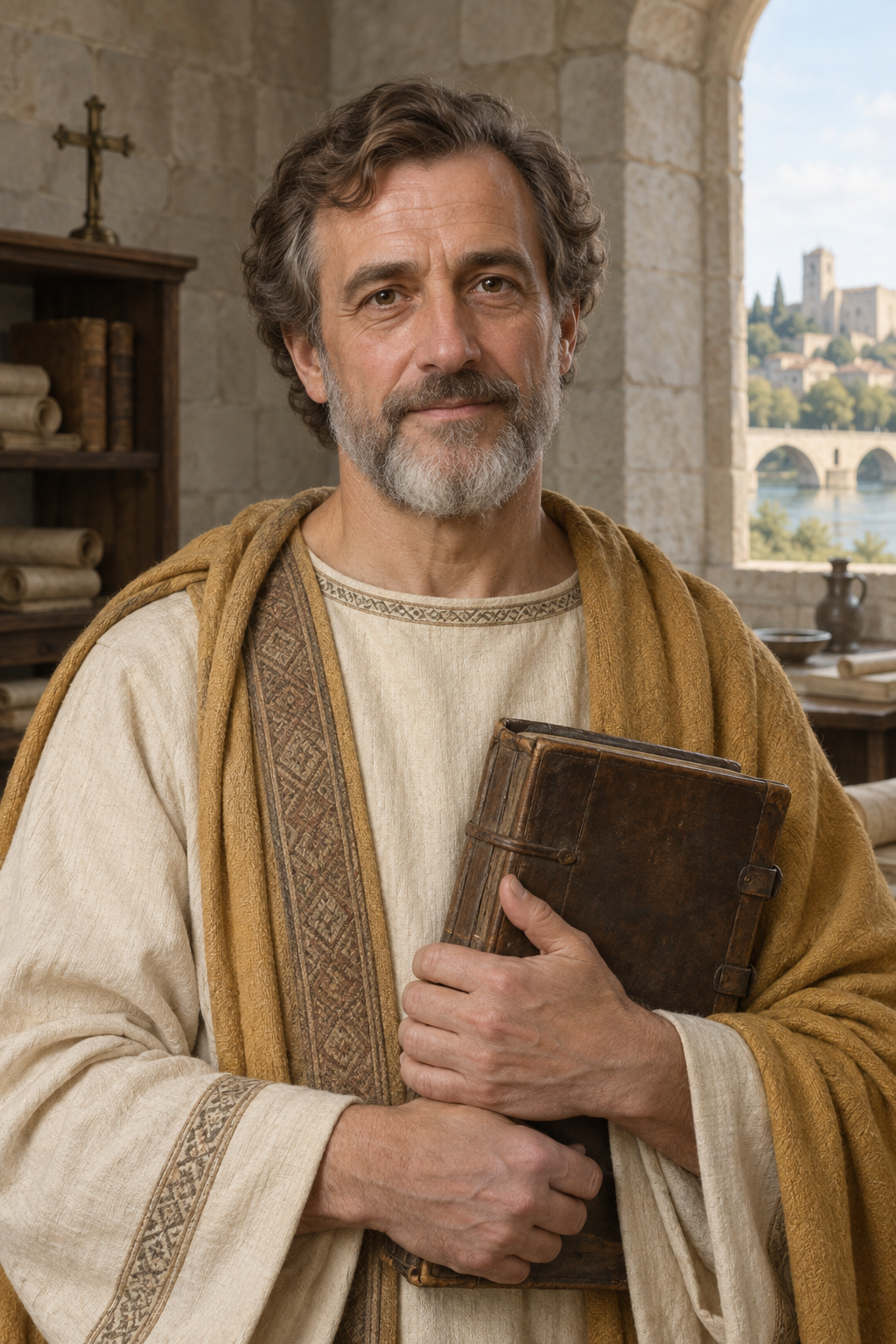
About Caesarius of Arles
Caesarius of Arles began as a monk, but illness carried him into a different kind of service. His severe ascetic practices at Lérins damaged his health, and his abbot sent him to Arles for treatment. There he became close to the bishop he would eventually succeed. The life he had sought in a monastery opened into responsibility for a city's Christian community, at a time when political power was repeatedly changing hands.
Born around 470 near Chalon-sur-Saône, Caesarius grew up in a Gallo-Roman family. He became a cleric as a young man and then entered the monastery of Lérins. Bishop Eone ordained him priest, and he became bishop of Arles around 502–503. The diocesan account also remembers his practical care for people displaced by war: negotiating captives' release and helping separated families return home.
Arles stood on the Rhône at a strategically important meeting point of trade and power. That position made a bishop's loyalties a matter of suspicion as well as pastoral duty. Under the Visigothic king Alaric II, Caesarius was accused of favouring Burgundian interests and sent into exile at Bordeaux. He was subsequently recalled, but suspicion returned amid further fighting. In 513 he had to appear before the Ostrogothic ruler Theodoric at Ravenna, where he cleared himself of the accusations. He also visited Rome and received the pallium from Pope Symmachus, strengthening the connection between his episcopal ministry and the Roman see. As a preacher he used familiar images from work and the countryside, addressing habits such as drunkenness and the neglect of worship in direct language.
His work as a teacher reached beyond the people who could hear him in person. The Roman Martyrology remembers his preparation and collection of sermons for priests to read on feast days. These supplied other ministers with material for teaching their own congregations. It also remembers his rules for both male and female communities, placing preaching and the organization of shared religious life together among his lasting services to the Church.
In one surviving sermon, Caesarius turns the desire for mercy into a searching question about daily conduct. People want to receive kindness and forgiveness, he observes, yet can be unwilling to show kindness themselves. He asks his hearers to attend to the sufferings of poor people, joining their requests to God with practical generosity. The sermon ends with a plain instruction to bring whatever they can afford for the poor when they come to church. His teaching brings the congregation back to something they can actually do, rather than leaving mercy as an attractive word.
Caesarius also led the second Council of Orange in 529, which considered the relationship between God's grace and human freedom. The council taught that even the first movement toward faith depends on divine help. Grace was not an optional addition to an otherwise self-sufficient religious life. Its teaching also concerned perseverance, good actions and love of God, while rejecting the idea that anyone is predestined to evil. Pope Boniface II confirmed the council's decisions in 531. The theological debate thus concerned the source of hope and the possibility of a faithful life, not simply a dispute over specialized vocabulary.
His rule for nuns reveals a leader willing to learn from experience. In revising it, he explains that he has considered what was reasonable and possible in the community's life. He asks that earlier copies give way to the corrected version. He also asks the women to pray for him and to obtain forgiveness for his failings. The bishop who offered a framework for their common life placed himself in need of their spiritual help.
A letter to an abbess, identified by its editor as Caesaria, begins with her persistent request for his advice. Caesarius acknowledges her careful study and admits his hesitation about telling her what she already knows. When he does offer counsel, he turns to the habits that can undermine a community from within: pride, envy, anger and careless speech. He distinguishes genuine humility from its appearance, testing it by patience when injured. His warning about speech has another side: silence can also become a failure when a useful word of correction is withheld. The letter calls for both restraint and responsibility in dealings with other people.
His followers' account of his life describes a church he built for the women's community, with provision for their burial. It remembers his sister Caesaria's burial there and another abbess of the same name succeeding her. Under the later abbess the women prayed, read and copied sacred books. The same account places Caesarius's own burial in the church of Saint Mary that he had founded, alongside the community whose life he had helped shape.
The diocesan chronology places his death at Arles on August 27, 542. Older accounts give 543. His long episcopate joined teaching, care for vulnerable people and the patient ordering of community life.
Wondering how to weigh the stories and sources? Learn how to read a saint biography.
Explore similar vocations
Prayers for Caesarius of Arles
Caesarius of Arles: sourced prayer excerpt
May the divine favor both fill you with present good things and render you worthy of the eternal.