Biography
Caesarius of Nazianzus
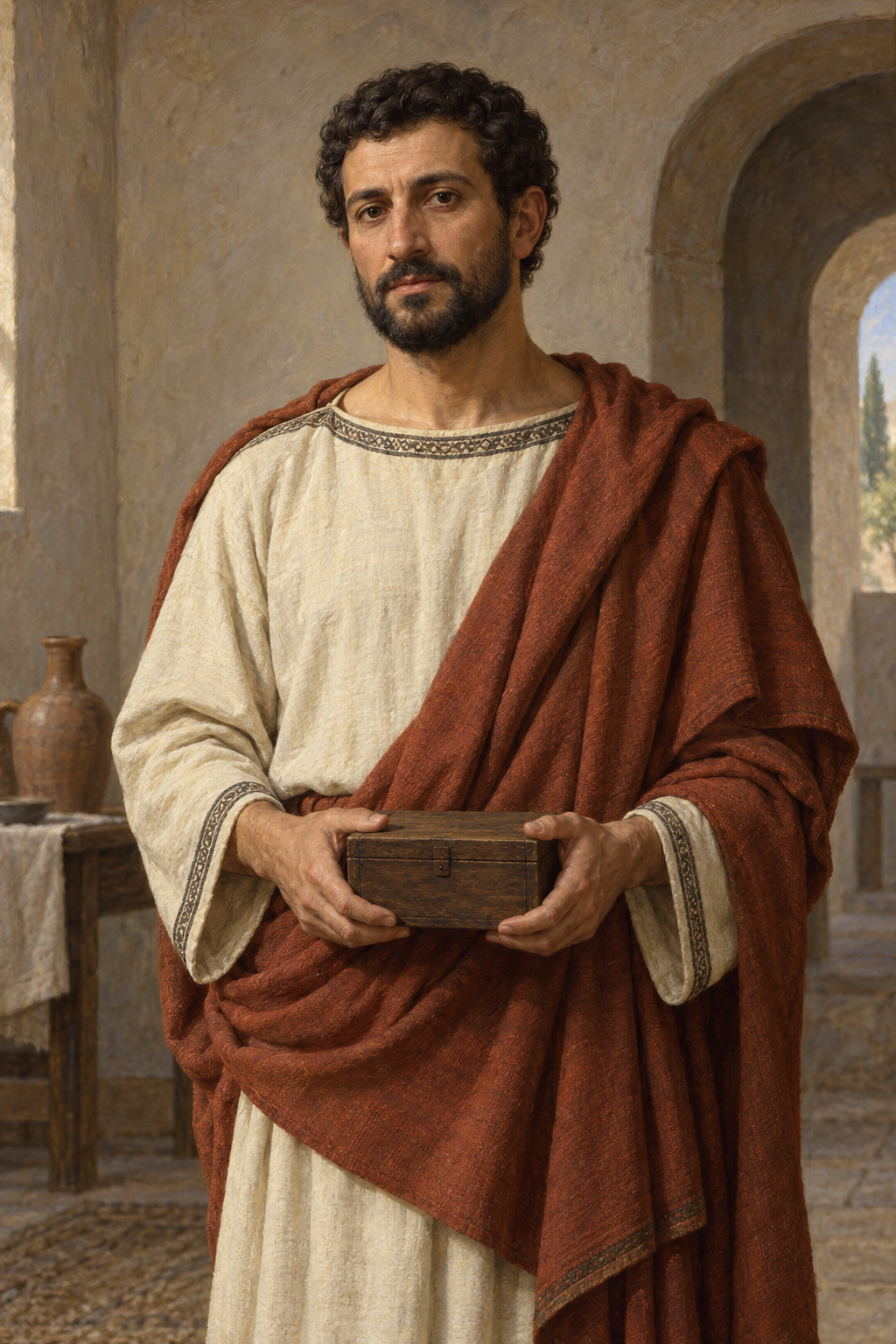
About Caesarius of Nazianzus
Caesarius of Nazianzus was a physician whose working life took him from advanced study in Alexandria to the imperial court. He belonged to a prominent Christian family: his father Gregory was bishop of Nazianzus, his mother was Nonna, and his siblings included Gorgonia and Gregory, later known as the Theologian. His birth is generally placed around 330, probably at Arianzus. The family’s religious commitments shaped his upbringing, but his career followed a different path from his brother’s.
Gregory’s funeral oration remembers a gifted student whose learning included mathematics, astronomy and medicine. It describes the brothers meeting again at Constantinople after their separate studies and returning home together. Later, Caesarius returned to the capital. Gregory praises both his professional standing and his willingness to provide medical help without demanding payment. The speech is affectionate testimony from someone who knew him, while also being a public tribute meant to present a Christian example.
Court service placed him close to power under Constantius II and then Julian. According to the early account, Julian attempted to draw him away from Christianity, but Caesarius would not change his allegiance. He eventually withdrew from the court and returned to his family. The Catholic Encyclopedia cautions against confusing him with another Caesarius, an official involved in the revolt of Procopius. The shared name does not justify adding that other man’s political history to the physician’s life.
His position was a source of tension within his own family. In a letter written during Julian’s reign, Gregory urges him to leave imperial service. He worries about the effect on their father’s standing as a bishop and says that their mother has been kept unaware of the situation. This is a more troubled picture than a smooth account of family agreement: a brother’s concern, religious conviction and anxiety about public reputation all appear together.
After Julian’s death, Caesarius returned to public employment and received a financial appointment in Bithynia. Margherita Cassia’s study explains why its exact title remains disputed: Gregory describes responsibility for imperial money without giving enough administrative detail to settle every modern identification. The secure point is that Caesarius handled public funds. His medical training and court connections formed part of a career that extended beyond the treatment of individual patients.
He survived the earthquake that struck Nicaea on 11 October 368. Gregory interpreted his escape as a call to reconsider his priorities, urging him in another letter to respond with gratitude and a different way of life. The appeal expresses Gregory’s hopes for his brother; it is not proof that every proposed change had already taken place. The surviving correspondence lets the reader hear that encouragement while leaving room for the uncertainty of Caesarius’s own final decisions.
Caesarius received baptism shortly before his death. Cassia places his final illness and death in late 368 or early 369 and notes evidence that he was still holding office. A lengthy retirement into an established ascetic community therefore should not be assumed. His body was returned to Nazianzus for burial. The funeral brought his professional success and sudden loss into the intimate setting of a grieving family.
He wished his remaining property to benefit the poor. Carrying out that intention proved difficult. Basil of Caesarea’s letter to the official Sophronius describes claims against the estate after distributions had begun. Basil asks for intervention on Gregory’s behalf and says that Gregory is willing to hand the remaining property to the treasury so that demands can be examined. The letter preserves a practical problem behind an act of charity: an intention in a will still required someone to settle competing claims.
Basil treats many of those demands as unjust, but he is writing as Gregory’s advocate. His accusations should not be mistaken for the findings of an independent court. What the letter establishes directly is the dispute, the brothers’ charitable intention as reported by their circle, and the effort to obtain official help. The surviving evidence does not allow every claimant’s case to be reconstructed.
Gregory’s farewell holds together sorrow and Christian hope. He presents Caesarius as someone whose achievements did not cancel his deeper religious belonging, then turns toward the hope of reunion beyond death. That remembrance is central to the saint’s story, but it remains a brother’s funeral tribute. Its emotional force and its purpose both matter when reading it as evidence.
His memory also attracted writings that were not his own. Four theological dialogues transmitted under his name are regarded as spurious. Their questions and answers therefore cannot be used to recover the physician’s personal teaching or treated as words securely spoken by him.
The Orthodox Church in America commemorates Caesarius on 9 March. Its account remembers a respected physician whose loyalty to Christianity survived the pressures of court service. His life offers an example of religious commitment carried through professional responsibility, family disagreement and an unexpectedly brief final illness.
Wondering how to weigh the stories and sources? Learn how to read a saint biography.